Ohio’s historic Clifton Mill

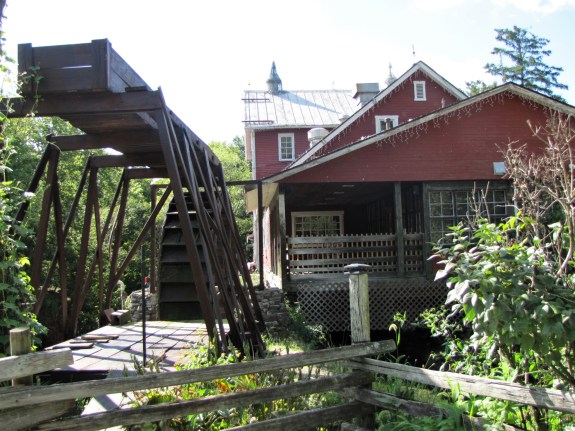
East of Dayton and south of Springfield, Ohio in the tiny town of Clifton you will find the Clifton Mill. This is one of, if not the oldest continuously operating grist mills left in the country. First built in 1802 by Revolutionary War veteran Owen Davis, the mill is still operating, as well as offering a restaurant and store.

The mill in the background

Another feature of this Ohio attraction is the famed Christmas lights display. The day we visited staff were installing what will be a total of four million Christmas lights to the grounds, buildings and walkways.

Workers hanging lights on the rock cliff

Nice log cabin on the grounds

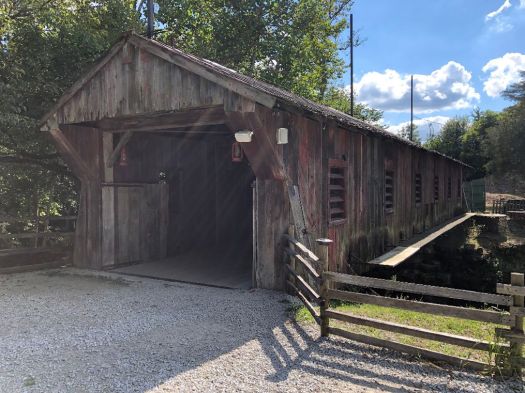
They built their own covered bridge

Honoring the designer of the light show

Historic plaque by the entrance door


We got there just after the mill, restaurant and store closed, but the grounds were still open, so we could see what was going on with the lights installation. Two men were installing lights on the side of the Clifton Gorge rock cliffs. Some lights had already been installed on the roof and sides of the mill itself and other outbuildings.

The Christmas Lights display, photo credit daytonlocal.com

This attraction receives thousands of guests each winter for the music and light show, Santa’s workshop and holiday fun.  The mill is open year round for tours and other events. This is the Clifton Mill website. This award winning attraction would make a nice stop on your Christmas events calendar.

Stevenson Cemetery aka Old Massie Creek Cemetery

We had just left the Stevenson Road Covered Bridge and were on the way to Charleton Mill Bridge when we saw two stone pillars flanking a gravel road heading into a wooded area. Had to check that out, and when we turned into the road we noticed a prominent sign labeling Stevenson Cemetery. Fortunately the road was open, so we drove in.

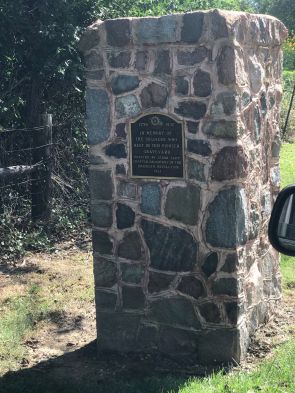
One of two stone pillars

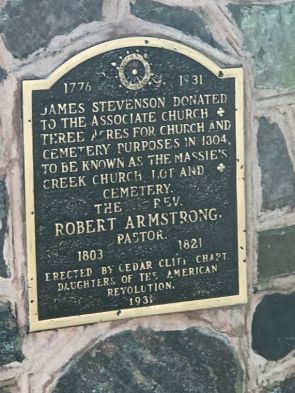
Detail of the second pillar plaque


This cemetery dates back to 1804 when James Stevenson donated 3 acres of ground for a church and cemetery for the existing congregation that had been worshiping in a private home. A Reverend Armstrong had come from Kentucky in 1800 to start a new congregation in Greene County.

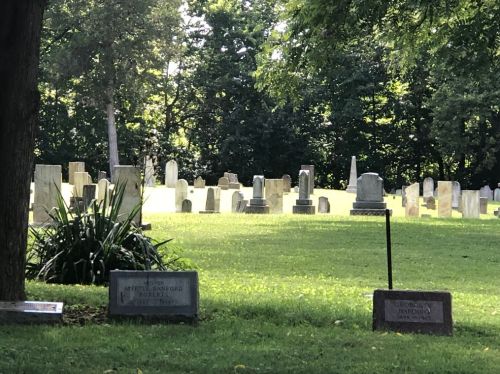
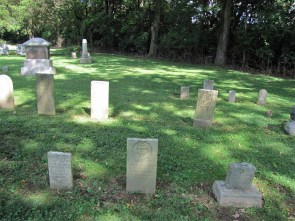
Sunshine lights up a portion of the cemetery

Old stones pictured

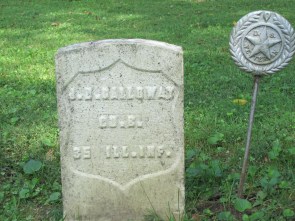
Civil War Veteran


The Stevenson Cemetery is probably the oldest one in Greene County. Rev. Armstrong is buried there. As many as 21 soldiers of the Revolutionary War with at least  seventeen soldiers identified, and recent studies indicate there are more not previously identified. Thirty seven War of 1812 and eighteen Civil War veterans are buried here.  In addition many veterans from 20th century conflicts are at rest in Stevenson Cemetery.

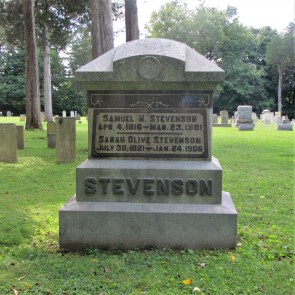
The Stevenson family

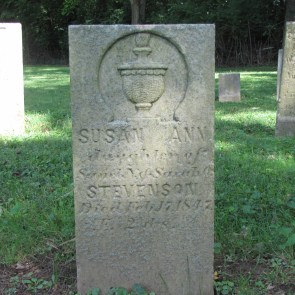
Daughter of the Stevensons, only lived 2 days


The Xenia (Ohio) Daily Gazette ran a detailed article about the cemetery in May 2017. From that article: “The Cedar Cliff Chapter of the Daughters of the American Revolution has made this cemetery a special project for many years. In 1931, an imposing gateway of colored stones was placed at the entry. Inscription on one pillar states that the D. A. R. erected them, the other has the name of James Stevenson, the donor of the site. The cost was $188. In 1975, a large stone which bears a bronze plaque giving the names of seventeen of the Revolutionary War soldiers was dedicated…

The D.A.R. plaque referenced above

This is truly a historic cemetery. The setting is beautiful and it was very enjoyable walking around the grounds and reading the inscriptions on the many stones.

Cemetery Road Bridge has a “new” home

The Cemetery Road Covered Bridge started its existence in 1886 after bridge builder Henry Hebble completed the construction of the original 129 foot long span over the Anderson Fork of Caesar Creek. In the 1970’s a new lake was planned and that lake when filled would have inundated and destroyed this bridge.

The sign on the entrance

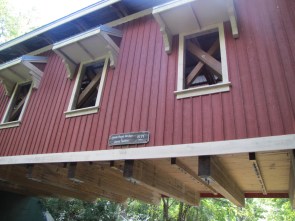
Name plate on bridge

Side of bridge showing abutments

The Reader’s Digest version of the story is that The Army Corp of Engineers ended up giving the bridge away to anyone that would move it. The middle 60 foot section was cut away, and the bridge did get moved, very slowly, to its new home in the Glen Helen Nature Preserve. The trip took two days and necessitated moving some traffic signal lights for clearance as the bridge on wheels was moved through towns.

View through the bridge deck

The bridge, once it was placed on its new location spanning the Yellow Springs Creek, did require substantial repairs including some new deck boards, siding and quite a bit of roof repairs. It was opened for pedestrian traffic only, and is off the road a hundred yards or so in the Glen Helen Nature Preserve.

Henry Hebble utilized the Howe through truss design

Even the bridge deck got graffitied


Since the opening  in 1975 the bridge has been the victim of serious and widespread vandalism in the form of graffiti over a high percentage of the wood members of the structure. It seems like lots of covered bridges fall victim to this kind of desecration. But, that said, it was great that at least a portion of this fine old bridge was saved from a watery demise.


The historic Grinnell Mill, now a Bed & Breakfast

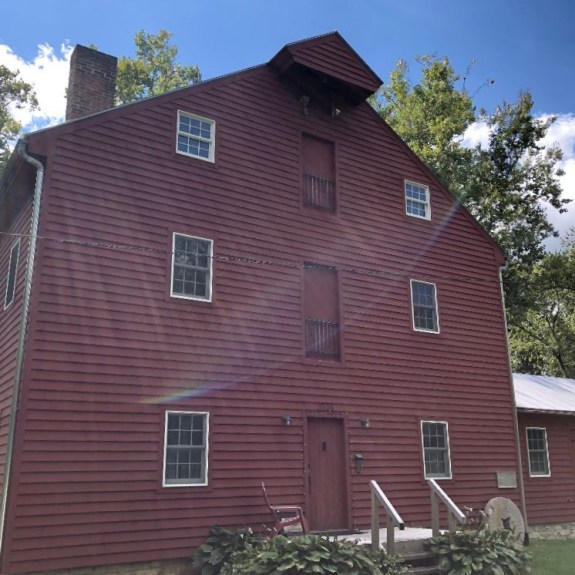
This simple but stately three story frame building stood out on the winding road as we were traveling through Greene County Ohio. The Grinnell Mill property has a long history, beginning in 1813. The original mill burned in 1818, and the current building was constructed in 1821 on the original limestone foundation. Over the years the mill has seen several uses, including a gristmill, sawmill and limestone processing facility.

The mill today

Information plaque

An original mill machinery piece

The building is now used as a Bed and Breakfast with three rooms available. The beautiful remodeled mill is also available for retreats, meetings, conferences, and parties. It is open to the public for tours most Saturdays and Sundays. Further details, including additional photos and a more complete history is available at the Grinnell Mill Bed and Breakfast website. It was not open when we were there.


A lovely site for a picnic

On our trip the other day to visit family in Ohio we were looking for covered bridges. In Greene County (east of Dayton) we came across this lovely pull off and saw a large information sign. That was our cue to stop.

Nice gazebo, note the covered picnic tables

Large covered seating place

Old cast iron drinking fountain


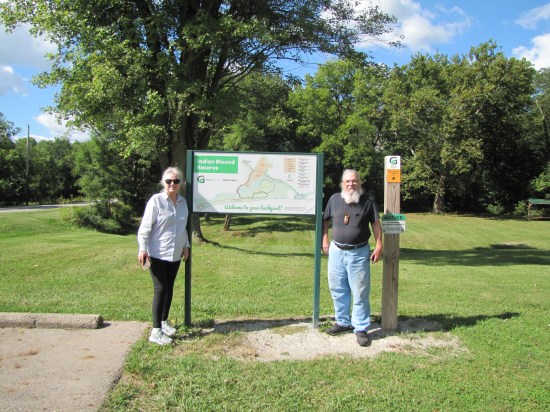
The signage explained that this was one of two turn offs at trail heads for the Indian Mound Reserve. The park was quite large according to the map and included an Indian Mound, multiple trails of varying lengths, picnic grounds, and a scenic falls and river.

Been around a while…

Ok, it’s not covered, but still a bridge

Enjoying a beautiful day in Ohio

Time constraints and schedule did not allow us to explore the falls or any of the other trails in the lovely county park. The people of Greene County are fortunate to have such a lovely facility to enjoy.


A new bridge with an old design

On the way from home base in central Indiana to family in Columbus, Ohio, a bit of research revealed the locations of a few covered bridges. If you have visited our site before, you probably know of our enjoyment visiting, photographing, and sharing our findings. Having noted a location of the Hyde Road bridge, we were quite surprised when we noted on the signage that the bridge was built in 2014!

OK, it is covered, but a cupula?

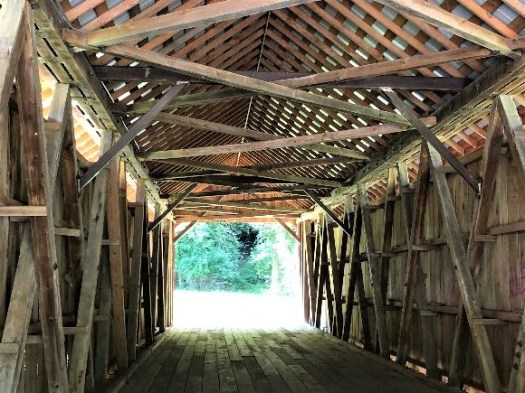
While the exterior of the structure was not at all similar to the “classic” covered bridge designs a stroll through the bridge revealed the very familiar Howe through truss design. The two metal rods for posts and the angled braces and counter braces are very familiar. Those braces had a metal fitting for attachment to the top and bottom chords, and rafter fasteners were different including modern truss nail plates.

Truss design is familiar, details vary from “normal”

A different multi window design

Modern designed deck supports


The bridge spans the Little Miami Scenic Trail on E Hyde Road. We did see several bike riders enjoying the wide paved trail that runs under the new bridge. One other change from the old classic covered bridges is the thin asphalt pavement overlay on the bridge deck . While the clip-clop of equine hoofs do sound out, not having a wood deck is, well, a bit hard to appreciate.

This was built when??

Window view of the bike trail


The Hyde Road Bridge is also known as the Richard P Eastman Covered Bridge, the name of which shows on Google maps. The bridge was constructed by R.G. Zachrich Construction who has constructed other reproduction bridges in the state.

Pedestrian traffic only on Stevenson Road Covered Bridge

Greene County , Ohio is a bit east of Dayton with pretty rolling hills and well kept farmsteads. This is also the home of the Stevenson Road Covered Bridge, now open to pedestrian traffic only.

View from the new road that bypasses the old bridge

Note the three members of the top chord

This beautifully restored bridge was originally built in 1877 by the Smith Bridge Company of Toledo. The design is designated a Covered Smith through truss. This design was patented by Robert Smith and utilized a system of multiple top and bottom chords depending upon span lengths and load requirements.

Vehicles were prohibited in 2003 with the road course moved in 2004. The bridge deck is 95 feet in length with a width of 16.5 feet. The bridge spans Massies Creek on Stevenson Road (CR 76) in Wilberforce.

This was the first Smith through truss bridge we had seen. While inspecting the bridge truss system, you notice several steel square pipe cross bracing supports. They did not look appropriate for the original structure. Photos on bridgehunter.com taken in 2015 do not show these steel braces, so these might have been added in the 2015 restoration mentioned on the entrance signage.

Note the rust colored steel angle and cross braces

View of the deck supports reflected in the water

Dates of interest

Sher enjoying this pretty bridge


The Stevenson Road Covered Bridge is a lovely addition to the history of Ohio, and to the countryside in which it stands. The approach is quite capable of safe vehicle parking allowing for easy and interesting access to the bridge and its surrounds. This is a stop well worth your time.


Fire destroyed the 1879 grandstand ten years ago

Around midnight on May 19, 2012, Shelbyville, Indiana residents saw flames raising hundreds of feet in the air. The source of the flames, visible from over a mile away, was the historic all wooden grandstands at the Shelby County Fairgrounds. These grandstands were constructed back in 1879, and records show that 6000 board feet of white pine was utilized for the build. Over 130 years later, the wood was tinder dry and the entire structure was fully involved when firefighters arrived on the scene.

New grandstands facing the track

The history of the Shelby County Fair goes way back to original farmer’s markets in the late 1840’s. The legal organization came in 1873 with the writing of the Fair Constitution. Future Vice President of the United States Thomas A. Hendricks took part in the authorship and execution of these documents. The first fair under the Shelby County Fair Association name was in 1874.

Stables in background, turn 3 in foreground

The backstretch


The grandstand, as mentioned above, was built in 1879 at the same time the race track was being renovated. This track is known as one of the fastest tracks in the state due to it’s design, which was a duplicate of the world-famous Kentucky Derby track at Churchill Downs in Louisville, Kentucky. Horse farms from all over have trained on this track for decades, and still continue to stable and train in this facility.

The old grandstand, photo by Gary Plunkett

The new entrance to the grandstand

New grandstand facing the fair midway

The burning of the grandstand in 2012 a couple of weeks before the scheduled opening of the fair was a shock to this small Indiana community. The temporary portable bleachers just didn’t quite get it. However, in 2014 the new grandstands were completed. with the same basic design, but now constructed with brick and concrete, both fireproof!