
We were on the hunt for a Geocache at a nearby park when we saw this praying mantis on an asphalt walking path. It didn’t move when I got down with the iPhone for a close up.
We were on the hunt for a Geocache at a nearby park when we saw this praying mantis on an asphalt walking path. It didn’t move when I got down with the iPhone for a close up.
This afternoon Sher and our son and I went on a ‘hunt’ for a Geocache at a nearby park. We had looked it up last night on a map, and there it was! So off we went.

Explanation of how the swale works
This Geocache was not one of those hidden boxes or log books. This one was a feature at the park. We went in search of a Water Quality Bio-Swale. Yes, a feature that is designed to collect pollutants from rain fall runoff.

That’s the swale in the background
It actually looked like an ordinary swale for rain runoff. This one had a more complex design than you normally expect. There was a thick layer of sandy soil in the low part of the swale which filtered any pollutants. A layer of gravel at the bottom surrounded a perforated drain pipe in which the storm water runs off to a nearby river.

The story of Indiana’s state tree
The swale banks were planted with trees native to Indiana. One of the park volunteers was mapping the location and species of each tree while we were on site. He informed us that there will be individual ID signs on each tree and a brochure with detailed info coming soon.

Just walking around in the yard this morning we spotted this red flower in an area just on the edge of where we normally mow. Not sure what it is, but it is pretty.
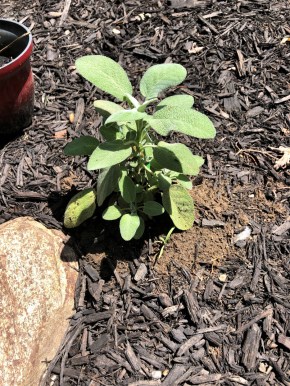
Taken June 20, 2020
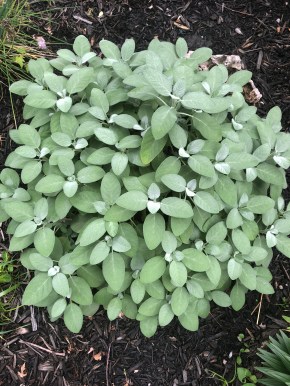
Taken June 30, 2021
Here is another look at our backyard flower and herb garden. These two photos show the same herb plant 12 months apart. We planted this sage in early June, 2020. We did harvest and dry some of the sage last fall. The other shot was taken this afternoon. This sage has really grown a lot.
In the upper left corner of today’s photo you can get a glimpse of the chives plant. In the lower right corner you can see leaves of one of the Asiatic lilies highlighted in another post here.

Here in our backyard another mushroom appeared. The cap is about 4 inches across. The stem of this one has an interesting twist. Not going to consume this, but can anyone help with an ID on this?

Here is a pretty neat stop action of a seagull coming in for a landing. Looks like he has his landing gear down and full flaps! We took this shot at a beach somewhere near Edmonds, Washington.
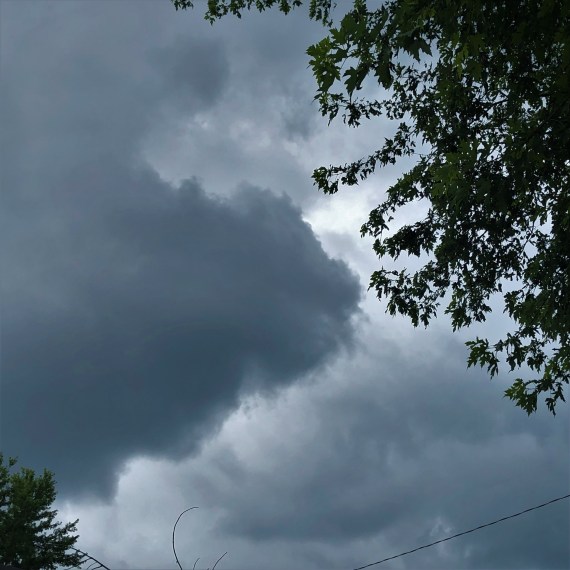
We have been needing some rain, and this system did bring a nice shower. While we are not getting the extreme heat like in the Pacific Northwest, our temps have been in the low 90’s with stifling humidity. The weather forecasters say the “Muggy Meter” is pegged today.
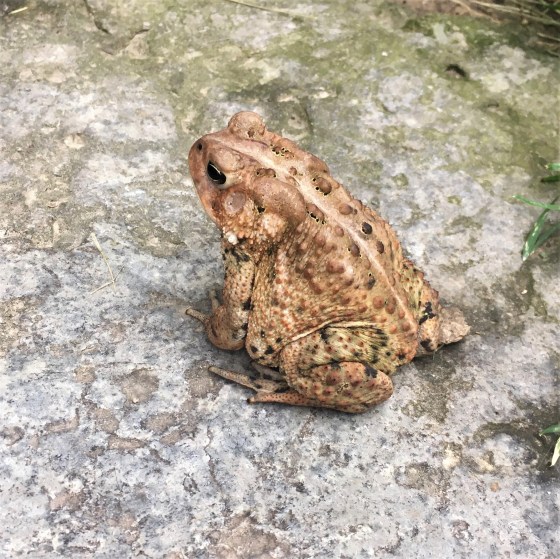
We got this picture of a big toad outside our son’s house recently. Our grandson (Kindergarten age) immediately proclaimed that he had already seen this toad. Not just any toad, but this one. Kids know critters, so who are we to doubt him?
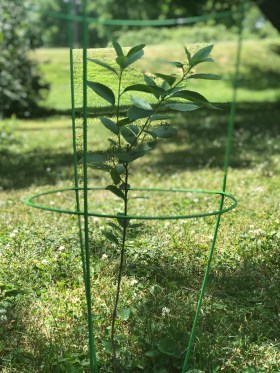
Taken on June 20, 2020

Taken on June 25, 2021
This Black Cherry was one we got free from the Conservation Service and Indiana DNR. The first picture was taken on June 20, 2020 shortly after being planted. The sapling was then in a cage for protection, and the top visible rung on the cage is less than 2 feet high. The second picture was taken on June 25, 2021. The tree is now a little over 6 feet tall. Black Cherry trees normally take 8 to 10 years of growth before they produce cherries. We’ll report back in June, 2030.

We picked up some free tress recently from the local Conservation Service and state DNR. This pecan sapling took a couple of weeks to get going, but it now has some strong leaf growth. According to the experts, you need two pecan trees to produce pecans. Don’t know if we’ll get another one growing or not.
 Roadtirement