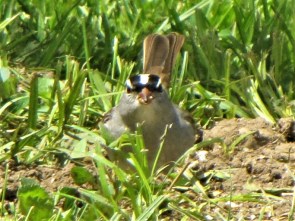
A shade of red in that squirrel’s tail

The gray squirrels we always see

We see lots of gray squirrels in our area of Indiana. Within the past week we have seen several squirrels that have a noticeable reddish color to their tails and along the center of their backs. Their coats are not red like the red squirrels we saw at our son’s house in Austin when we visited a couple of weeks ago.

Note the red color of the tail

These are not red squirrels. Reds and grays are two different species, and are incompatible for cross breeding. Reds have much more red coloring all over their bodies. These grays have gotten some reddish tints in their tails and their backs. Anybody seen these kinds of colorations in your area’s populations?

Some folks like squirrels. Others think they are just “tree rats”. I’ve heard it said that squirrels are nothing more than rats with a good Public Relations Department…

A frosty gallery

This morning we woke to a very heavy frost. These pictures were captured at 10 o’clock, with the ambient temperature still at 28 F.
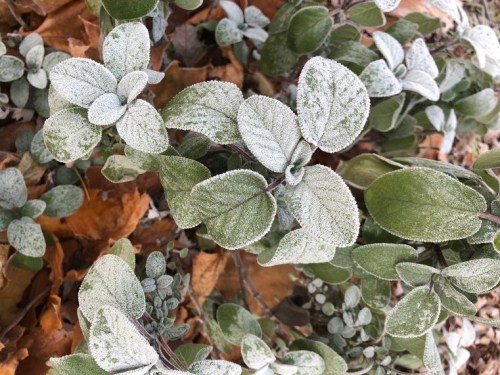
Frost covered sage
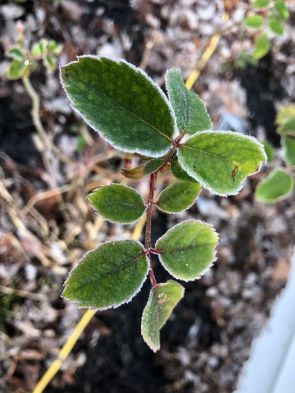
Rose leaf edges attracted the frost

Another leaf edge with heavy frost


A heavy frost should not be a surprise: Winter Solstice is three days away!

Tulip tree mysterious growth

Last spring  (2020) the state DNR offered free tree saplings. We got some, including Tulip poplars.  The Tulip tree is the State tree of Indiana. We planted three, and they have done very well, and have grown from sapling size to about 4 feet tall.

May 28, 2020

September 6, 2021


I’ve noticed some interesting growth on the trees. On the trunks are single individual leaflets. They are close together, one on top of the other and on opposite sides of the trunk. I have never seen anything like this. Any foresters out there that can explain if this growth is normal in Tulip tree growth?

Never seen growth like this…

Tulip trees were plentiful in the hardwood forests of the Midwest prior to European settlement. The trees were harvested for railroad ties and fenceposts, so state some historical records. George Washington planted Tulip trees on his Mt. Vernon estate. Growing to 90 feet in height with large diameter trunks, the poplar trees provided excellent quality lumber. They do flower when mature, but the flowers are in the tops of the trees so are hard to see.

Our backyard bird feeders are back in service

Hummingbirds are so amazing!

In May 2021 some species of songbirds began to be afflicted with a deadly disease of some kind. This started in Virginia and moved west. Indiana birds began to die in late May and by early June the Indiana Department of Natural Resources put out the warning to stop all bird feeding in private yards. We posted about that. We both really missed our almost daily birdwatching time our back.

By the first week in August the DNR published the news that 76 out of Indiana’s 92 counties were bird disease free, and could resume the use of bird feeders.

Our cute little Nuthatch is back

We soon refilled our two seed feeders, and also refilled our hummingbird feeder. (DNR also had said to stop using hummingbird feeders as well.) It has been a couple of weeks since we started feeding our avian friends again, and slowly lots of the birds are coming back to our yard. We haven’t seen all of the species we had seen before the “lockdown”, but perhaps that is to be expected. We are grateful that we can again enjoy birding from our backyard swing!

Wild strawberry or COVID virus??

Took a picture of a couple of mushrooms yesterday.  Within the image was a little red wild strawberry. Once the photo was enlarged and the red berry zeroed in, the details of the berry came into focus.

That looks eerily close to COVID

Immediately the  shape of the berry looked very familiar. Yes, that shape has been displayed just about everywhere since, oh, sometime around March 2020. It does look way to much like the renderings you see of that damned COVID-19 virus.

Fungus still among us

OK, promise this will be the last time for the fungus among us headline…

The clover leaves will help you judge the size of these mushrooms

Once again the wet conditions seem to have offered a good environment for the growth of a couple of mushrooms. These two popped up under our yard swing. The shade may have helped.

Short video of five geese, seven ducks and moderate flooding

A nearby park received moderate flooding over the past few days from heavy rains. This park has seen a lot worse: the swing sets in the background have been in water 2 feet deep before. Some geese found it good grazing where a walking/bike path was covered. A group of ducks also enjoyed the shallow water. One duck honked off one of the geese, however. Fortunately the video ends before serious goose vs. duck conflict occurs.

Little and elusive

I was lucky to even see this little green bug. Talk about camouflage. He kept moving around hiding on the branch (like squirrels do on tree trunks) as I tried to get this image. 

He’s about a half inch tall

After doing a search on a bug identification site, I came to the conclusion that this guy is a planthopper. No, not a leafhopper, but a planthopper. According to the experts, planthoppers have fewer leg spines and a “more interesting head” than leafhoppers.  I didn’t make that up. Thank heavens, at least my bug has an interesting head. Whew…

How they are growing

Welcome to our tomato growth pictorial


Flower/pollination

Flower petals still hanging on the bottom

More possible starts here in addition to the two already growing

A little further along (yes it rained last night)

These two look like they are going to make it

These were the first two that showed up

This year we bought two plants instead of growing from seeds. The last photo is from a different plant from the other images. The header at the top of the page is actually of a “volunteer” plant that just showed up in the backyard. It seems to be doing well and will soon earn the right to have its own tomato cage.