Colonial is good Bread

Old advertisements have always been popular, it seems. Keep your eyes open and you never know when you’ll spot a piece of pure Americana.

The back of the oval sign says “Thank You”

We found a nice example of a vintage (pre 1958) functional advertisement in the form of a working wooden/screen door on the Whistle Stop Cafe in Osgood, Indiana.  The well worn metal cross piece proudly announces that “Colonial is good Bread”. Colonial Bread began in 1928 in Oklahoma City. The name was changed to Rainbo Bread in 1958 when the recipe was changed.

Complete Colonial Bread screen doors are bringing quite a lot on the online sites like ebay, Pinterest and Etsy. Just the signs without doors also command high prices.


Jefferson Proving Grounds use today

In 1940 the US War Department designated 56,000 acres in southern Indiana as a future munitions testing area. In May of 1941 the first round of ammunition was fired from the firing line. Thus began the long history of the Jefferson Proving Grounds (JPG).

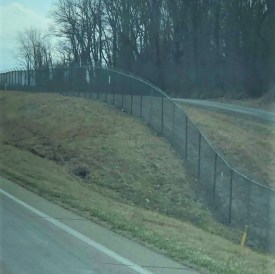
View from US Highway 421

Driving on US Highway 421 (the old Michigan Road) north of Madison, Indiana you’ll see on the west side of the road a long barbed wire topped tall chain link fence set back from the road. It runs for 17 miles. Inside the fence there will be another road, and US Govt. No trespassing signs evenly spaced on the fence. This is the old JPG site.

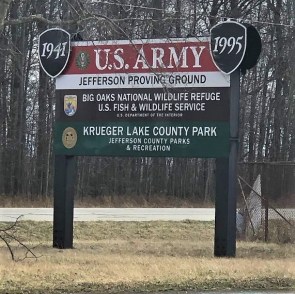
The JPG closed in 1995, but is still utilized by different entities. Part of the acreage is now the Big Oaks National Wildlife Refuge. Over 1000 acres is still used as a munitions training area for Indiana National Guard Aviation wings. A local railroad museum has a collection of rail stock on an old rail line within the site. Some areas are open for camping and seasonal permit hunting.

Signage on US 421

Boarded up original gate house


The following is from a Site Status Summary from this USNRC website: “JPG was established in 1940 for the purpose of production and specification testing of all types of ammunition, projectiles, propellants, cartridge cases, primers, fuses, boosters, bombs, and grenades. From 1941-1995, over 24 million rounds of conventional explosive ammunition were fired.” To this day there are areas within the old firing range that still contain millions of rounds of unexploded ordinance making those areas extremely dangerous.

Lanthier Winery and Distillery

The Lanthier Winery and Distillery in historic Madison, Indiana fits the tag ‘historic’ in several ways. The site of the facility has quite an interesting history going back to the 1700’s.
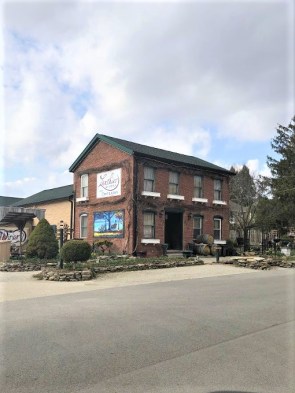
The stately historic building
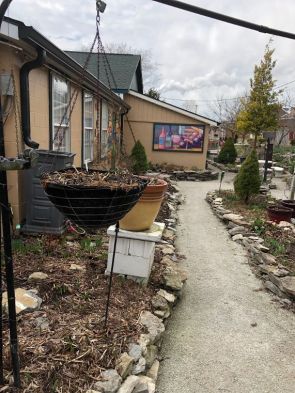
Beautiful garden paths to the entrance


We made this winery a stop on a recent trip to southeastern Indiana. The path to the entrance door leads through a beautiful garden. The flowers had begun to grow, and a few daisies had begun to bloom.
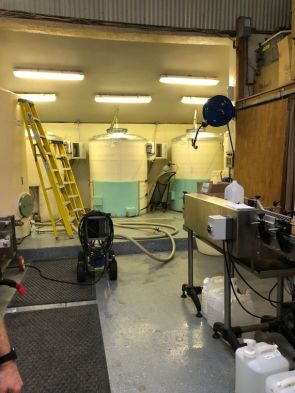
Wine vats and start of bottling machine, right
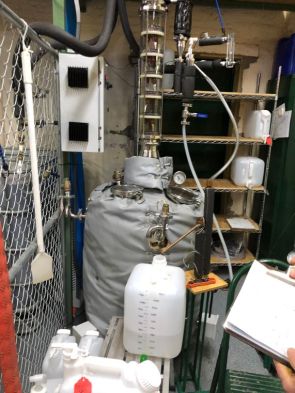
Distilling column, gathering 94% ABV spirits


Once in the building we headed to the tasting counter where free tastings are offered. We tried 5 different wines and landed on two of the sweet wine offerings. While we were sampling I asked if the winery and distillery were operated on this site. Immediately a nice fellow said “We are making wine and distilling vodka here, would you like to see the operation?”
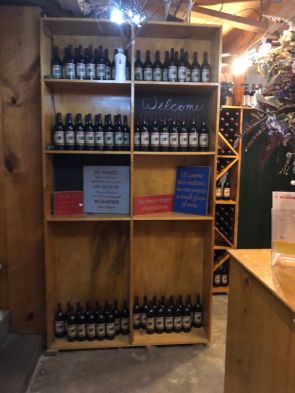
In the tasting room area
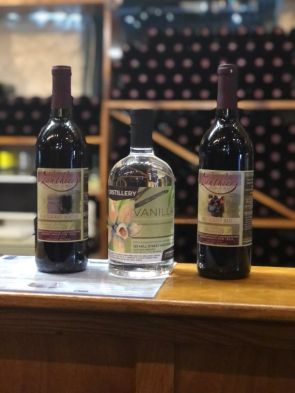
Our purchases after tastings


The fellow who offered us a private tour was none other than Chris Lanthier, Cellarmaster and, with his wife Tami, owner of Lanthier Winery and Distillery. Chris took us right back in the production area of wine making, bottling and the distilling of vodka products. He was most generous of his time as he explained, in detail, how the distillery works, and how it leads to their own brand of flavored vodkas.

We enjoyed the gardens, our tour, the tastings and the friendly staff of Lanthier Winery and Distillery. Chris was most generous with his time and all made us feel very welcome. Be sure to visit the Lanthier website here for more fascinating information about this wonderful winery.

Indiana’s First Volunteer Fire Department

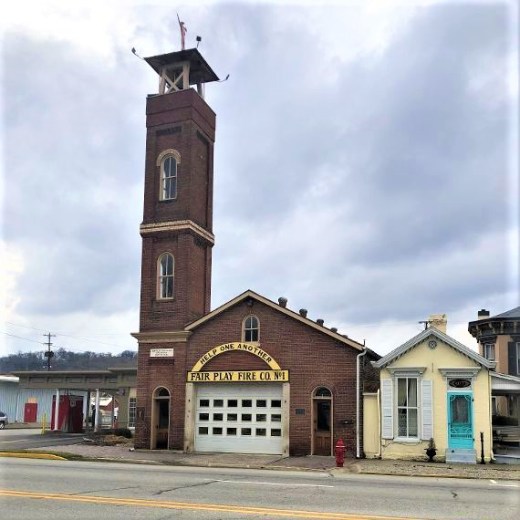
Madison, Indiana was founded in 1809 on the Ohio River between Cincinnati and Louisville. The entire downtown has been designated part of a National Historic District. One part of this town’s fascinating history is the story of the Fair-Play Fire Co. Firehouse.

From a National Park Service article: “The Union Volunteer Fire Company organized in 1830 to help protect Madison’s citizens from fire, a very serious threat to 19th century communities. Several years later, the City of Madison voted to fund a paid municipal fire department, but within ten months the service was cancelled and the responsibility again rested on volunteer forces. In 1841, about 100 men, who originally were members of the Union Volunteer Fire Company, organized the Fair Play Fire Company No. 1, which is now the oldest volunteer company in Indiana.”


This is one of several active Volunteer Fire Departments protecting Madison, Indiana. Fair-Play Fire Company first saw action as a bucket brigade. They bought a hand drawn piece of equipment in 1851, and it is still owned by the department.  The tall tower on the firehouse was built to hang hoses to dry. Go to the NPS article, link above, for more details about the history of this fire company.

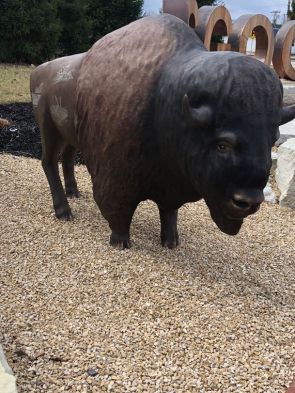
Another Indiana Bison-Tennial statue

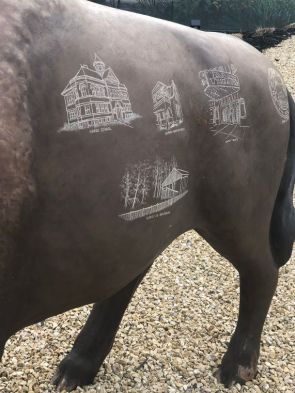
Indiana’s Bicentennial was celebrated in 2016. As part of the celebration, fiberglass statues of bison were made available to each of Indiana’s counties. Local artists decorated them with themes and scenes of the local area and features. We have seen several of these during our travels around the state.


We discovered this one in Osgood, Indiana, in south central Indiana. Named Ozzy, this bison was decorated/painted by Nancie Scott Davis. The bison Ozzy stands proudly on a gravel path with a beautiful mural on the wall of the adjacent building.

Treat yourself to the best

This barn’s Mail Pouch paint job is fading fast.

A Mail Pouch Barn is a barn with one or more sides painted with the slogan:

CHEW

MAIL POUCH

TOBACCO

TREAT YOURSELF TO THE BEST

Starting in 1890 the Bloch Brothers Tobacco Company of Wheeling West Virginia began offering farmers a bit of cash and a years supply of their Mail Pouch chewing tobacco in exchange for painting at least one side of their barn with their slogan. Even without the cash or product, a free coat of paint helps keep your barn siding protected, and this deal would look inviting.

The advertising campaign continued until the mid 1990’s. Over 20,000 barns in 22 Midwest and Southeastern states were painted during that 100+ year run. If you have any of these in your area or when you spot one while traveling, take a look. They won’t be around forever, and are an interesting slice of American rural history.


Public art is everywhere in Carmel Indiana

Carmel, Indiana is a suburban city immediately north of Indianapolis. Known as the roundabout capital of the U.S. with 140 of those wild traffic routes, the city is also known for its many pieces of public art.  Fifteen of these works of art are by Seward Johnson,  an American artist known for trompe-l’œil painted bronze statues. Other artists also have public art displayed.

“Ambassador of the Street” by Seward Johnson, placed 2012, cost $78,000

“Spring Eternal” by Jerry Joslin, placed 2010, cost $49,975

“Things To Do” by Seward Johnson, placed 2008, cost $80,000

“Who’s In Charge” by Seward Johnson, placed 2008, cost $88,000

Even bike racks have become “art” in Carmel

The day we were in Carmel the weather was not conducive to enjoying street art. We’ll return on a day without cold rain and see more of the many other public art displays. There is some controversy about the people street statues, as not all taxpayers feel that they are worth the price.