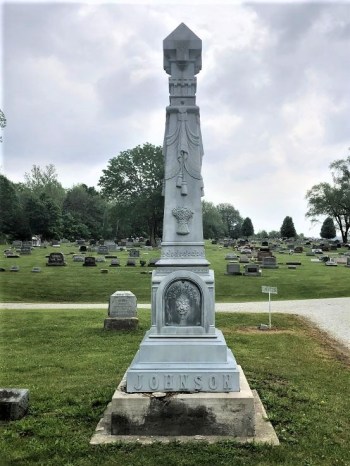
 When you come across a blueish colored grave monument you can’t help but wonder how it has maintained its lettering and clarity of the dates. No, it is not a later replacement, it is the original zinc metal grave marker. Manufactured by the Bridgeport, CT. Bronze Company, these long lasting but somewhat fragile monuments were custom made from 1876 until 1914.
When you tap on the surface of these monuments you can immediately tell it is metal. The seams where the individual pieces are joined are also obvious. Each piece was cast in Bridgeport and then shipped to the cemetery for installation. Customers dealt with sales reps armed with multiple catalogues with unlimited possibilities for choice of monuments.
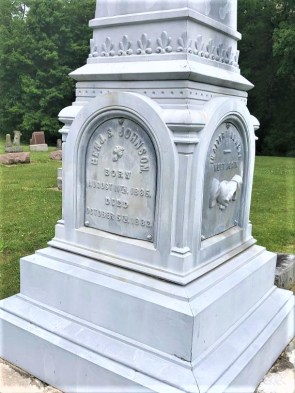
Name/dates of deceased and panel with “Shaking Hands”
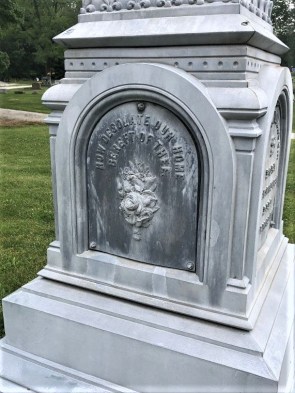
“HOW DESOLATE OUR HOME BEREFT OF THEE”
The zinc-tin alloy used in the castings did not rust and resisted the growth of mold or algae. Each monument was custom ordered, so all are one of a kind. The designs included panels that were screwed in and could even be changed at a later date, if desired. These were perfect for symbols like the shaking hands, sheaves of wheat or personal messages in addition to the name and dates of the deceased.
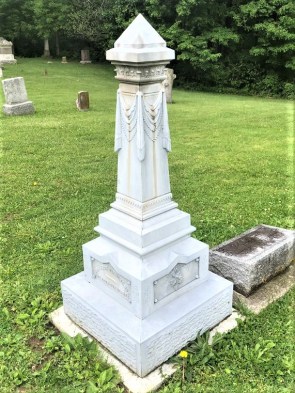
A smaller monument
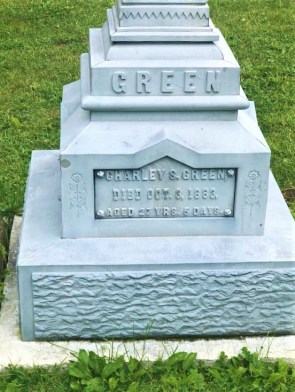
Name/date still legible after nearly 140 years
The material of these was advertised as White Bronze. White Bronze doesn’t exist. These are made with a zinc-tin alloy. The company, however, felt that White Bronze is a much classier and sophisticated name than zinc. They also claimed (of course!) that their monuments would outlast any stone monument. In a way that was true, however these zinc beauties were susceptible to breakage from, for example, falling trees. In addition, very tall monuments could suffer over time from settlement of part of the bases.
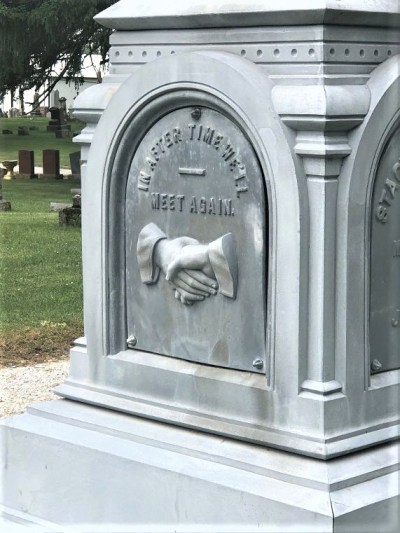
This panel would have been custom ordered for the monument
The next time you are enjoying a relaxing walk through a cemetery or graveyard keep an eye out for different looking monuments. Go have a look, it just might be a one of a kind White Bronze monument that was cast in Bridgeport, Connecticut between 1876 and 1914.