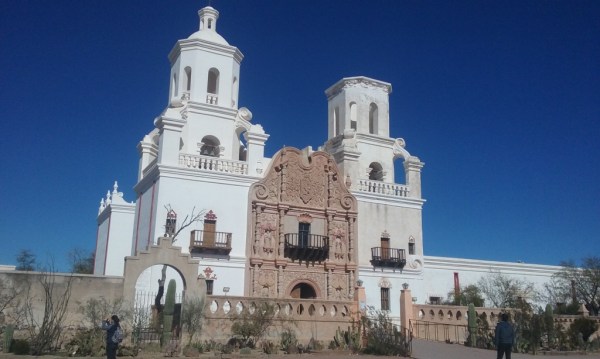
Mission San Xavier del Bac, the White Dove of the Desert

About 10 miles south of Tucson, Arizona you will find the “White Dove of the Desert” also known as the Mission San Xavier del Bac. This magnificent Spanish mission was completed in 1797. The first Spanish missionary, Father Eusebio Kino, arrived at the site in 1692. Throughout the years the location has been part of New Spain, Mexico, and finally a part of the U.S. after the Gadsen Purchase of 1854.


When you enter the church you cannot help but be amazed by the incredible amount of 18th century statuary and murals. The impact varies for everyone who walks the interior of this powerfully spiritual place. Candles are always lit and displayed. A shrine to St Francis is a prominent feature and one of solemn devotion.
The sanctuary

The edifice is still a functioning Catholic Church that primarily serves the Tohono O’odham tribe, formerly known as the Papago. There is a museum the shows the history of the church however it ws under construction during our visit so we missed much of the displays. There is also a gift shop.

Prayer chapel and garden

Striking statuary


Being one of the most popular tourist stops in Tucson, we were fortunate to visit when there were very few people there. It was almost as if we had the place to ourselves. This is a site that is filled with history as well as a sacred place for contemplation, meditation and prayer. Do not miss a chance to visit San Xavier. You will be moved.

The San Xavier website is packed with info for your assistance in visit planning .

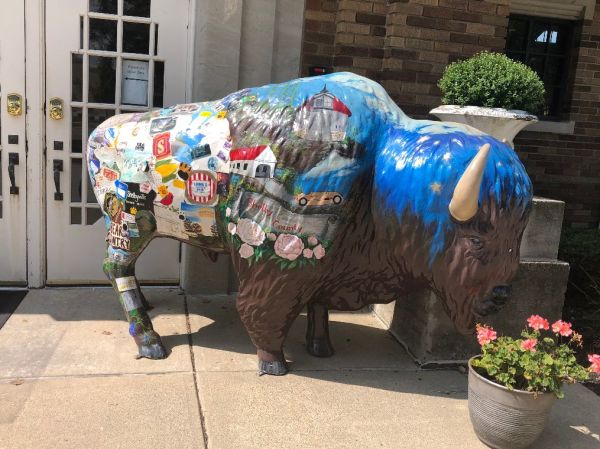
A Bison-tennial statue in Shelby County

Before each county got theirs to decorate

Indiana’s Statehood Bicentennial was celebrated in 2016. The remnants of that celebration can be seen all over the state in the form of 5 feet tall fiberglass bison. The in.gov website states: “Indiana Association of United Ways was the proud sponsor of the statewide Bison-tennial Public Art Project. This legacy project helped celebrate Indiana’s 200th birthday by decorating and displaying 5-foot-tall fiberglass bison with an end goal of at least one – if not a herd – of bison on display in each of Indiana’s 92 counties.” We’d seen a few around the state, and just last week we saw a newly placed one in Shelbyville.

Balsar the Bison in front of the old Porter Pool Bath House

Lots of local landmarks, businesses

Recognize that Kennedy Covered Bridge?


The bison is named Balsar after the main character in The Bears Of Blue River by Shelbyville resident author Charles Major. Not sure where Balsar has been since 2016, but now the Shelby County bison grazes in front of the old Porter Pool Bath House which was built in 1930. (Read about the current use of the Porter building here.)


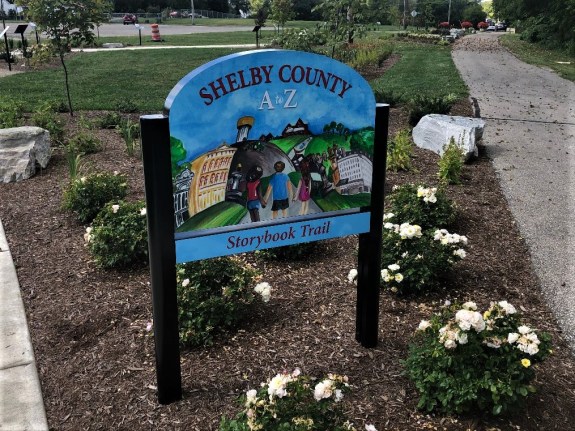
An A to Z Storybook Trail

A new short trail showcasing highlights and history of Shelby County has been completed along the Blue River Trail in Shelbyville, Indiana. The 13 signs are placed at intervals with two “letters” each on the signs.

One of the 13 signs on the trail

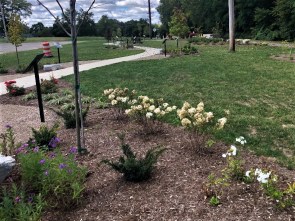
Shot of the trail

Note the limestone benches

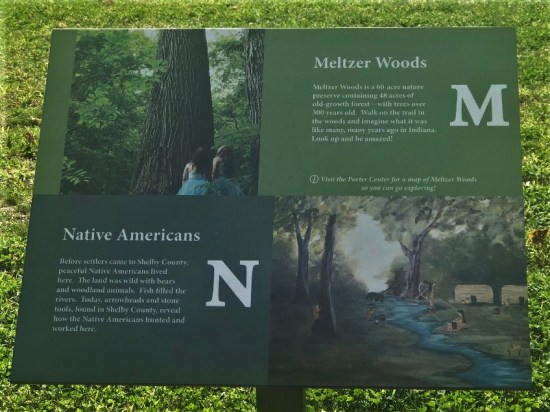
Sign showing local attraction and bit of history

The whole trail and sign placements are very nicely landscaped with trees and flowers. Scattered around are large limestone “benches”. These have been quarried from a Shelby County quarry that has has been in operation for decades.

The main Blue River Trail along the tree line

In the far background you can see the Blue River-Wind, Rain and Water public art (here is a link to our post about the sculpture). Shelbyville and Shelby County have done a great job constructing and maintaining the Blue River Trail complex across the city and through at least three parks.


Ohio’s historic Clifton Mill

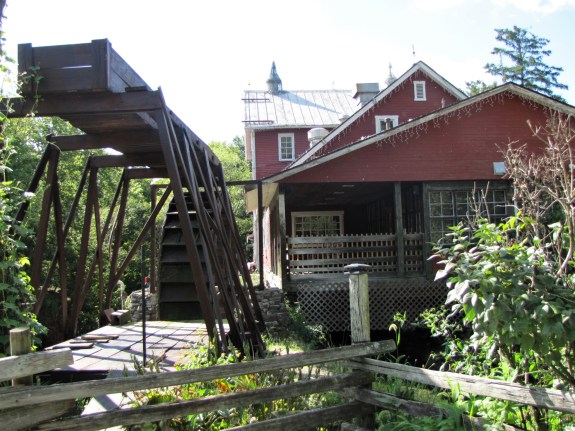
East of Dayton and south of Springfield, Ohio in the tiny town of Clifton you will find the Clifton Mill. This is one of, if not the oldest continuously operating grist mills left in the country. First built in 1802 by Revolutionary War veteran Owen Davis, the mill is still operating, as well as offering a restaurant and store.

The mill in the background

Another feature of this Ohio attraction is the famed Christmas lights display. The day we visited staff were installing what will be a total of four million Christmas lights to the grounds, buildings and walkways.

Workers hanging lights on the rock cliff

Nice log cabin on the grounds

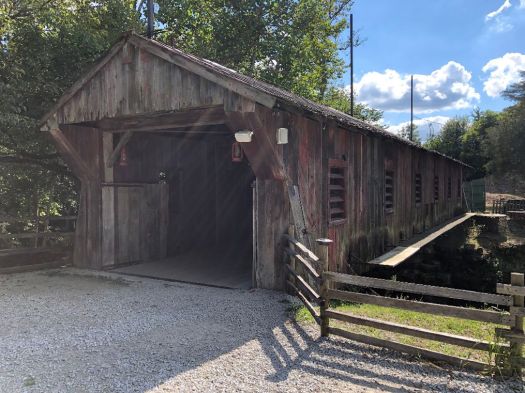
They built their own covered bridge

Honoring the designer of the light show

Historic plaque by the entrance door


We got there just after the mill, restaurant and store closed, but the grounds were still open, so we could see what was going on with the lights installation. Two men were installing lights on the side of the Clifton Gorge rock cliffs. Some lights had already been installed on the roof and sides of the mill itself and other outbuildings.

The Christmas Lights display, photo credit daytonlocal.com

This attraction receives thousands of guests each winter for the music and light show, Santa’s workshop and holiday fun.  The mill is open year round for tours and other events. This is the Clifton Mill website. This award winning attraction would make a nice stop on your Christmas events calendar.

Stevenson Cemetery aka Old Massie Creek Cemetery

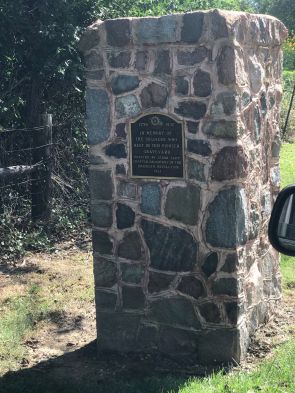
We had just left the Stevenson Road Covered Bridge and were on the way to Charleton Mill Bridge when we saw two stone pillars flanking a gravel road heading into a wooded area. Had to check that out, and when we turned into the road we noticed a prominent sign labeling Stevenson Cemetery. Fortunately the road was open, so we drove in.

One of two stone pillars

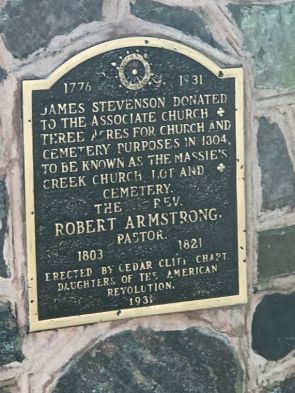
Detail of the second pillar plaque


This cemetery dates back to 1804 when James Stevenson donated 3 acres of ground for a church and cemetery for the existing congregation that had been worshiping in a private home. A Reverend Armstrong had come from Kentucky in 1800 to start a new congregation in Greene County.

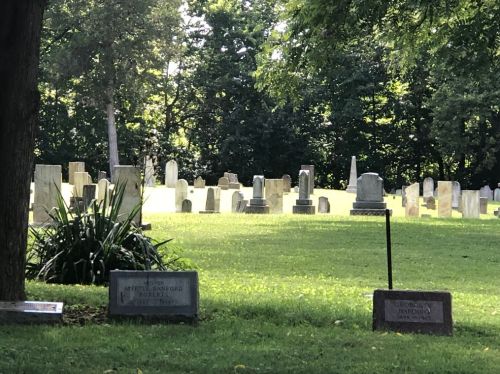
Sunshine lights up a portion of the cemetery

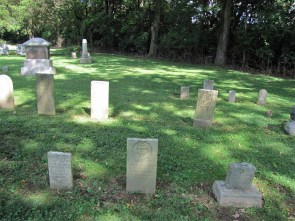
Old stones pictured

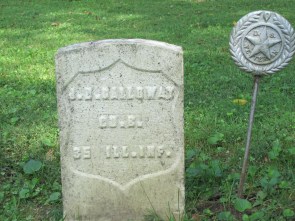
Civil War Veteran


The Stevenson Cemetery is probably the oldest one in Greene County. Rev. Armstrong is buried there. As many as 21 soldiers of the Revolutionary War with at least  seventeen soldiers identified, and recent studies indicate there are more not previously identified. Thirty seven War of 1812 and eighteen Civil War veterans are buried here.  In addition many veterans from 20th century conflicts are at rest in Stevenson Cemetery.

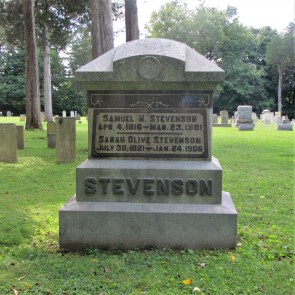
The Stevenson family

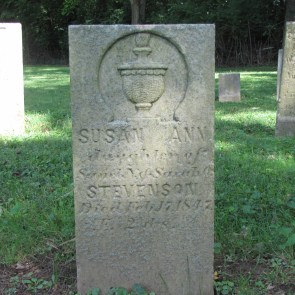
Daughter of the Stevensons, only lived 2 days


The Xenia (Ohio) Daily Gazette ran a detailed article about the cemetery in May 2017. From that article: “The Cedar Cliff Chapter of the Daughters of the American Revolution has made this cemetery a special project for many years. In 1931, an imposing gateway of colored stones was placed at the entry. Inscription on one pillar states that the D. A. R. erected them, the other has the name of James Stevenson, the donor of the site. The cost was $188. In 1975, a large stone which bears a bronze plaque giving the names of seventeen of the Revolutionary War soldiers was dedicated…

The D.A.R. plaque referenced above

This is truly a historic cemetery. The setting is beautiful and it was very enjoyable walking around the grounds and reading the inscriptions on the many stones.

Cemetery Road Bridge has a “new” home

The Cemetery Road Covered Bridge started its existence in 1886 after bridge builder Henry Hebble completed the construction of the original 129 foot long span over the Anderson Fork of Caesar Creek. In the 1970’s a new lake was planned and that lake when filled would have inundated and destroyed this bridge.

The sign on the entrance

Name plate on bridge

Side of bridge showing abutments

The Reader’s Digest version of the story is that The Army Corp of Engineers ended up giving the bridge away to anyone that would move it. The middle 60 foot section was cut away, and the bridge did get moved, very slowly, to its new home in the Glen Helen Nature Preserve. The trip took two days and necessitated moving some traffic signal lights for clearance as the bridge on wheels was moved through towns.

View through the bridge deck

The bridge, once it was placed on its new location spanning the Yellow Springs Creek, did require substantial repairs including some new deck boards, siding and quite a bit of roof repairs. It was opened for pedestrian traffic only, and is off the road a hundred yards or so in the Glen Helen Nature Preserve.

Henry Hebble utilized the Howe through truss design

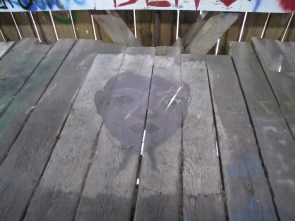
Even the bridge deck got graffitied


Since the opening  in 1975 the bridge has been the victim of serious and widespread vandalism in the form of graffiti over a high percentage of the wood members of the structure. It seems like lots of covered bridges fall victim to this kind of desecration. But, that said, it was great that at least a portion of this fine old bridge was saved from a watery demise.


The historic Grinnell Mill, now a Bed & Breakfast

This simple but stately three story frame building stood out on the winding road as we were traveling through Greene County Ohio. The Grinnell Mill property has a long history, beginning in 1813. The original mill burned in 1818, and the current building was constructed in 1821 on the original limestone foundation. Over the years the mill has seen several uses, including a gristmill, sawmill and limestone processing facility.

The mill today

Information plaque

An original mill machinery piece

The building is now used as a Bed and Breakfast with three rooms available. The beautiful remodeled mill is also available for retreats, meetings, conferences, and parties. It is open to the public for tours most Saturdays and Sundays. Further details, including additional photos and a more complete history is available at the Grinnell Mill Bed and Breakfast website. It was not open when we were there.


A lovely site for a picnic

On our trip the other day to visit family in Ohio we were looking for covered bridges. In Greene County (east of Dayton) we came across this lovely pull off and saw a large information sign. That was our cue to stop.

Nice gazebo, note the covered picnic tables

Large covered seating place

Old cast iron drinking fountain


The signage explained that this was one of two turn offs at trail heads for the Indian Mound Reserve. The park was quite large according to the map and included an Indian Mound, multiple trails of varying lengths, picnic grounds, and a scenic falls and river.

Been around a while…

Ok, it’s not covered, but still a bridge

Enjoying a beautiful day in Ohio

Time constraints and schedule did not allow us to explore the falls or any of the other trails in the lovely county park. The people of Greene County are fortunate to have such a lovely facility to enjoy.