Indiana’s Wilbur Wright Birthplace Museum

The address is Hagerstown, Indiana, but the Wilbur Wright Birthplace Museum is out in the middle of Hoosier farmland. This fascinating museum has two different focuses: Wilbur’s birthplace and living conditions of the mid 1860’s and the success of Wilbur and Orville’s history making powered human flight at Kitty Hawk North Carolina in 1903.
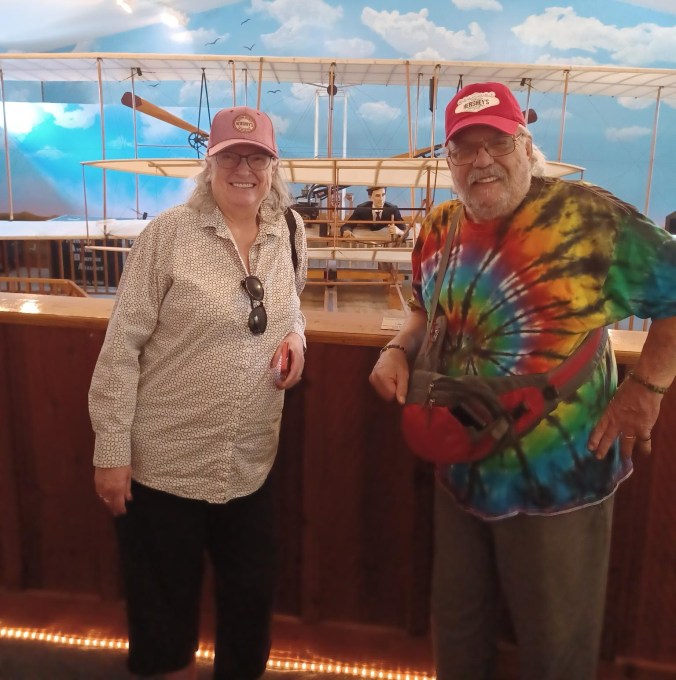
Yes, that is the Wright Flyer in the background

The flight museum and other Wright Brothers artifacts are housed in a separate building next to the family home and the visitor center. The exciting focus of this is the full life size and historically accurate reproduction of the original “Wright Flyer”.
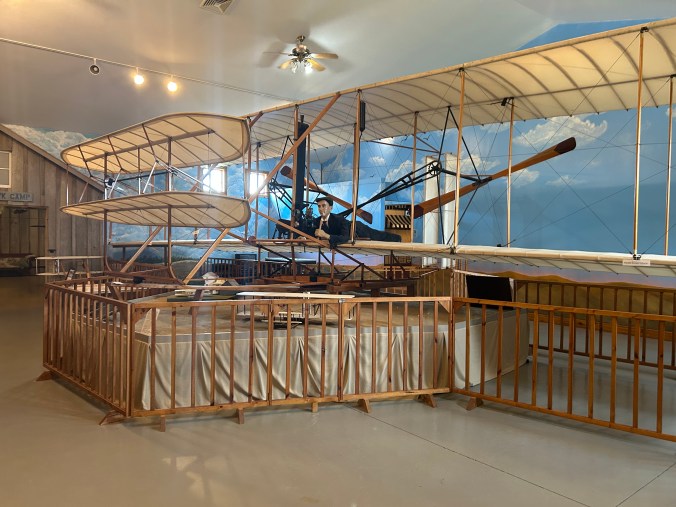
Floor level view of the Wright Flyer
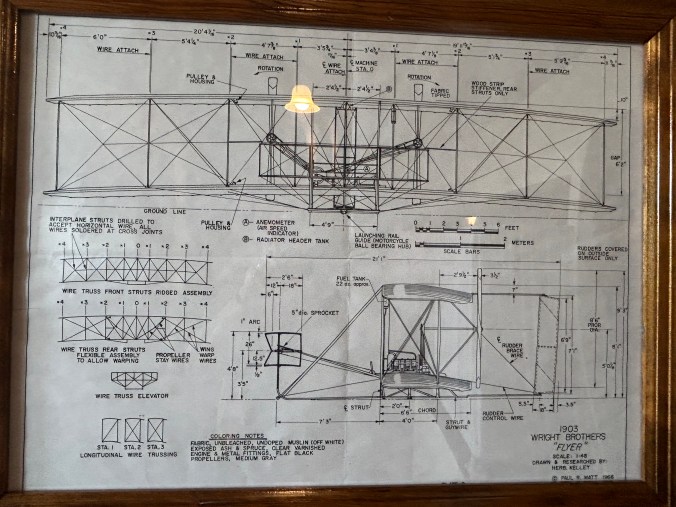
Wright Flyer Specification Drawing

This construction of  the Wright Flyer was completed after referencing the original specifications drawings from the Smithsonian.  The plane and other displays are in a lower level providing a striking view as you stand on the landing at the top of a short flight of stairs.
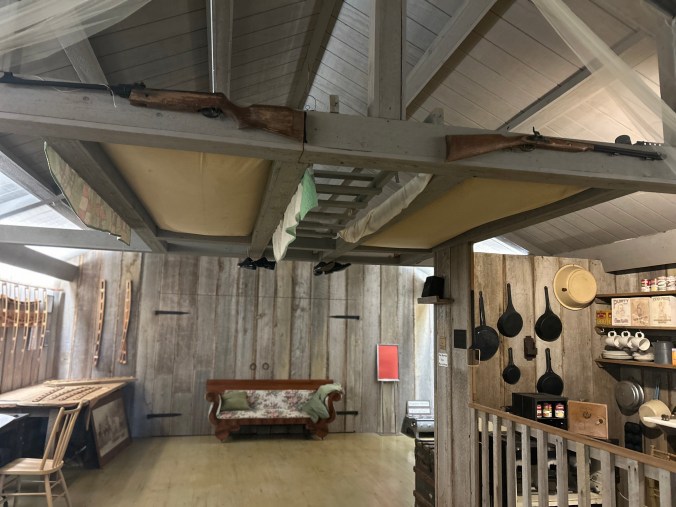
Kitty Hawk Camp work shop and living quarters (note the cots pulled up in the rafters)
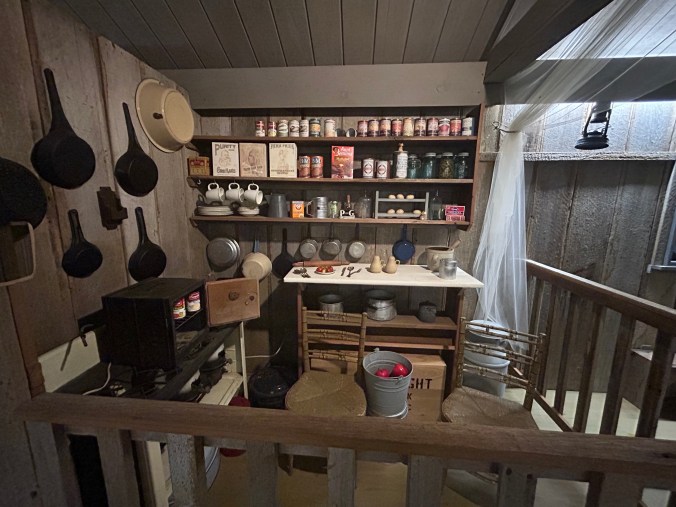
Kitchen in the shop/living quarters

In addition to the plane itself, this lower level display also includes a representation of the Brother’s Kitty Hawk Camp. Here is their work and living quarters while at the site of the flight tests. The building had work shop areas, kitchen facilities and sleeping cots that are pulled up during the day.
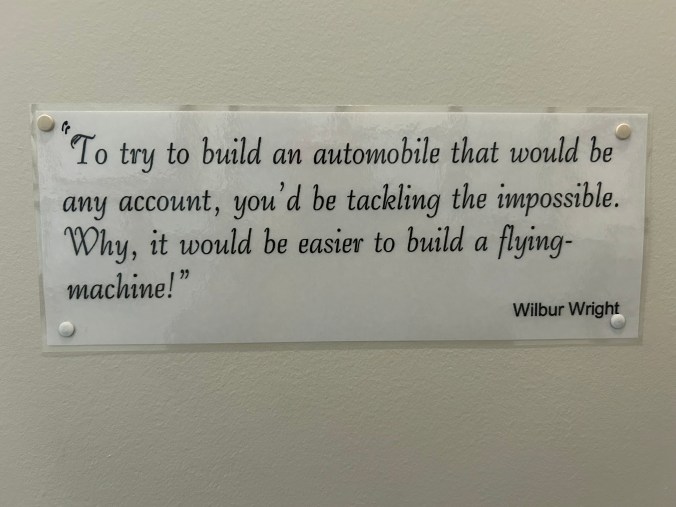
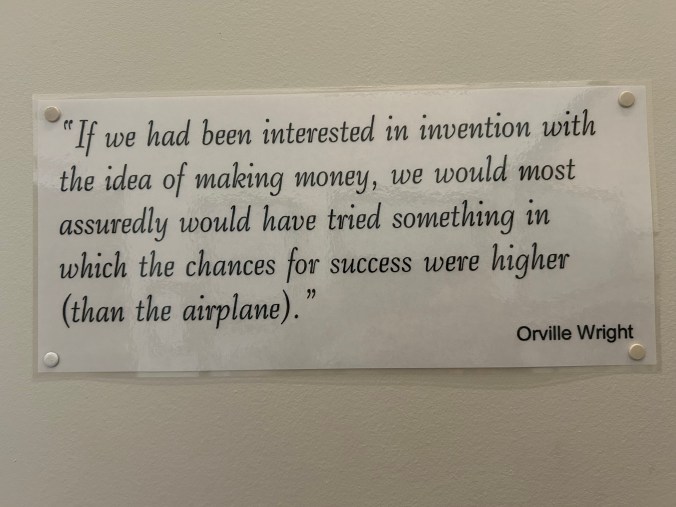
Also included is a display of 1900s storefronts, including the Brothers bicycle shop. We have been to the Kitty Hawk Park and Memorial, where there is a metal reproduction of the Flyer, Orville and Wilbur and other support folks. Seeing the repro plane at this museum was a thrill, as it is of the original materials.
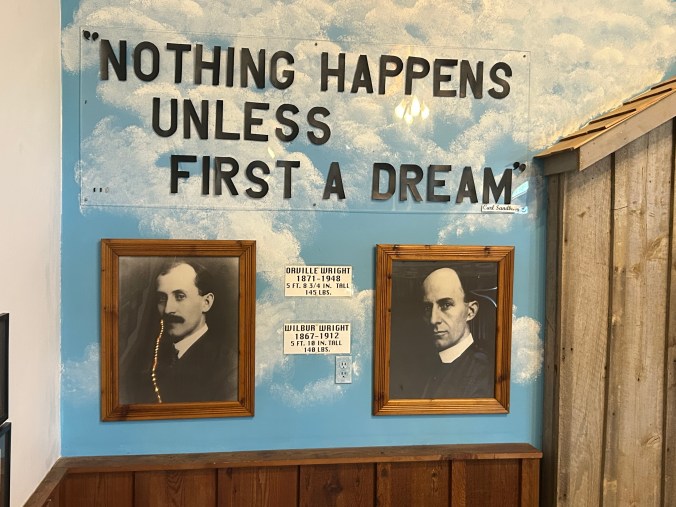
It is remarkable that a mere 66 years after Wilbur and Orville’s first flight man was walking on the moon. Take a trip to the Wilbur Wright  Birthplace Museum. You’ll be amazed at the quality and quantity of the displays.
Morgan County Heroes

There is a remarkable black granite three sided monument dedicated to the men of Morgan County, Indiana who gave their lives in 20th century wars. Starting with the French and Indian Wars up to and including the War on Terrorism, this monument speaks to the ultimate sacrifices made throughout the centuries. The honors are flanked by Old Glory, Indiana’s State Flag, and the black POW*MIA flag.

The Memorial is located in small plaza across street from the courthouse in downtown Martinsville, Indiana. I could not find a date of dedication, , the first reference I found was 2009.

The Willard offers history, food and drink, and a ghost

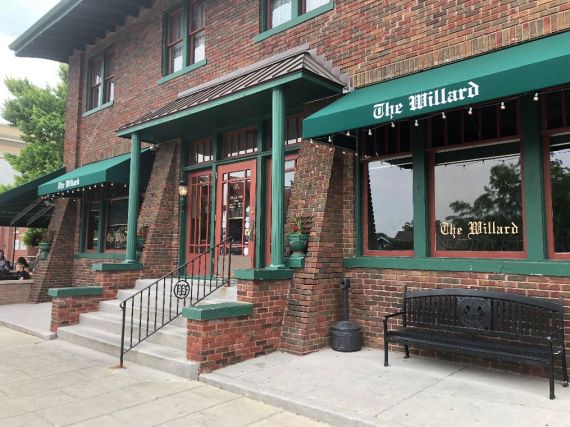
Franklin, Indiana is south of Indianapolis and is the county seat of Johnson County. One of the most noteworthy places in Franklin is The Willard, now a family friendly restaurant housed in an historic brick building a block north of the courthouse. Originally a home, the property has seen several uses and additions over the years. Check The Willard website for a detailed history.

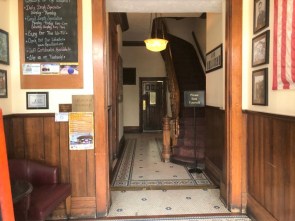
Main entrance of the restaurant

We were in Franklin for a dental appointment and decided to try out the American cuisine at The Willard. There was a decent crowd when we got there, and as we ate there was a constant stream of customers coming in to the facility. We were seated in the main dining room, while lots of folks took advantage of the outdoor seating.

Vegetarian pizza, stuffed w/veggies

Outdoor seating visible left, background


One of Willard favorites is pizza, and Sher did order the small vegetarian pizza. As you see in the photos it was packed with veggies. I had to try the breaded tenderloin and fries. The sandwich breading was different and not as “crunchy” as most recipes. It was tasty however.

Full service bar past the arched brick wall

From the lobby, curved staircase visible

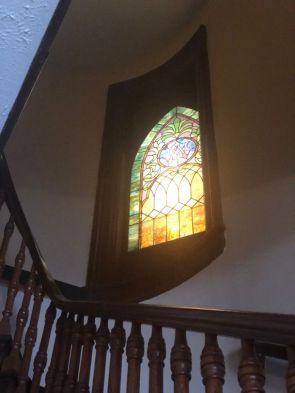
At the top of the main stair

Passageway past the bar and bistro tables


The building has been around since 1860, and quite a few old details make the place very interesting. The main curved staircase has a beautiful stained glass window at the top landing. The marble fireplace and original Willard Hotel sign compliment main dining room where we ate. And even though there is no prominent mention of her, a ghost named Eliza, a former love scorned owner of the property can be seen moving about the building in a rage. Seems she caught her fiancé in a compromising situation with her sister on a table in the kitchen.

When it walks like a duck and quacks like a duck…

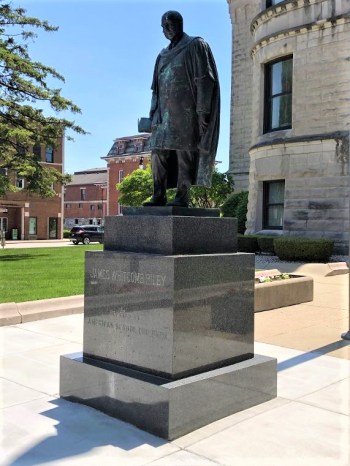
Riley statue at the courthouse

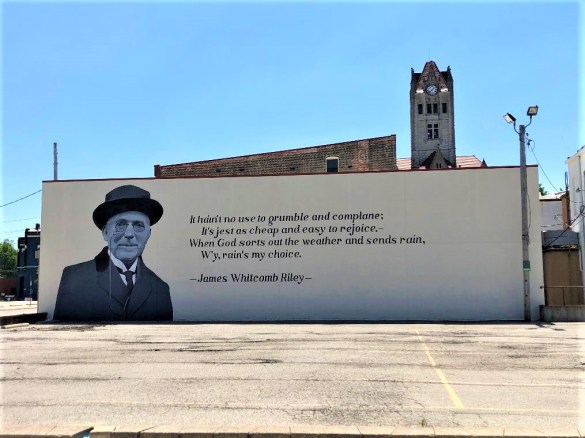
You have no doubt heard the saying “When I see a bird that walks like a duck and swims like a duck and quacks like a duck, I call that bird a duck.” That quote is from James Whitcomb Riley, the Hoosier Poet. He is from Greenfield, Indiana, a small town east of Indianapolis.

Riley was noted for his down home use of dialect that epitomized rural Indiana. He is famous for his remarkable volume of poems. He wrote and published over 1000 verses. His most popular are “Little Orphant Annie”, “The Raggedy Man,” “Our Hired Girl,” “A Barefoot Boy,” “The Bumblebee,” “Granny,” and “When the Frost Is on the Punkin.”

Mural with verses from his “Wet Weather Talk” poem

Chief Tecumseh statue


It is always fun when travelling to come across an interesting attraction. We found this striking likeness of the famous Chief Tecumseh near the Wabash River levee in Vincennes, Indiana. The statue is the creation of Peter “Wolf” Toth, a Hungarian artist, and is the most recent addition (the 74th) to the “The Trail of Whispering Giants” series of statues scattered across the country.

Polygonal barn built in 1910 in central Indiana

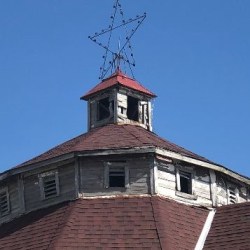
In 1910 a Mr. George Rudicel constructed a rather unusual barn. It has twelve sides, thus the name polygonal. The cone shaped roof is capped with a polygonal cupola and it topped by a square smaller cupola. There is also a large dormer facing the road. This barn was listed on the National Register of Historic Places in 1993. It is on CR 700S in Noble Township, Shelby County.

As seen from County Road 700S.

Note the face of the dormer matches the polygonal angled panels

Christmas Star on top

Round barns were designed for dairy farming, and were not useful for general farming use. By the late 1920’s round barns had fallen out of favor: there was an ag depression after WWI, and easy  to construct prefabricated barn packages were now available. There were 226 round barns in Indiana but 100 of these have vanished from the Hoosier countryside. Many round barns have been restored and are well maintained. The Rudicel barn, aka locally as the Montgomery round barn, is in need of maintenance and a good coat of paint.


Historic Starr Piano and Gennett Recording Studio

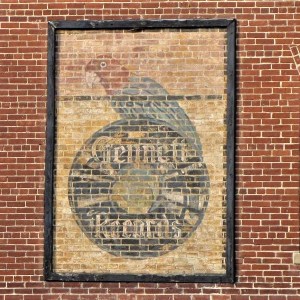
Original Gennett Records logo

Richmond Indiana is a history filled city on the Ohio-Indiana border in the central part of the state. Both I-70 and Historic US 40 run through Richmond. One of the historic sites in Richmond is the remains of the old Starr Piano manufacturing plants and the Gennett Recording studios.

Starr made high end pianos beginning in the 1870’s. The remaining Starr pianos are highly sought after by collectors and musicians alike. The Gennett recording Studios were in business from 1920 to 1934. The records were made in a primitive concrete and brick building with little acoustical features. Legend says that an Oriental rug from the Gennett mansion was used as a wall hanging to deaden the echo sounds during the recording sessions.

Louis Armstrong’s place on the Walk of Fame

Today the Starr Gennett Foundation continues to keep the music history of the 20’s and 30’s alive with many events at the site of the old factory building. One of the many memorials to music is the Walk of Fame. The Starr-Gennett Foundation website details this feature: “In 2007, as part of its ongoing effort to promote and celebrate the music legacy of Starr Piano Company and its subsidiary, Gennett Records, the Foundation inaugurated the Gennett Records Walk of Fame to honor those who recorded for Gennett Records and whose work contributed significantly to American history. Selected by a national panel of music experts, those honored are musicians who created the distinctly American musical genres of jazz, blues, country, gospel, and popular music. However, the Gennett studio recorded the spoken word as well as the music of American Indian and other ethnic groups.”

Many famous musicians of the times got their first recordings made at Gennett. Hoagy Carmichael’s big band recorded there. Louis Armstrong got his start in the Gennett studio. The Great Depression, however, signaled the end of Gennett Records as it did many other record companies of the times.

The old factory now refurbished for concerts

Unique view of the old factory


The remaining portion of the brick factory now has a modern steel structure and metal roof system. This building is used for concerts, meetings and other civic events. It is interesting to think of the tremendous musical history represented at this Indiana site. Hand made pianos and the beginnings of several genres of music began here. When in Richmond be sure to seek out the old Starr Piano building. You just might hear echoes of music from the past.

A Vice President’s family log cabin

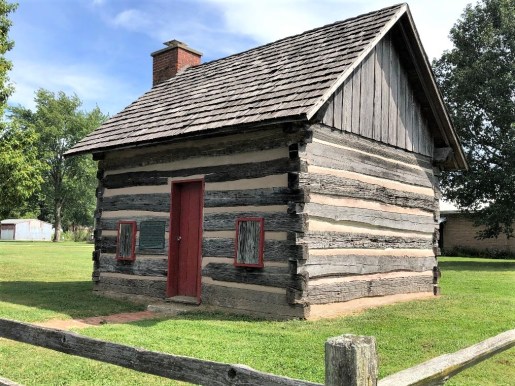
Shelbyville, Indiana is a small town in central Indiana and was home to Thomas A. Hendricks, Vice President to Grover Cleveland. A replica of the Hendricks family log cabin is on display at the Shelby County Fairgrounds.

Reconstructed log cabin made from original logs from the Hendricks family cabin

Thomas A. Hendricks was a politician and lawyer who served as the 16th governor of Indiana from 1873 to 1877 and the 21st vice president of the United States from March until his death in November 1885. Hendricks also served Indiana in the U.S. House of Representatives and the U.S. Senate. He was born in Ohio and his family moved to Shelbyville in 1822.

Information plaque mounted on the cabin

Vintage postcard of the original cabin, courtesy Indiana Historical Society

Thomas A. Hendricks


Hendricks was married to Eliza Morgan, and they had one child, a son who sadly died at age three. Hendricks was very popular with the people, and unfortunately he died on Thanksgiving night during his first year in office as Vice President. Hendricks is buried in Crown Hill Cemetery in Indianapolis.


Finks Road stone arch bridge

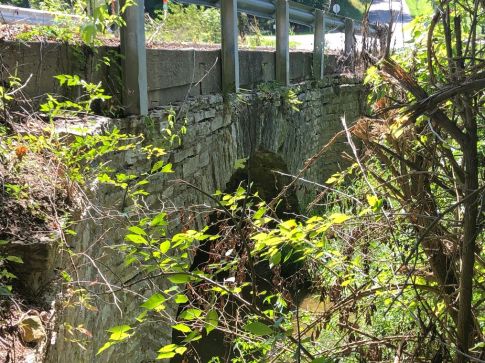
Ripley County, Indiana is allegedly home to 11 stone arch bridges. The Fink Road bridge spans a branch of Laughery Creek, one of the main waterways in the county. This is a smaller single arch bridge that is not really obvious from the road.

Hard to see the stone arch through the vegetation

All you see are guardrails

Courtesy bridgehunter.com by Anthony Dillon

Stonework in B&W

This bridge was probably built around 1900 and refurbished in 1993. This turn of the century time frame saw many stone arch bridges constructed. The Fink Road Bridge, while only 60 feet long, has an unusual full 19 feet wide two lane spacing. It shows the high degree of craftsmanship typical of the times.


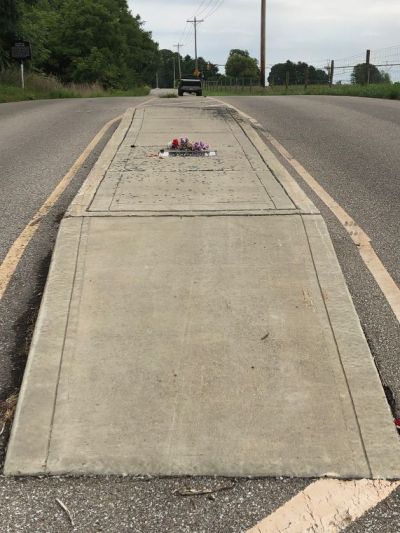
Indiana’s “Grave in the middle of the road”

A history and legend filled roadside oddity can be found on CR 400S outside of Amity, Indiana  which is south of Indianapolis in Johnson County. The story begins in 1808 when 14 year old Nancy Kerlin married William Barnett. The couple had 11 kids.

The only marker on the grave

Fast forward to 1831, the year of Nancy’s passing. She had a favorite spot on a rise overlooking nearby Sugar Creek. This became her final resting place. Stories say that others began to be buried there as well, creating a small country cemetery. A road was discussed through the cemetery, but Nancy’s son refused to move his mother, so the road went around her.

The road still splits around the graves

In the early 1900’s CR 400 was plotted out, again right through Nancy’s grave site. This is when her grandson Daniel Doty showed up with his shotgun refusing to allow any such activity. Don’t mess with Grandma’s grave! Thus the county said fine, they would run the road on either side of the grave.

The old raised grave mound, photo by Rick Hinton

Over the years vehicle traffic, including large farm machinery, took its toll on both the protection barriers and the grave mound itself. Then in 2016 it was decided that the grave should be lowered and covered with a low profile concrete structure. Archaeology students from the University of Indianapolis excavated the grave and were surprised by the discovery of not just Nancy’s body but remains of six others.

New (2016) historical plaque

The bodies of two women, a man and four children were reburied in individual coffins. The low profile concrete structure now protects Nancy and other early Indiana pioneers. Today flowers and hundreds of coins adorn the surface of the grave in the middle of the road.