Fire damaged Jefferson County Indiana courthouse

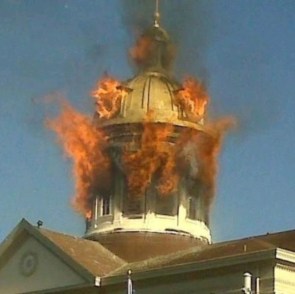
The Jefferson County courthouse in historic Madison, Indiana was built in 1855. In May of 2009 a fire broke out in the clock tower during a construction project. The fire destroyed the  clock tower and most of the third floor.

Photo by Jamey Cobb, May 20, 2009

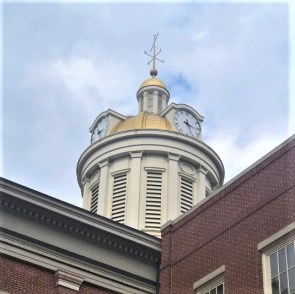
Restored after the fire


The massive 3100 pound bell in the tower fell into the third floor as the fire destroyed the bell supports.  The bell was removed from the wreckage by crane after the fire was put out. The repairs on the courthouse were completed in 2011, including a modern chimes system in place of the bell.

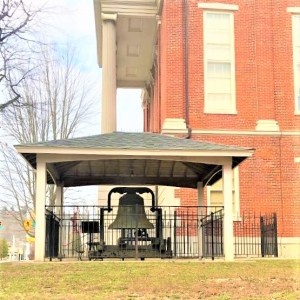
New home for the bell

The bell became a project for a couple of trade classes and a teacher from the Madison Consolidated Schools. This group designed and built an open-air structure on the courthouse grounds to house the bell. The bell has a distinctive strip of figures and the markings “Buckeye Foundry” and “1864 Cincinnati.” One story says that the bell is tuned to the musical note “E”. The project was dedicated in 2014.

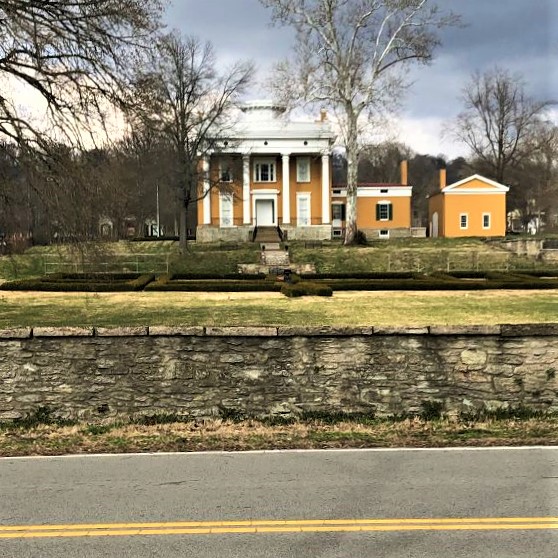
Greek Revival Lanier Mansion finished in 1844

Madison, Indiana is known for it many historic buildings, including some of the best examples of Greek Revival architecture preserved in the country. The Lanier Mansion was the home of James Franklin Doughty Lanier, a banker, railroad developer and Clerk of the Indiana General Assembly. The south face of the home faces the Ohio River, and is considered the “front door” to the mansion.

The Ohio River is behind the camera

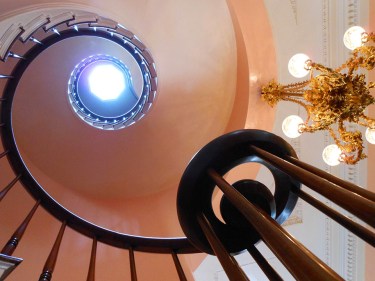
Spiral staircase in the mansion. Photo courtesy Ind. State Museum

From an Indiana State Museum website: Francis Costigan designed the mansion with many Greek Revival features. These include its square plan, the full façade porch on the south elevation, the Corinthian columns on the south portico, the Doric pilasters that appear on several locations on the exterior, the massive exterior entablature and dentilated cornice, the ornamental anthemia, the ornamental pediments over the windows and doors, and the Ionic columns that separate the double parlors on the first floor.

West side of the mansion, Ohio River to the right

The Lanier Mansion was designed by renowned architect Frank Costigan, with the project completed in 1844. It is now part of the Indiana State Museum system as an official Historic Site. It has been referred to as the Crown Jewel of the Madison Historic District, and provides insight into the life and times of the 1840’s Indiana along the Ohio River.


Colonial is good Bread

Old advertisements have always been popular, it seems. Keep your eyes open and you never know when you’ll spot a piece of pure Americana.

The back of the oval sign says “Thank You”

We found a nice example of a vintage (pre 1958) functional advertisement in the form of a working wooden/screen door on the Whistle Stop Cafe in Osgood, Indiana.  The well worn metal cross piece proudly announces that “Colonial is good Bread”. Colonial Bread began in 1928 in Oklahoma City. The name was changed to Rainbo Bread in 1958 when the recipe was changed.

Complete Colonial Bread screen doors are bringing quite a lot on the online sites like ebay, Pinterest and Etsy. Just the signs without doors also command high prices.


Jefferson Proving Grounds use today

In 1940 the US War Department designated 56,000 acres in southern Indiana as a future munitions testing area. In May of 1941 the first round of ammunition was fired from the firing line. Thus began the long history of the Jefferson Proving Grounds (JPG).

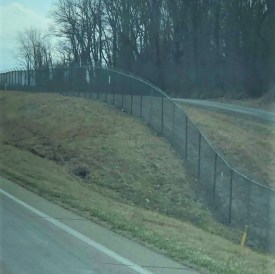
View from US Highway 421

Driving on US Highway 421 (the old Michigan Road) north of Madison, Indiana you’ll see on the west side of the road a long barbed wire topped tall chain link fence set back from the road. It runs for 17 miles. Inside the fence there will be another road, and US Govt. No trespassing signs evenly spaced on the fence. This is the old JPG site.

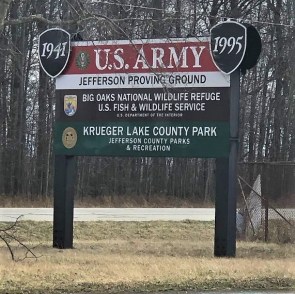
The JPG closed in 1995, but is still utilized by different entities. Part of the acreage is now the Big Oaks National Wildlife Refuge. Over 1000 acres is still used as a munitions training area for Indiana National Guard Aviation wings. A local railroad museum has a collection of rail stock on an old rail line within the site. Some areas are open for camping and seasonal permit hunting.

Signage on US 421

Boarded up original gate house


The following is from a Site Status Summary from this USNRC website: “JPG was established in 1940 for the purpose of production and specification testing of all types of ammunition, projectiles, propellants, cartridge cases, primers, fuses, boosters, bombs, and grenades. From 1941-1995, over 24 million rounds of conventional explosive ammunition were fired.” To this day there are areas within the old firing range that still contain millions of rounds of unexploded ordinance making those areas extremely dangerous.

Indiana’s First Volunteer Fire Department

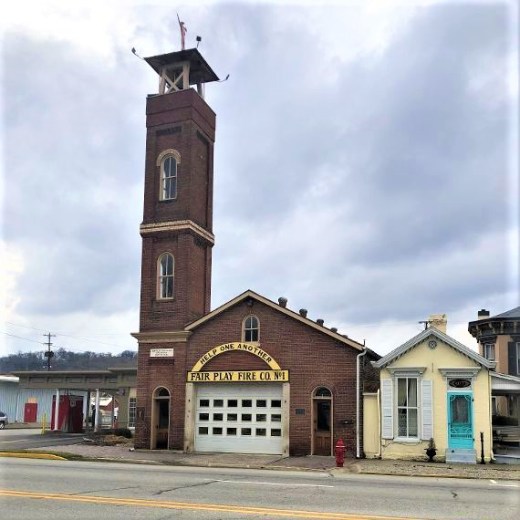
Madison, Indiana was founded in 1809 on the Ohio River between Cincinnati and Louisville. The entire downtown has been designated part of a National Historic District. One part of this town’s fascinating history is the story of the Fair-Play Fire Co. Firehouse.

From a National Park Service article: “The Union Volunteer Fire Company organized in 1830 to help protect Madison’s citizens from fire, a very serious threat to 19th century communities. Several years later, the City of Madison voted to fund a paid municipal fire department, but within ten months the service was cancelled and the responsibility again rested on volunteer forces. In 1841, about 100 men, who originally were members of the Union Volunteer Fire Company, organized the Fair Play Fire Company No. 1, which is now the oldest volunteer company in Indiana.”


This is one of several active Volunteer Fire Departments protecting Madison, Indiana. Fair-Play Fire Company first saw action as a bucket brigade. They bought a hand drawn piece of equipment in 1851, and it is still owned by the department.  The tall tower on the firehouse was built to hang hoses to dry. Go to the NPS article, link above, for more details about the history of this fire company.

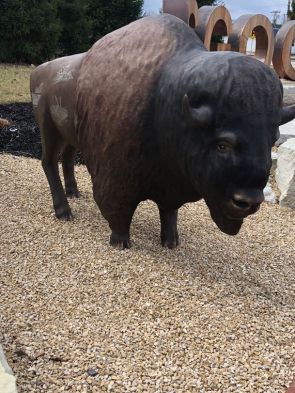
Another Indiana Bison-Tennial statue

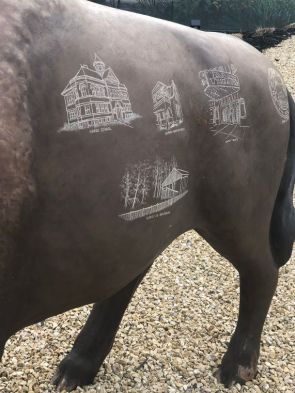
Indiana’s Bicentennial was celebrated in 2016. As part of the celebration, fiberglass statues of bison were made available to each of Indiana’s counties. Local artists decorated them with themes and scenes of the local area and features. We have seen several of these during our travels around the state.


We discovered this one in Osgood, Indiana, in south central Indiana. Named Ozzy, this bison was decorated/painted by Nancie Scott Davis. The bison Ozzy stands proudly on a gravel path with a beautiful mural on the wall of the adjacent building.

Treat yourself to the best

This barn’s Mail Pouch paint job is fading fast.

A Mail Pouch Barn is a barn with one or more sides painted with the slogan:

CHEW

MAIL POUCH

TOBACCO

TREAT YOURSELF TO THE BEST

Starting in 1890 the Bloch Brothers Tobacco Company of Wheeling West Virginia began offering farmers a bit of cash and a years supply of their Mail Pouch chewing tobacco in exchange for painting at least one side of their barn with their slogan. Even without the cash or product, a free coat of paint helps keep your barn siding protected, and this deal would look inviting.

The advertising campaign continued until the mid 1990’s. Over 20,000 barns in 22 Midwest and Southeastern states were painted during that 100+ year run. If you have any of these in your area or when you spot one while traveling, take a look. They won’t be around forever, and are an interesting slice of American rural history.


Feline confrontation

Our neighbor has a gray cat who spends as much time in our yard as her yard. It is rather territorial, and has little tolerance for other cats intruding in “its” domain.

Notice the hair raised on gray’s back

The other day a black cat came into the yard, leading to what looked like a possible confrontation in the making. Gray cat stalked the black cat over the approximate 50 feet distance between them in full predator mode: crouching and moving forward in slow hunting style.

Soon after black spotted gray ready to pounce, it moved on

Fortunately the black cat moved on when it saw gray cat approaching. The episode ended without it coming to blows. That is not always the case, as we have seen and heard some pretty loud cat fights in the past.