Chief Tecumseh statue


It is always fun when travelling to come across an interesting attraction. We found this striking likeness of the famous Chief Tecumseh near the Wabash River levee in Vincennes, Indiana. The statue is the creation of Peter “Wolf” Toth, a Hungarian artist, and is the most recent addition (the 74th) to the “The Trail of Whispering Giants” series of statues scattered across the country.

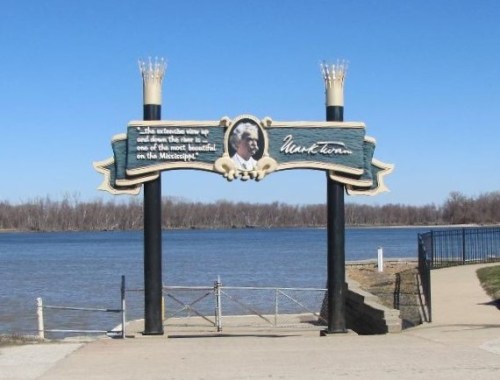
Hannibal, Missouri, home of Mark Twain/Samuel Clemens

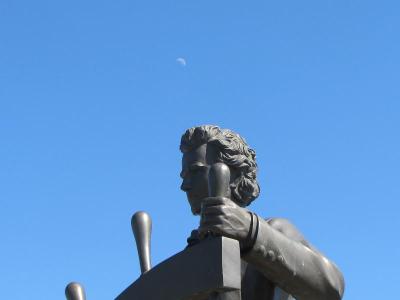
Statue on the riverfront of a young Sam Clemens as a riverboat captain

During one of our trips from Indiana to the west coast we stopped in Hannibal, Missouri. Famous for being the home of Samuel Clemens, also known as the author Mark Twain, Hannibal is a really interesting and very historic small town on the banks of the mighty Mississippi River.

Mark Twain is of course everywhere, both in name and in picture.  One local restaurant proudly proclaims that it has Mark Twain fried chicken on the menu. Hmmm I didn’t know that Twain had scooped the colonel.

” the extensive view up and down the river is … one of the most beautiful on the Mississippi.”

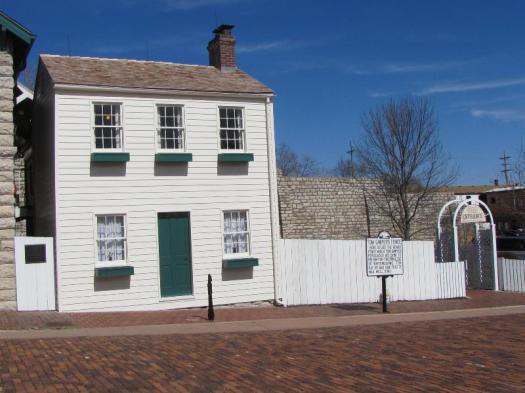
The original homes of Clemen’s family and those of other real life people who became the fictional characters in the Tom Sawyer and Huck Finn books are open for tours.

Clemens’s (Tom Sawyer’s) home and that famous white-washed fence

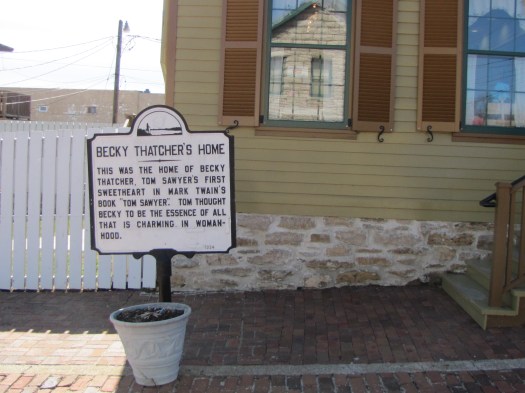
Tom Sawyer’s first love, Becky Thatcher, who existed in real life when Clemens was but a young lad

In addition to all the Mark Twain attractions, this river town is filled with some magnificent old Victorian homes, some restored, some in the midst of restoration and some in need of immediate attention.

Lincoln’s Tomb in Oak Ridge Cemetery, Springfield, Illinois

Lincoln’s tomb is in the huge Oak Ridge Cemetery in Springfield, Illinois. This is a State historic site, not a National property. The impressive structure is on top of a hill in roughly the center of the cemetery grounds.

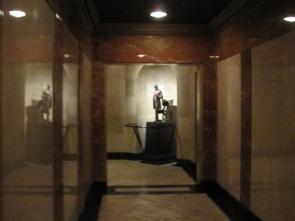
You enter the tomb into a small round room. There were two volunteers in the room answering questions. The tomb itself is reached via a marble lined hall way with different bronze statues of Lincoln along the way.

You enter the tomb via the small door seen on the lower right of the structure.

The entry room has a small version of the Lincoln Memorial statue in Washington DC

Not a clear photo, but this shows the hall leading to the tomb.

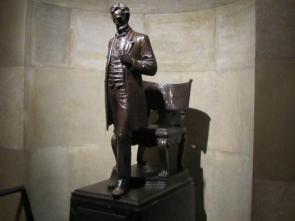
One of several depictions of Lincoln in various places in the walkway.


Once you have seen the marker for Lincoln and the internment wall behind which are Lincoln’s wife and children you continue out another hallway. This was a very somber and, for me, emotional time. All of Lincoln’s history, the tragedy of the Civil War and his untimely death seemed to rush to the forefront of my thinking.

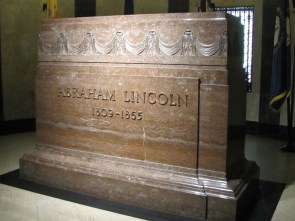
Lincoln’s casket is actually behind and 10 feet below this massive marker. It is encased in steel reinforced concrete.

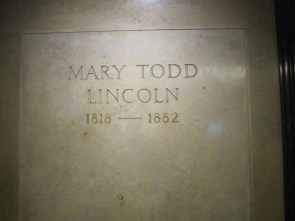
Lincoln’s children are also here next to Mrs. Lincoln

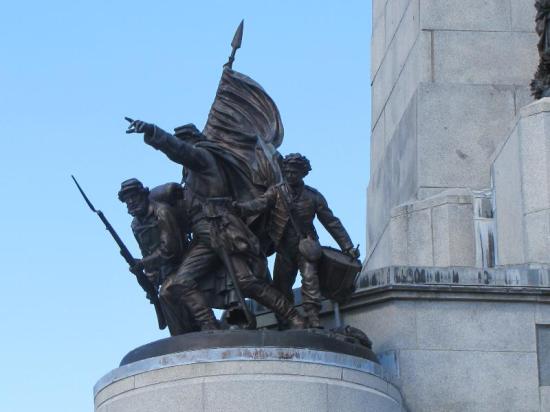
One of four statues representing the Infantry, Cavalry, Artillery and Navy that fought in the Civil War, and that Lincoln commanded.

The photos do not really do justice to the magnificence of the exterior and the interior of tomb. This is a true must visit site if you are near Springfield.

National Road “modern improvements” in Ohio in 1916

Photo on the Eagles Nest Interpretive Marker showing travel on the National Highway

The Eagle’s Nest monument on the National Road (US 40) was erected around 1916 after a 29 mile stretch of the then unimproved and often nearly impassable road was replaced with concrete. The stretch of highway ran from Zanesville to Hebron and is east of Columbus. It is at the highest elevation of the road in Ohio.

Eagle’s Nest Monument, Interpretive Sign on right

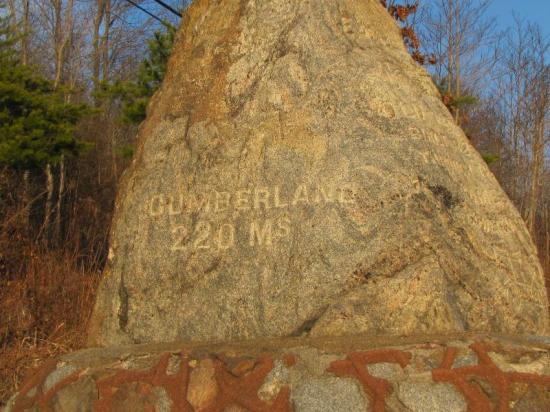
The monument is a large granite rock with some interesting inscriptions carved into the surface. The photos show some of the details of the inscriptions, including a Conestoga wagon and mileage to Cumberland, Maryland, the starting point of the road. The completion of the experimental concrete stretch of the road led to a large parade when it opened.

Conestoga wagon etched into the granite

Ironically the day we stopped here the conditions were very muddy and wet. What a reminder of some of the early muddy conditions that the early travelers faced as they traveled across country.

You are 220 miles from the start of the National Road in Cumberland, MD.

A large interpretive sign was installed next to the monument in 2000. A well attended ceremony was held in a church near the site. You can visit the record of that ceremony here. This page displays the entire interpretive sign and other details.


“The Ruins” from a New York City building to Indianapolis

Holliday Park is a city park located in the near north-side of Indianapolis in one of the more higher end neighborhoods. The park is a beautiful setting with hundreds of trees, flowers and wildlife. In addition to the natural features of this inner city recreation site you will find an eclectic display affectionately tagged “The Ruins”.

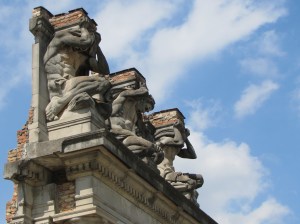
The centerpiece of this ‘artwork’ is a structure that is the home of three massive sculptures atop a brick and mortar conglomeration of various architectural details. The three statues are called “The Races of Man”, are carved from (fittingly) Indiana limestone and represent Caucasian, Asian and African ethnic groups. Karl Bitter was the sculptor.
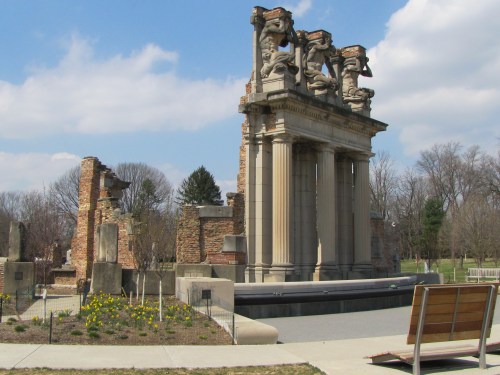
View of the whole display

Entrance of structure in 1898 showing the 3 statutes and columns

The original home of the three statues was the St. Paul building in downtown New York. The building was the work of famed architect George B. Post (1837-1913) who was the architect of many of the most important landmarks in New York City, including the New York Stock Exchange.  At the time of the completion of the St. Paul building in 1898 it was 315 feet tall and the tallest in New York City.

The original St. Paul building was torn down in 1958 to make way for a new skyscraper. The building’s owner, Western Electric, held a contest among US cities for the rights to have the sculptures. Long story short, Indianapolis won the competition. It took two decades and tons of money to bring “The Ruins” to a condition suitable for public use. For a while Western Electric considered retrieving the statues. Then Mayor of Indianapolis Richard Lugar pushed the completion of the project, which included the three  original entrance columns, in the mid 1970’s.

Detail of one of the statues

When we visited the park we frankly were amazed. What a beautiful setting! The Ruins were fascinating to see. It was fun walking the grounds and touring the extensive nature center as well. Note that there was adequate parking for RV’s and buses, making access very easy.


WWII Gun Emplacements still overlook Puget Sound

The Army had plans in place to upgrade the Puget Sound harbor defenses when the Japanese attacked Pearl Harbor on December 7, 1941. The attack prompted a feverish scramble to implement those WWII plans.
Fort Ebey was constructed from 1942 to 1944. It overlooked the Straight of Juan de Fuca and the open Pacific Ocean. It was the first of a series of defensive positions that also included forts Casey, Worden and Flagler, also on Puget Sound.

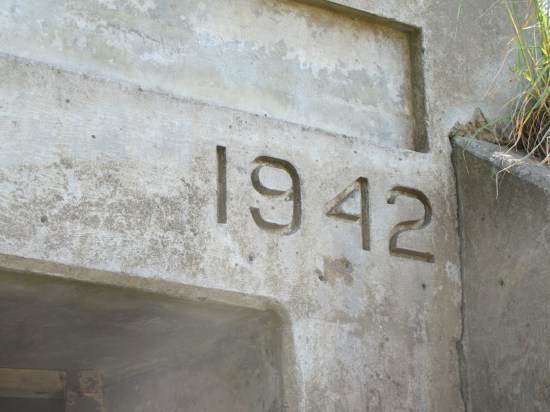
Date on the main bunker entrance

Historic Fort Ebey State Park on Widbey Island is home to the remains of Battery 248 of the Coast Artillery Regiment of the Washington National Guard. The guns are gone, having been melted down for scrap at the end of the war. What remains, however, are the two circular gun emplacements and the supporting large concrete bunker where ammunition, powder bags, and other equipment was stored. 

Forward observation post facing Puget Sound

In front of the bunker towards the edge of the steep cliff you will see the forward observation bunker. A narrow slit provided a panoramic view of the waters. No ships could enter the Sound without being spotted.

One of the remaining two gun turret foundations

The main armament of the fort was provided by two guns on swivel turrets. These guns fired a 108 pound shell with a range of 15 miles. The 26 man gun crews could fire a round every 12 seconds.
Take a step back in time with a visit to Fort Ebey State Park. Walk where the artillerymen walked. Explore the bunker. Stand near the forward observation position and imagine being on the lookout for enemy ships trying to invade the Puget Sound. More information about Fort Ebey State Park may be found at the park website.

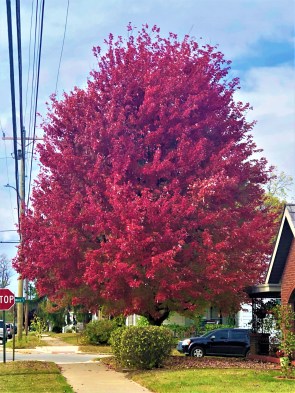
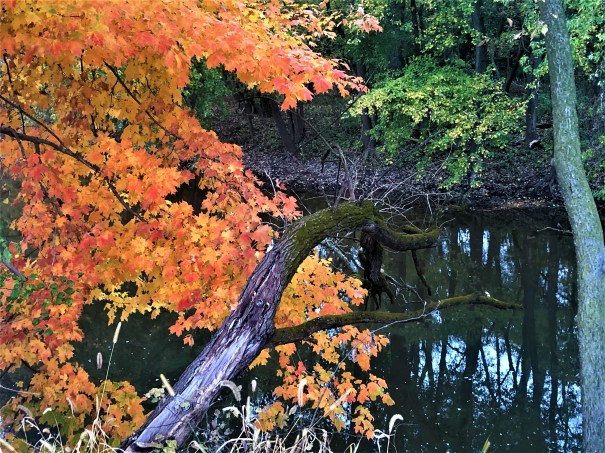
Indiana fall colors

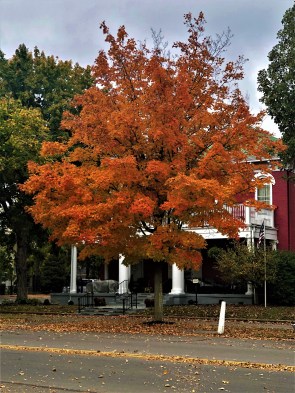
Indiana has beautiful displays of changing fall colors. 


The fully changed trees are just stunning to see.


Fall is a most beautiful time of year in Indiana. My grandfather loved to travel and took trips several times a year. Granddaddy would never travel in October, thus would never miss the seasonal colors he loved so much.

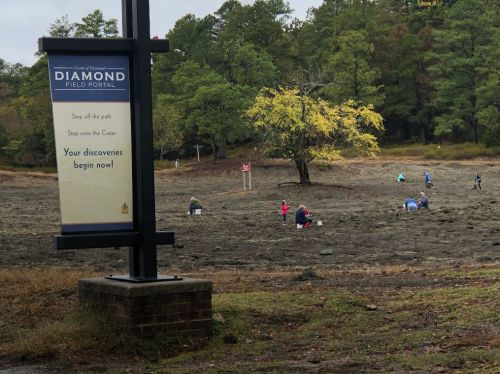
Crater of Diamonds State Park in Arkansas, keep what you find

Sher and I had discussed going to the diamond mine in Arkansas for some time. We’d read about this place, and it sure sounded like a fun and adventurous outing. The site is a 95 million year old inactive volcano crater. The first diamonds were discovered in 1906. Various mining enterprises have been attempted over the years. In 1972 the Craters of Diamonds State Park was established.

A small portion of the 37 acres for diamond hunting

We were able to plan a stop at the State Park on one of our trips to Austin to see family. We were of course exicited at the prospect of finding a diamond, or at least some of the other intersting and colorful stones in the park. This park is the only diamond hunting areas open to the public in the world. You keep what you find.

Getting ready to head for the diamond field.

The ground was muddy and slick so we had to watch our footing. The 37 acres open for diamond hunting is plowed about once every month, thus opening up more chances for finds. A fairly large amount of 1 carat plus sized diamonds have been found at the park.

Ready to dig! There is a sign picturing a huge diamond found.

Shed for washing dirt for diamonds and gemstones


We did not find any diamonds, but we did find some nice rocks for our landscaping at home. It was a fun way to spend a couple of hours. We enjoyed seeing some of the gear that others had. Pulled wagons filled with shovels, rakes, buckets and even sieves and screens. These are serious diamond hunters!

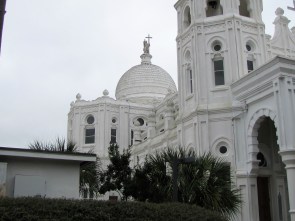
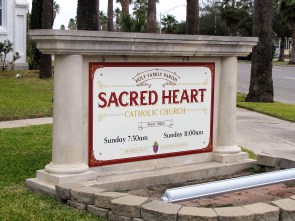
Sacred Heart Catholic Church of Galveston

In 1892 the first Sacred Heart Catholic Church was built in Galveston, Texas. Unfortunately it was completely destroyed in the horrific hurricane of 1900. A replacement church was constructed during 1903-1904. Like the Bishop’s Palace across the street, famed Galveston architect Nicholas J. Clayton designed this, the second church on the site.

Note the dome, center

The beautiful church marquee


Following is a quote from a 1981 Texas Historical Commission Historical Marker placed at the church: “The present building, the second for the parish, was constructed in 1903-04 during the pastorate of the Rev. D. J. Murphy. A prominent landmark in the city, it features ornate octagonal towers, flying buttresses, elaborate ornamentation, and a variety of arches. The design reflects influences of the Moorish, Byzantine, Gothic and Romanesque styles. The building’s original dome, damaged in a 1915 hurricane, was redesigned by Nicholas Clayton.”

October is pumpkin picking time

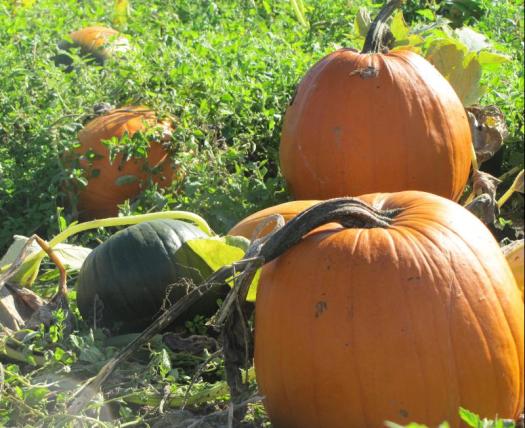
A tiny fraction of the pumpkin picking area available.

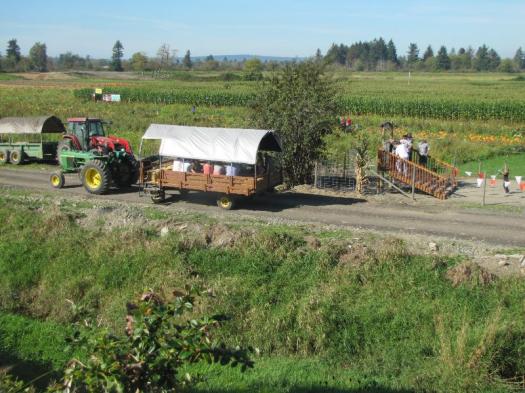
Hay ride to the pumpkin patch! (That is the kids zip line on the right.)

What a variety!

A U-Pick-It pumpkin farm in the Snohomish Valley north of Seattle. It provides a fun outdoor activity for young and old alike. This area has several farms offering pumpkin patches, corn mazes and Halloween spooky stuff too.