The Bartholomew County Memorial for Veterans

A most remarkable scene will greet you when you observe the south lawn of the Bartholomew County Courthouse in Columbus, Indiana. From the sidewalk you will see a series of tall stone columns. This is the Bartholomew County Memorial for Veterans. There are 25 columns, each 40 feet tall and positioned in a 5X5 foot grid. Recessed lights are positioned between the columns. Each column is rock cut Indiana limestone set on black granite.

The memorial is designed to be a tribute to those living and dead who answered our nation’s call during the twentieth century conflicts. It was dedicated in 1997. There are 156 names of local veterans engraved on the smooth sides of the columns. In addition to the names, there are inscriptions of letters sent home from veterans from their places overseas during the wars. Many of these were the last letters written home. Below the letters the date and places where they lost their lives are also recorded.
This memorial is really eye catching and remarkable to see. Allow for enough time to read the names engraved on the columns. Allow even more time to read the letters. So many of them are the last letters that the servicemen wrote home before they perished in combat. This is a most emotional memorial that brings home the gratitude you must express for our servicemen and women. Prepare to shed some tears.

The historic Bartholomew County Courthouse in Columbus, Indiana

Bartholomew County, Indiana is south of Indianapolis and is known for its architecture, public art and well known and long running industry. Columbus is the county seat, and thus is home to the County Courthouse. This striking edifice was designed by noted Indiana architect Isaac Hodgson. The building was constructed from 1871–1874 at the cost of (then)$250,000. The courthouse was put on the National Register of Historic Places in 1979.

A panorama view

The following Court House description is from Wikipedia: It is a three-story, Second Empire style red-brick building trimmed in limestone. It features a mansard roof, corner pavilions, Corinthian-order portico, and a six-level clock tower. The clock tower is 154 feet tall. A six-inch thick, 10-ten clock bell was installed in 1875. The clock’s weighted mechanism were replaced with an electric motor in 1940 and a 900-pound weight fell.

We visited on a Saturday, so the building was closed. It would be interesting to see inside this county government building.

Springer Cemetery , Elizabethtown, Indiana

Elizabethtown is a tiny berg with a little over 500 residents near Columbus, Indiana. The Springer Cemetery is about a mile and a half from town. The first burial was of George Springer in 1857.

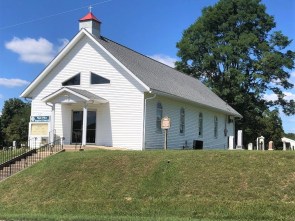
The pretty chapel in the cemetery

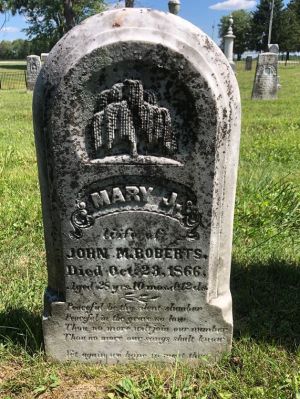
Civil War veteran and wife

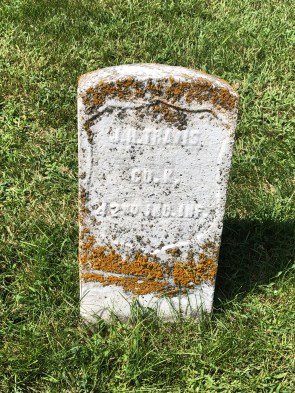
An Indiana Civil War veteran with military headstone


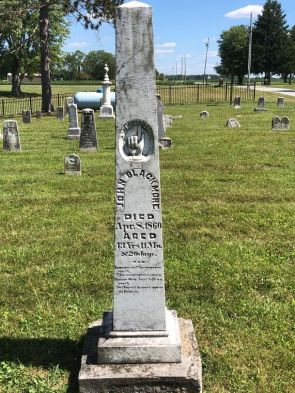
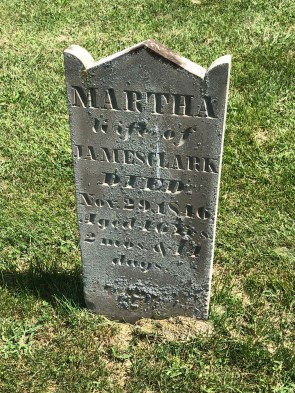
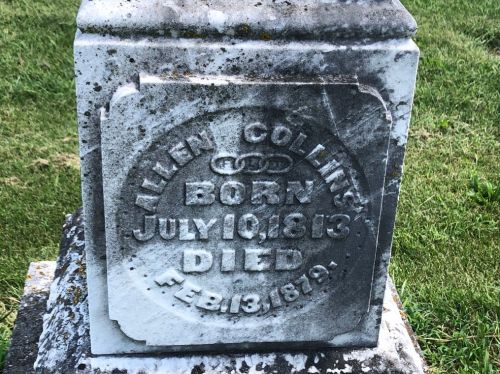
Springer Cemetery is filled with Civil War vets among the other civilians resting here in this small country cemetery. The chapel lends a feeling of spiritual calm and memory of those resting here.


Gonna have some “maters” in a bit

We have Red Beefeater and Big Boy tomato plants this year

Red Beefeater

Big Boy

Big Boy twins

Just in the past couple of days our tomato plants have really started putting on fruit. I guess that patience has paid off. It looks like we might have a good crop this season after all, as we had good plant growth but no tomatoes to speak of.  Now if those rascally squirrels will only behave…


The Canada goose is common but stately

They hold their head high, walk slowly, and you can see them just about everywhere. These large birds flock in very high numbers, and are known to make large poopy messes on the paved areas they walk across.

Next to the drainage pond near a large grocery store

He spotted me!

This goose and his buddies were lounging next to the pond. When he got up and walked away he turned, stretched his neck and gave me the stink eye for bothering their rest. Glad he didn’t rush me! They can be mean…


The Forsythe Covered Bridge, aka Forsythe Mill Bridge

We found yet another one of those magnificent 1880’s covered bridges, this one again in Rush County, Indiana. The Forsythe Bridge, also known as the Forsythe Mill Bridge spans Big Flatrock River in the southeast corner of the county. This bridge was built by E. L. Kennedy bridge building company. Emmet Kennedy was one of the sons of Archibald M Kennedy, premier bridge builder from Rush County.

The Forsythe Bridge over Big Flatrock River

A long view of the Burr- Arch truss system

A look outside over the river below


We spotted Maj shooting the video of the river and the bridge

This bridge is 196 feet long, as noted designed with the typical Burr-Arch truss system. This bridge was one of six bridges that all were registered on the US National Registry of Historic Places. All six of the bridges were constructed by the Kennedy family, and were registered at the same time in 1983.


The Homer Covered Bridge saga

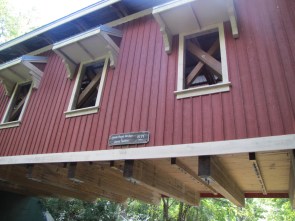
Yes, this marvelous covered bridge has what can be described as a life history of epic proportions. Here’s the Reader’s Digest version: Built in 1881 over Mud Creek in Rush County Indiana. Floated away during the flood of 1892, ended up downstream in a field. Farm owner turned the bridge into a barn. Barn started falling apart over the years. Local Pioneer Engineers (antique farm machinery club) dismantle bridge/barn and rebuild it on their grounds as a pedestrian bridge in 2009. Bridge saved!

Used as a barn in 2008, photo courtesy Bridgehunter.com

Rebuilt on new location at Caldwell Pioneer Acres


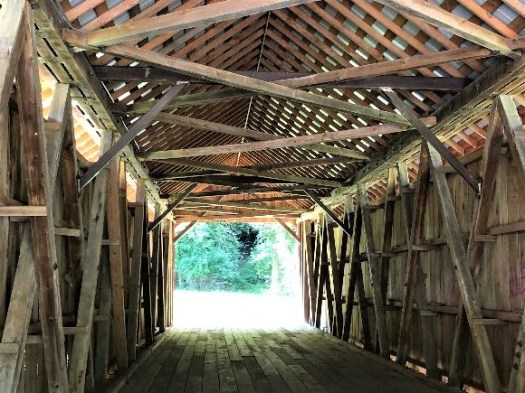
This bridge, originally built by A.M. Kennedy and Sons is constructed with Multiple King trusses. These are not the more common Burr Arch trusses used by Kennedy. Surprisingly, the lumber in the trusses was still in excellent condition after time and floods. Only the foundation lumber needed total replacement, along with siding and roofing.

Good view of the Multiple King trusses. Note the diagonals notched into verticals

Reproduced name and date on the reconstructed bridge

” For Machinists, Steam and Pump Fitters Work. Go To W.H. Moffett & Co.”

The advertisement sign above had made it through the years and was noticed when the bridge timbers were salvaged at the farm where the 1892 flood had placed the bridge. It survived all those decades. Now the sign, as well as the bridge itself, continue to provide a nostalgic look back into Indiana history.


The historic 1850’s Big Flatrock Christian Church

The website of the Big Flatrock Christian Church gives an informative insight into the history of this still vibrant rural Rush County Indiana church. One preacher, Knowles Shaw, gave his first sermon as a charter member of this congregation. Shaw was also an author, singer and evangelist. He was a very prolific writer of hymns, penning over 110, including the beloved and well known “Bringing in the Sheaves”.

Plaque honoring Knowles Shaw

One of many stained glass windows

The original church edifice was built in 1852, with a major renovation occurring in 1921. The church is “just over the hill” from a beautiful covered bridge constructed in  1888 by the E.L. Kennedy Company. Lots of history in this corner of Rush County , Indiana in the heart of Hoosier farmland.

Another fledgling robin

Mom with a morsel for junior

Close up of the youngster

The Free Dictionary lists the first definition of fledgling as “A young bird that has left the nest and has usually acquired flight feathers, but is often not yet able to fly.” That’s a pretty accurate description of this young robin. It would run across the yard, chirping all the way with a feeble attempt to flap its wings. Hopefully this little one will survive until it can fly. This fledgling may be the same robin from this post.