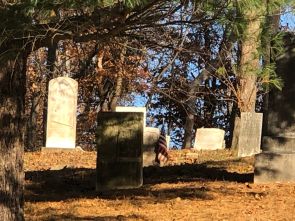
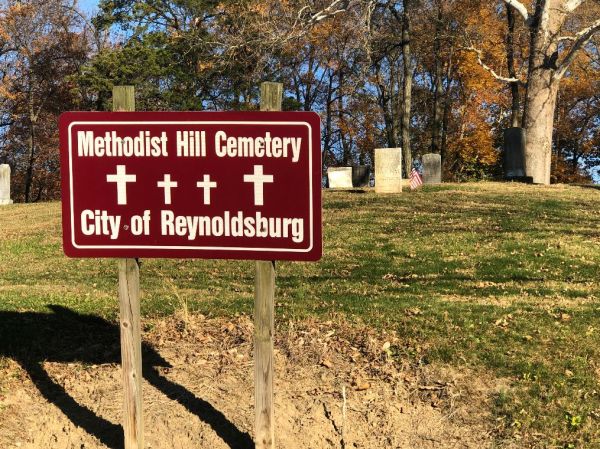
Methodist Hill Cemetery in Reynoldsburg, Ohio

This cemetery caught our eye as we were driving around Reynoldsburg, Ohio. We were actually going to the VFW to see the tank and this cemetery was adjacent to that.

One of several names of this historic cemetery


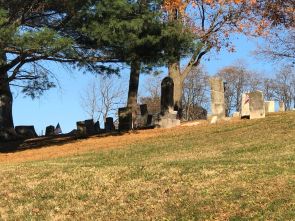
Also known as Hill Road Methodist Cemetery, Historic Hill Cemetery, and Reynoldsburg Cemetery, it is located in Franklin County, Ohio. The first burial is recorded to have taken place in 1816. According to the Franklin County Chapter of The Ohio Genealogical Society the last burial recorded was in 1908.

National Road US 40 vintage highway mileage signs

In 1806 an Act of Congress which authorized the construction of the National Road also stipulated that mile markers be installed at regular intervals. These reference sign posts helped travelers know that they were following the correct route. They also indicated the distances traveled and the distance to the next destination.

In Ohio there are several of these ” Mile Markers” information signs, explaining the mile posts that followed the National road from the start in Cumberland, Maryland and ending in East St. Louis, Illinois.

This is in front of the City Admin Building in Reynoldsburg, Ohio.

The following text is from the sign, above:   “Whether the letters or numerals were painted or carved, markers followed a standard pattern of showing at the top the number of miles from the beginning of the Road in Cumberland, Maryland. On the next row, they wrote the name of the next big town and number of miles to it. On the left side of the marker, it would show eastbound travelers the next big town to the east. On the right side, it would show westbound travelers the next big town to the west and the number of miles to go. On the lowest level, there was usually an initial and a small number. This indicated the nearest town. It didn’t need to be spelled out, because most people from the vicinity would recognize it from the initial.”

An original we saw 1/4 mile outside of Brownville, Ohio
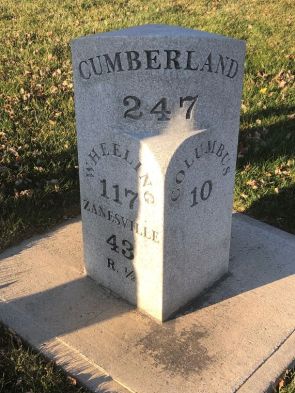
Made of granite, this is a reproduction set next to the sign pictured above. It is a copy of the original Reynoldsburg mile post


When you travel on US 40, keep your eyes peeled for these old mile posts and for historic information signs. Each state has its own info sign design, the same as each state had its own mile post material.
 

Father of the modern tomato Alexander Livingston

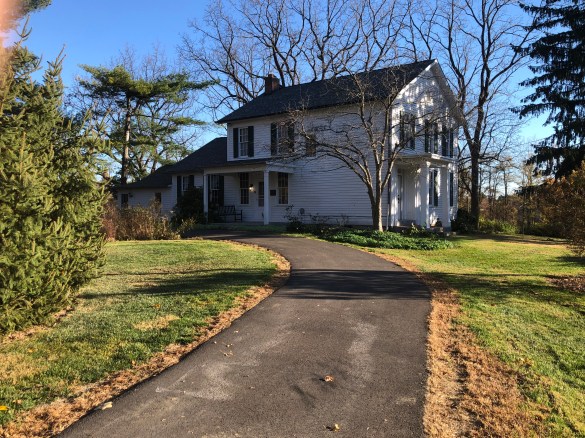
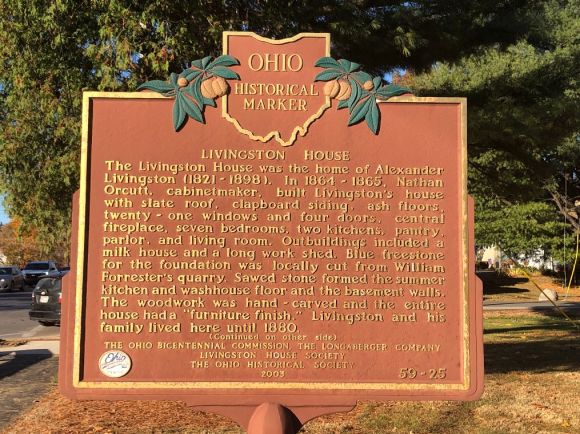
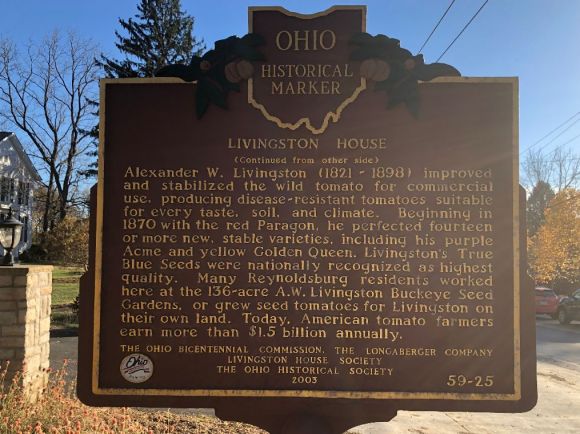
Alexander W. Livingston (1821-1898), a Reynoldsburg, Ohio seedsman, in 1870 developed the first commercially successful variety of tomato. Known as “The Father of the modern tomato” his lovely house still stands and is part of a delightful park on what used to be the outskirts of Reynoldsburg, Ohio.

Built in 1865, now on the National Register of Historic Places

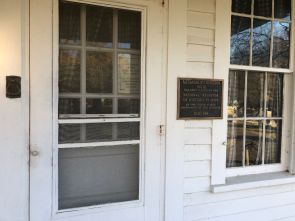
Entrance to the house, which is open for tours

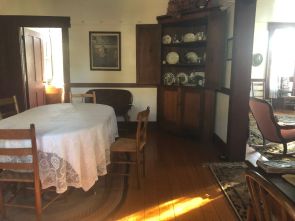
Vintage furnishings in the house

Information sign

The other side

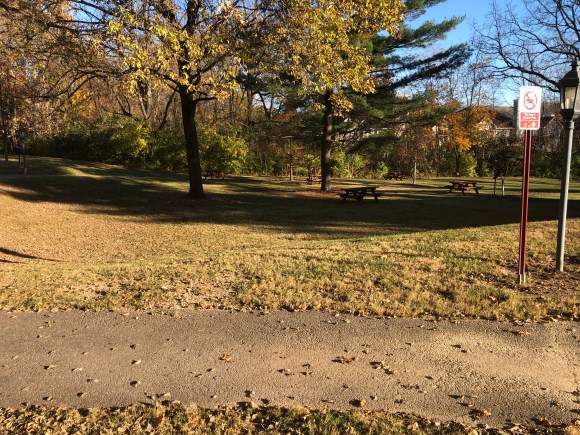
Nice park and trails on the grounds.

This park is no doubt quite lovely in spring when the trees and flowers open up. There are some great old fashioned tire swings and even a teeter-totter for the kids to enjoy, and of course lots of picnic tables. The City of Reynoldsburg has made a great area for recreation for its citizens.


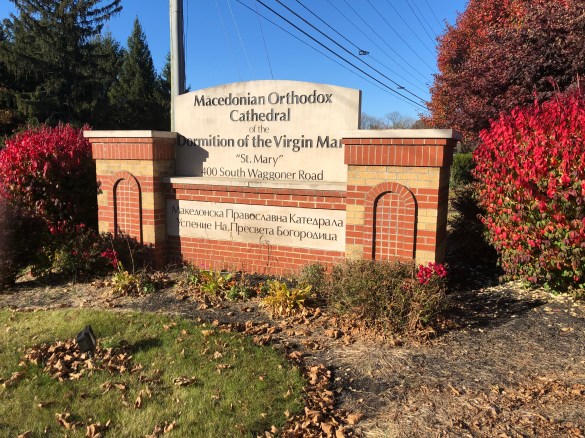
Macedonian Orthodox Cathedral of the Dormition of the Virgin Mary, Reynoldsburg, Ohio

This beautiful Greek Orthodox Cathedral was constructed in 2006 after the local parish community had purchased 17 acres in Reynoldsburg, on the near east side of Columbus, Ohio in 2003.

The main entrance doors and triple domes

The Cathedral’s marquee

Mosaic over north door

Mosaic over south door

Mosaic over the main entrance doors

The history of the parishes is just fascinating, and somewhat hard to follow. Strongly recommend that if you are interested, go to the St. Mary website. Lots of history, lots of photos, and just lots of information. We enjoyed seeing this magnificent cathedral while visiting family.


National Road “modern improvements” in Ohio in 1916

Photo on the Eagles Nest Interpretive Marker showing travel on the National Highway

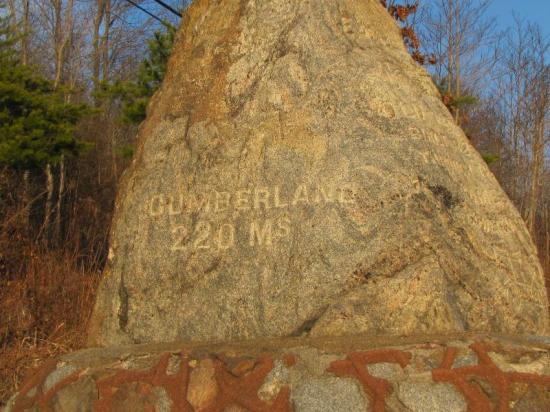
The Eagle’s Nest monument on the National Road (US 40) was erected around 1916 after a 29 mile stretch of the then unimproved and often nearly impassable road was replaced with concrete. The stretch of highway ran from Zanesville to Hebron and is east of Columbus. It is at the highest elevation of the road in Ohio.

Eagle’s Nest Monument, Interpretive Sign on right

The monument is a large granite rock with some interesting inscriptions carved into the surface. The photos show some of the details of the inscriptions, including a Conestoga wagon and mileage to Cumberland, Maryland, the starting point of the road. The completion of the experimental concrete stretch of the road led to a large parade when it opened.

Conestoga wagon etched into the granite

Ironically the day we stopped here the conditions were very muddy and wet. What a reminder of some of the early muddy conditions that the early travelers faced as they traveled across country.

You are 220 miles from the start of the National Road in Cumberland, MD.

A large interpretive sign was installed next to the monument in 2000. A well attended ceremony was held in a church near the site. You can visit the record of that ceremony here. This page displays the entire interpretive sign and other details.


Ohio’s historic Clifton Mill

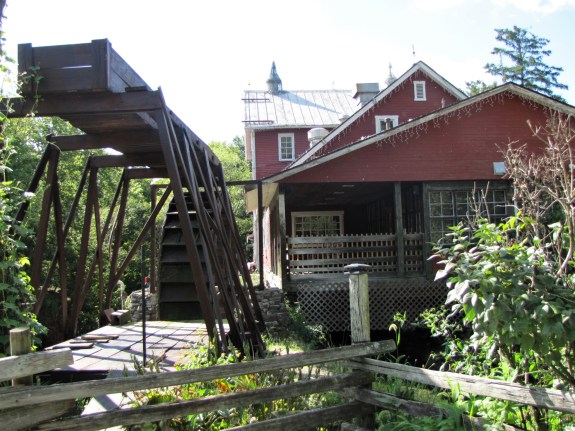
East of Dayton and south of Springfield, Ohio in the tiny town of Clifton you will find the Clifton Mill. This is one of, if not the oldest continuously operating grist mills left in the country. First built in 1802 by Revolutionary War veteran Owen Davis, the mill is still operating, as well as offering a restaurant and store.
The mill in the background

Another feature of this Ohio attraction is the famed Christmas lights display. The day we visited staff were installing what will be a total of four million Christmas lights to the grounds, buildings and walkways.

Workers hanging lights on the rock cliff

Nice log cabin on the grounds

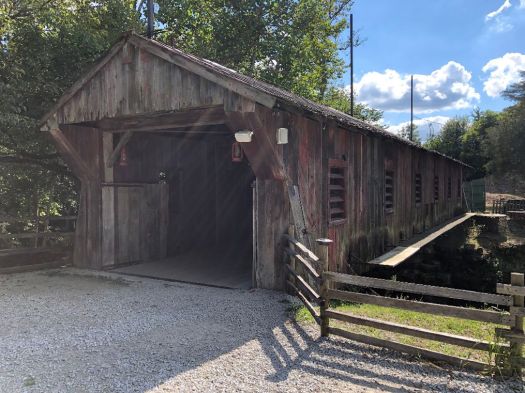
They built their own covered bridge

Honoring the designer of the light show

Historic plaque by the entrance door


We got there just after the mill, restaurant and store closed, but the grounds were still open, so we could see what was going on with the lights installation. Two men were installing lights on the side of the Clifton Gorge rock cliffs. Some lights had already been installed on the roof and sides of the mill itself and other outbuildings.

The Christmas Lights display, photo credit daytonlocal.com

This attraction receives thousands of guests each winter for the music and light show, Santa’s workshop and holiday fun.  The mill is open year round for tours and other events. This is the Clifton Mill website. This award winning attraction would make a nice stop on your Christmas events calendar.

Stevenson Cemetery aka Old Massie Creek Cemetery

We had just left the Stevenson Road Covered Bridge and were on the way to Charleton Mill Bridge when we saw two stone pillars flanking a gravel road heading into a wooded area. Had to check that out, and when we turned into the road we noticed a prominent sign labeling Stevenson Cemetery. Fortunately the road was open, so we drove in.

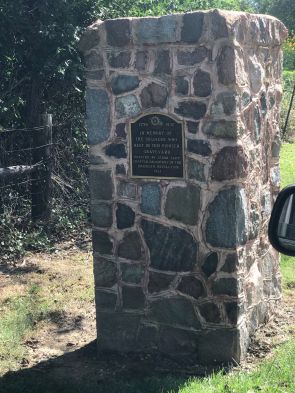
One of two stone pillars

Detail of the second pillar plaque


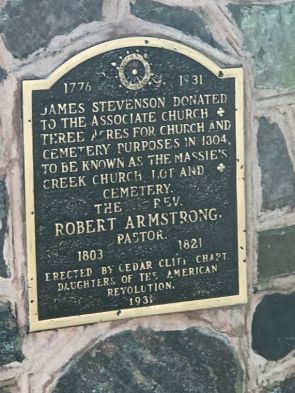
This cemetery dates back to 1804 when James Stevenson donated 3 acres of ground for a church and cemetery for the existing congregation that had been worshiping in a private home. A Reverend Armstrong had come from Kentucky in 1800 to start a new congregation in Greene County.

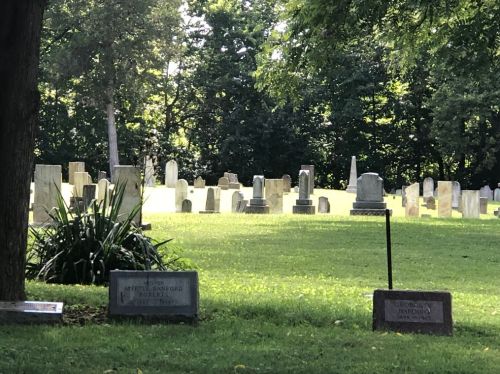
Sunshine lights up a portion of the cemetery

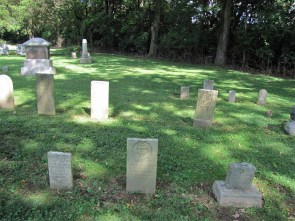
Old stones pictured

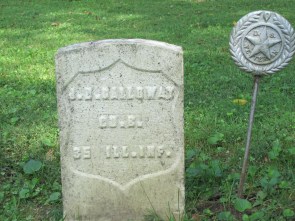
Civil War Veteran


The Stevenson Cemetery is probably the oldest one in Greene County. Rev. Armstrong is buried there. As many as 21 soldiers of the Revolutionary War with at least  seventeen soldiers identified, and recent studies indicate there are more not previously identified. Thirty seven War of 1812 and eighteen Civil War veterans are buried here.  In addition many veterans from 20th century conflicts are at rest in Stevenson Cemetery.

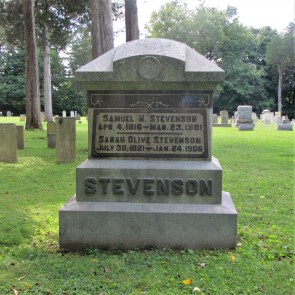
The Stevenson family

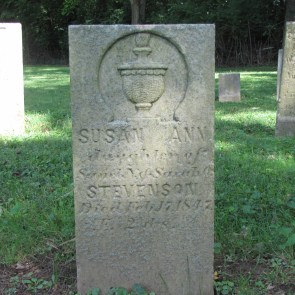
Daughter of the Stevensons, only lived 2 days


The Xenia (Ohio) Daily Gazette ran a detailed article about the cemetery in May 2017. From that article: “The Cedar Cliff Chapter of the Daughters of the American Revolution has made this cemetery a special project for many years. In 1931, an imposing gateway of colored stones was placed at the entry. Inscription on one pillar states that the D. A. R. erected them, the other has the name of James Stevenson, the donor of the site. The cost was $188. In 1975, a large stone which bears a bronze plaque giving the names of seventeen of the Revolutionary War soldiers was dedicated…

The D.A.R. plaque referenced above

This is truly a historic cemetery. The setting is beautiful and it was very enjoyable walking around the grounds and reading the inscriptions on the many stones.

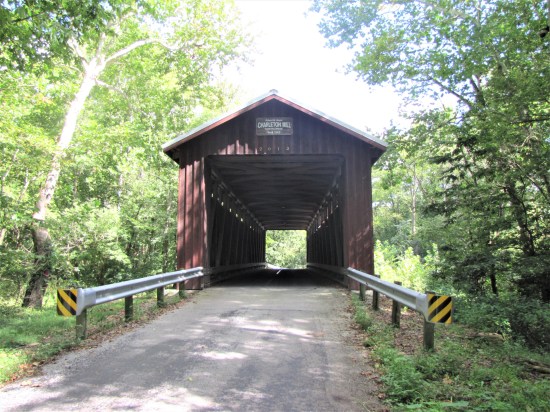
Charlton Mill Covered Bridge

The Charlton Mill Covered Bridge was originally built by Henry Hebble in 1883. This bridge was a classic Howe through truss design, and the Charlton Mill structure was quite long, with 12 truss panels and a total length of 128 feet. The bridge spans Massies Creek north of Xenia in Greene County, Ohio.

The approach to the bridge

Looking down the 120 foot long span

View of Massies Creek


Time took its toll on the original bridge constructed by Henry Hebble. An unfortunate mistake by a dump truck driver in 1969 resulted in a 20 ton load of gravel crashing through the deck and depositing the truck in the creek below. That took some serious repair.

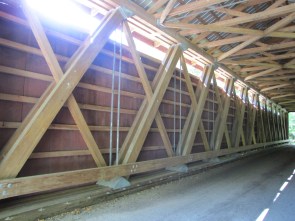
Photo by Bill Caswell in 2009 before bridge was razed, note brace/top chord connection and wood deck runners

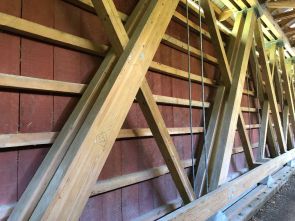
Photo for comparison of the construction details, again note brace/top chord connection and asphalt deck

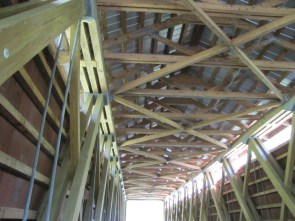
Close look at stringers for the exterior siding and bottom chord details

Roof framing details


Finally the decision was made in 2013 that the condition of the bridge was beyond repair. Thus the structure was razed, and a new replacement bridge was constructed on the same site.  The truss design remains faithful to the original Howe through truss, all 12 panels of it. Some metal attachment accessories are used to attach the angle braces to the top and bottom chords, and modern nailing plates are used in the roof rafter systems. And a thin asphalt deck overlay?  Seriously? There are already places where this overlay is peeling up.