This pair flies and squawks daily

If you’ve been following us for a while, you know that Sher and I like to sit outside in our backyard and take in the sights and sounds of our little slice of nature. Recent additions to our bird feeding equipment have increased the number of feathered visitors.

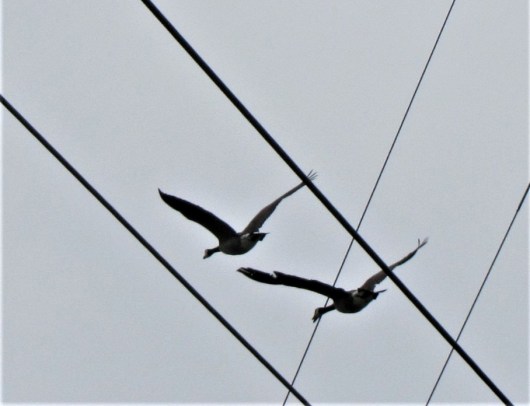
Lucked out and got a photo of the geese just after they passed our yard

We get to share the company of couple of Canadian Geese each day. And we do mean a couple. This pair flies over our house barely clearing the trees. What is fun is how loud they are. They are always having a very loud and animated conversation, both of them honking and squawking during their whole flight. They follow the same route each day, coming from about 6 or so blocks away, and ending after they pass our house and land on the river that is about 100 yards from our yard. They never land in our yard, be we consider them part of our feathered family!

Additions to our backyard bird sanctuary

Sher spotted some small but pretty bird baths in a local store’s ad flyer. We decided that they would be a nice addition to our backyard. We thought that we’d use one of the glass receptacles as a true water filled bird bath. The second, however, for now we put bird feed in the second one as a shelf feeder.
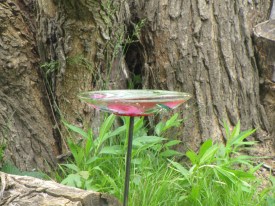
Glass bowl bird bath
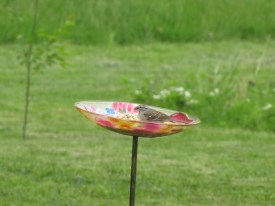
2nd bird bath as a shelf feeder


We have been thrilled with the number of different species of birds that have been gracious enough to visit our backyard.
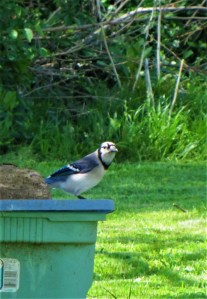
A brash Blue Jay
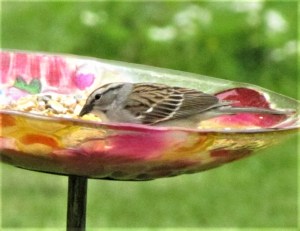
Chipping Sparrow in the new feeder
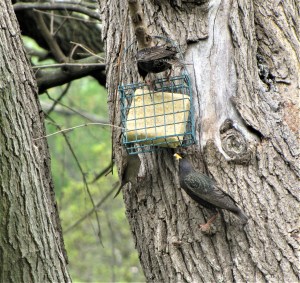
Two Starlings enjoying the suet

We have so enjoyed sitting in our backyard watching the birds coming and going from the bird feeders, now scattered across our backyard. We will keep the bird and critter photos coming as we capture them.
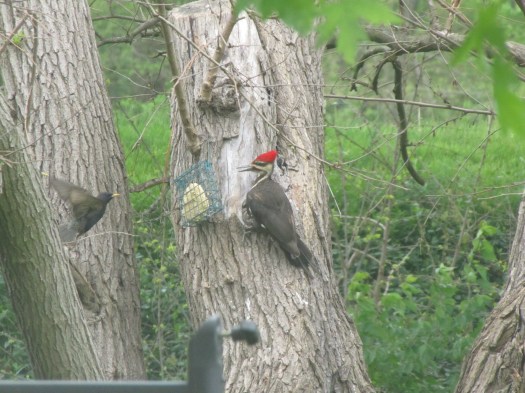
Suet yourself

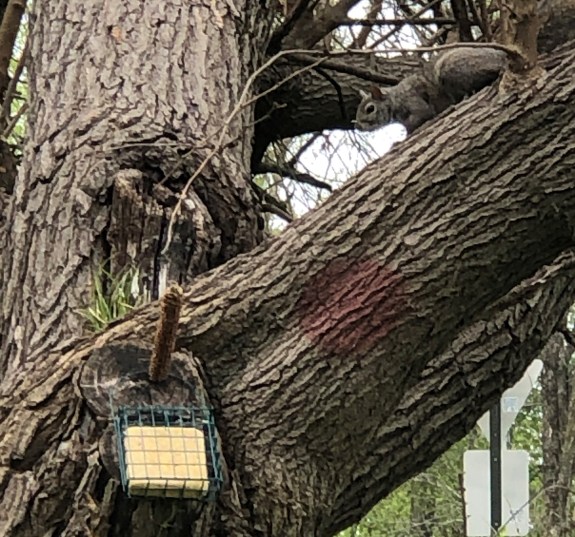
Hanging on an empty corn cob on a large nail is our new backyard suet cage. Soon after the debut of this wildlife feeding device a resident squirrel showed up. He really wasn’t thrilled with this “not corn” thing.


He finally moved on, leaving the suet to the birds.

Backyard birdwatching

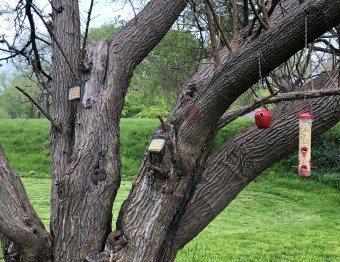
Tube feeder and 2 suet cages

The weather is finally getting nice enough for some days out in the backyard. We bought feed for our tube feeder, a hummingbird feeder and a couple suet cages.

We have had a great time just rocking in our swing watching our feathered friends frolic around and partaking of the feeders.

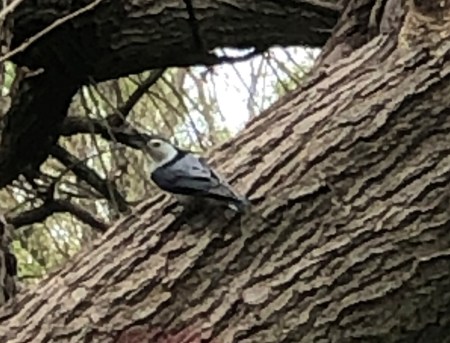
White breasted nuthatch

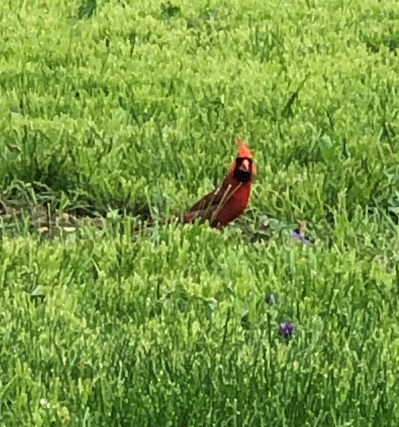
Cardinal (State Bird for 7 states)

We’ll continue to post more pictures as we can get them.  Stay tuned!

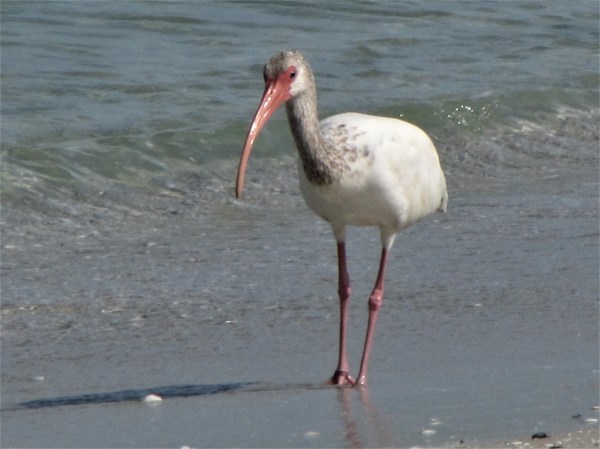
White Ibis teenager

You can tell this White Ibis is a “teenager” by the coloration of its feathers. When fully mature, it will have all white plumage. The brown mottled plumage on its neck shows it is immature. The pink color of the legs and beak will also turn bright red when full grown. We didn’t see Mom or Dad, so who knows what teenaged mischief this one was up to. We captured this shot on a trip to Naples, Florida.

High flying and loud

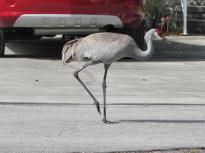
This is the time of year when the Sandhill Cranes head back north. Usually you hear them first, then have to search the skies for the typical “V” shaped formations. While the normal flying altitude is around 5,000 feet, they have been known to fly as high as 12,000 feet.
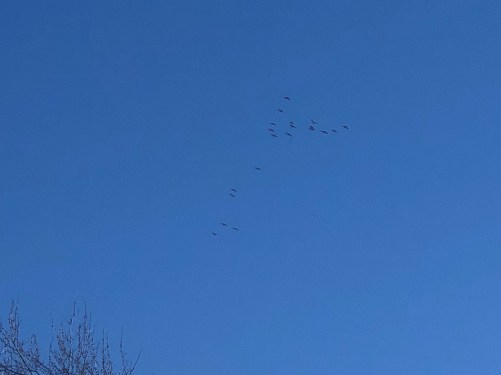
Took this picture this afternoon in our backyard. You have to look closely!

Click below for the sounds of one Sandhill Crane. Imagine how loud it is with all of the cranes squawking as they fly.

About the ugly and sometimes scary

Does a kettle of vultures circling in the sky give you pause?

Took this picture a few years back one early morning

Turkey vultures often get a bad rap. Yes, they are pretty ugly. They do perform a vital role in the ecosystem by cleaning up the carrion. It is for some kind of scary seeing a lot of them circling overhead. Here’s some other information:

  • Yes, a group of turkey vultures circling is called a kettle of vultures
  • They spread their wings to warm up or dry off, usually in the morning
  • They can soar for  hours at a time, rarely flapping wings
  • They clean up the carcasses of dead animals, keeping diseases down
  • Wing spans reach up to six feet
  • They stick their heads in carcasses so no head feathers to keep clean
  • Buzzard is not the correct name for turkey vultures
  • They DO NOT kill dogs, cats, or children

Want more information? Here is the Wikipedia link for turkey vultures.