Charlton Mill Covered Bridge

The Charlton Mill Covered Bridge was originally built by Henry Hebble in 1883. This bridge was a classic Howe through truss design, and the Charlton Mill structure was quite long, with 12 truss panels and a total length of 128 feet. The bridge spans Massies Creek north of Xenia in Greene County, Ohio.
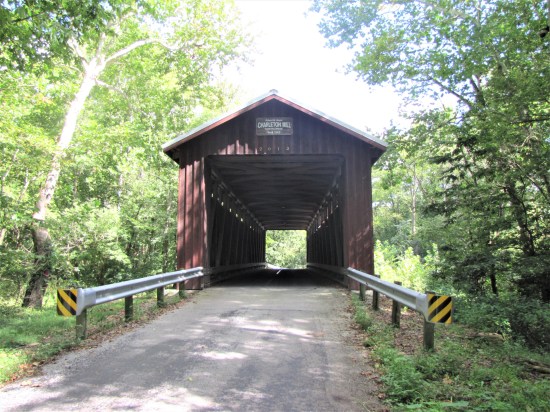
The approach to the bridge

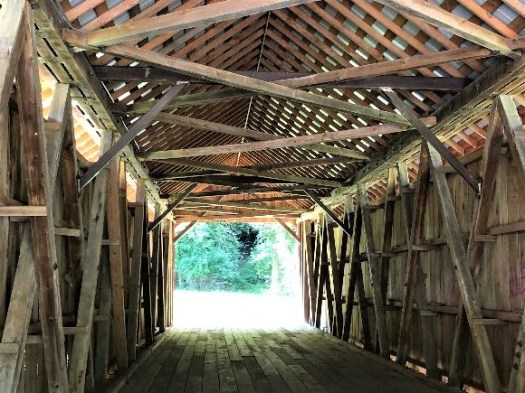
Looking down the 120 foot long span

View of Massies Creek


Time took its toll on the original bridge constructed by Henry Hebble. An unfortunate mistake by a dump truck driver in 1969 resulted in a 20 ton load of gravel crashing through the deck and depositing the truck in the creek below. That took some serious repair.

Photo by Bill Caswell in 2009 before bridge was razed, note brace/top chord connection and wood deck runners
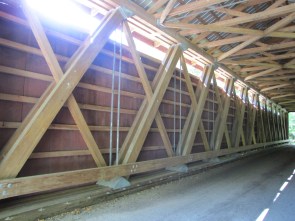
Photo for comparison of the construction details, again note brace/top chord connection and asphalt deck
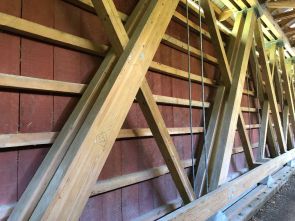
Close look at stringers for the exterior siding and bottom chord details
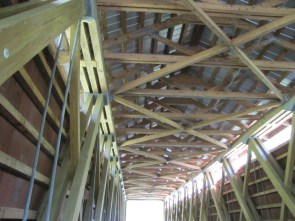
Roof framing details


Finally the decision was made in 2013 that the condition of the bridge was beyond repair. Thus the structure was razed, and a new replacement bridge was constructed on the same site.  The truss design remains faithful to the original Howe through truss, all 12 panels of it. Some metal attachment accessories are used to attach the angle braces to the top and bottom chords, and modern nailing plates are used in the roof rafter systems. And a thin asphalt deck overlay?  Seriously? There are already places where this overlay is peeling up.

Cemetery Road Bridge has a “new” home

The Cemetery Road Covered Bridge started its existence in 1886 after bridge builder Henry Hebble completed the construction of the original 129 foot long span over the Anderson Fork of Caesar Creek. In the 1970’s a new lake was planned and that lake when filled would have inundated and destroyed this bridge.

The sign on the entrance

Name plate on bridge

Side of bridge showing abutments

The Reader’s Digest version of the story is that The Army Corp of Engineers ended up giving the bridge away to anyone that would move it. The middle 60 foot section was cut away, and the bridge did get moved, very slowly, to its new home in the Glen Helen Nature Preserve. The trip took two days and necessitated moving some traffic signal lights for clearance as the bridge on wheels was moved through towns.

View through the bridge deck

The bridge, once it was placed on its new location spanning the Yellow Springs Creek, did require substantial repairs including some new deck boards, siding and quite a bit of roof repairs. It was opened for pedestrian traffic only, and is off the road a hundred yards or so in the Glen Helen Nature Preserve.

Henry Hebble utilized the Howe through truss design

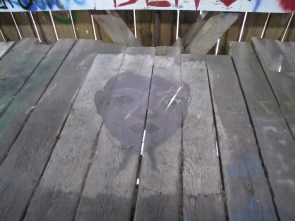
Even the bridge deck got graffitied


Since the opening  in 1975 the bridge has been the victim of serious and widespread vandalism in the form of graffiti over a high percentage of the wood members of the structure. It seems like lots of covered bridges fall victim to this kind of desecration. But, that said, it was great that at least a portion of this fine old bridge was saved from a watery demise.


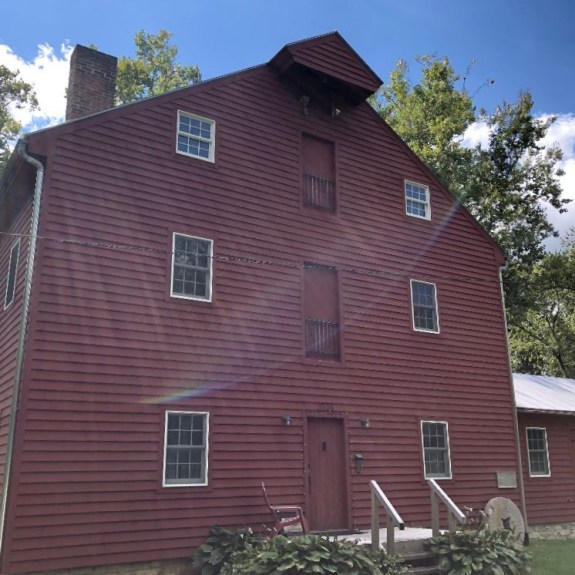
The historic Grinnell Mill, now a Bed & Breakfast

This simple but stately three story frame building stood out on the winding road as we were traveling through Greene County Ohio. The Grinnell Mill property has a long history, beginning in 1813. The original mill burned in 1818, and the current building was constructed in 1821 on the original limestone foundation. Over the years the mill has seen several uses, including a gristmill, sawmill and limestone processing facility.

The mill today

Information plaque

An original mill machinery piece

The building is now used as a Bed and Breakfast with three rooms available. The beautiful remodeled mill is also available for retreats, meetings, conferences, and parties. It is open to the public for tours most Saturdays and Sundays. Further details, including additional photos and a more complete history is available at the Grinnell Mill Bed and Breakfast website. It was not open when we were there.


A lovely site for a picnic

On our trip the other day to visit family in Ohio we were looking for covered bridges. In Greene County (east of Dayton) we came across this lovely pull off and saw a large information sign. That was our cue to stop.

Nice gazebo, note the covered picnic tables

Large covered seating place

Old cast iron drinking fountain


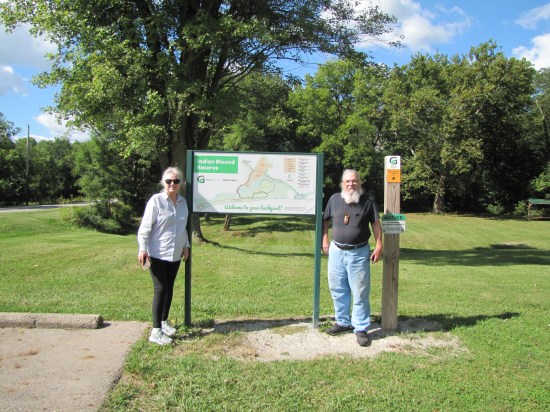
The signage explained that this was one of two turn offs at trail heads for the Indian Mound Reserve. The park was quite large according to the map and included an Indian Mound, multiple trails of varying lengths, picnic grounds, and a scenic falls and river.
Been around a while…

Ok, it’s not covered, but still a bridge

Enjoying a beautiful day in Ohio

Time constraints and schedule did not allow us to explore the falls or any of the other trails in the lovely county park. The people of Greene County are fortunate to have such a lovely facility to enjoy.


A new bridge with an old design

On the way from home base in central Indiana to family in Columbus, Ohio, a bit of research revealed the locations of a few covered bridges. If you have visited our site before, you probably know of our enjoyment visiting, photographing, and sharing our findings. Having noted a location of the Hyde Road bridge, we were quite surprised when we noted on the signage that the bridge was built in 2014!

OK, it is covered, but a cupula?

While the exterior of the structure was not at all similar to the “classic” covered bridge designs a stroll through the bridge revealed the very familiar Howe through truss design. The two metal rods for posts and the angled braces and counter braces are very familiar. Those braces had a metal fitting for attachment to the top and bottom chords, and rafter fasteners were different including modern truss nail plates.

Truss design is familiar, details vary from “normal”

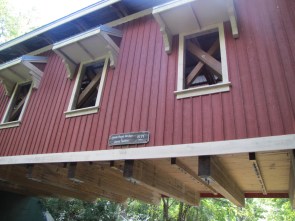
A different multi window design

Modern designed deck supports


The bridge spans the Little Miami Scenic Trail on E Hyde Road. We did see several bike riders enjoying the wide paved trail that runs under the new bridge. One other change from the old classic covered bridges is the thin asphalt pavement overlay on the bridge deck . While the clip-clop of equine hoofs do sound out, not having a wood deck is, well, a bit hard to appreciate.

This was built when??

Window view of the bike trail


The Hyde Road Bridge is also known as the Richard P Eastman Covered Bridge, the name of which shows on Google maps. The bridge was constructed by R.G. Zachrich Construction who has constructed other reproduction bridges in the state.

Pedestrian traffic only on Stevenson Road Covered Bridge

Greene County , Ohio is a bit east of Dayton with pretty rolling hills and well kept farmsteads. This is also the home of the Stevenson Road Covered Bridge, now open to pedestrian traffic only.

View from the new road that bypasses the old bridge

Note the three members of the top chord

This beautifully restored bridge was originally built in 1877 by the Smith Bridge Company of Toledo. The design is designated a Covered Smith through truss. This design was patented by Robert Smith and utilized a system of multiple top and bottom chords depending upon span lengths and load requirements.

Vehicles were prohibited in 2003 with the road course moved in 2004. The bridge deck is 95 feet in length with a width of 16.5 feet. The bridge spans Massies Creek on Stevenson Road (CR 76) in Wilberforce.

This was the first Smith through truss bridge we had seen. While inspecting the bridge truss system, you notice several steel square pipe cross bracing supports. They did not look appropriate for the original structure. Photos on bridgehunter.com taken in 2015 do not show these steel braces, so these might have been added in the 2015 restoration mentioned on the entrance signage.

Note the rust colored steel angle and cross braces

View of the deck supports reflected in the water

Dates of interest

Sher enjoying this pretty bridge


The Stevenson Road Covered Bridge is a lovely addition to the history of Ohio, and to the countryside in which it stands. The approach is quite capable of safe vehicle parking allowing for easy and interesting access to the bridge and its surrounds. This is a stop well worth your time.


Fire destroyed the 1879 grandstand ten years ago

Around midnight on May 19, 2012, Shelbyville, Indiana residents saw flames raising hundreds of feet in the air. The source of the flames, visible from over a mile away, was the historic all wooden grandstands at the Shelby County Fairgrounds. These grandstands were constructed back in 1879, and records show that 6000 board feet of white pine was utilized for the build. Over 130 years later, the wood was tinder dry and the entire structure was fully involved when firefighters arrived on the scene.

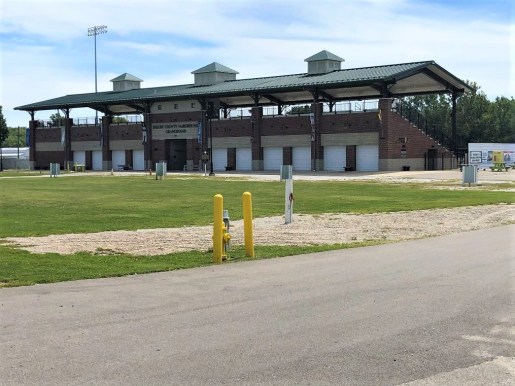
New grandstands facing the track

The history of the Shelby County Fair goes way back to original farmer’s markets in the late 1840’s. The legal organization came in 1873 with the writing of the Fair Constitution. Future Vice President of the United States Thomas A. Hendricks took part in the authorship and execution of these documents. The first fair under the Shelby County Fair Association name was in 1874.

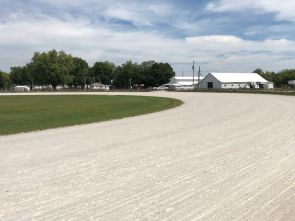
Stables in background, turn 3 in foreground

The backstretch


The grandstand, as mentioned above, was built in 1879 at the same time the race track was being renovated. This track is known as one of the fastest tracks in the state due to it’s design, which was a duplicate of the world-famous Kentucky Derby track at Churchill Downs in Louisville, Kentucky. Horse farms from all over have trained on this track for decades, and still continue to stable and train in this facility.

The old grandstand, photo by Gary Plunkett

The new entrance to the grandstand

New grandstand facing the fair midway

The burning of the grandstand in 2012 a couple of weeks before the scheduled opening of the fair was a shock to this small Indiana community. The temporary portable bleachers just didn’t quite get it. However, in 2014 the new grandstands were completed. with the same basic design, but now constructed with brick and concrete, both fireproof!

St. Peter’s UCC is a beautiful country church

St. Peter’s United Church of Christ is a lovely church in Ripley County, Indiana. While it has an Osgood address, it is actually closer to Napoleon.

Front of the church

The steeple

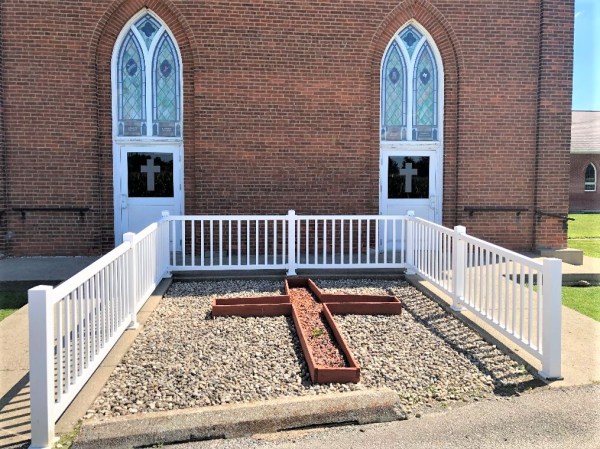
Unique double entrance doors

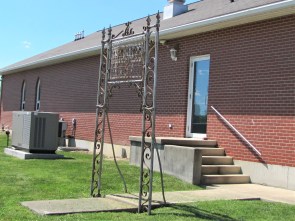
There is a decent sized graveyard behind the church building. Of note is the interesting iron graveyard gate signage over the entrance drive to the graveyard. Also seen is an additional smaller gate entrance piece that has been mounted over a sidewalk entrance to the back of the fellowship hall of the church. It could be guessed that both of these structures have been relocated for original placements.

View of the graveyard

Fancy iron entrance signage

Smaller iron gate arbor


This church is located on the south east corner of the intersection of W County Rd 700 N and N Fink Road in Ripley County, Indiana.


A Vice President’s family log cabin

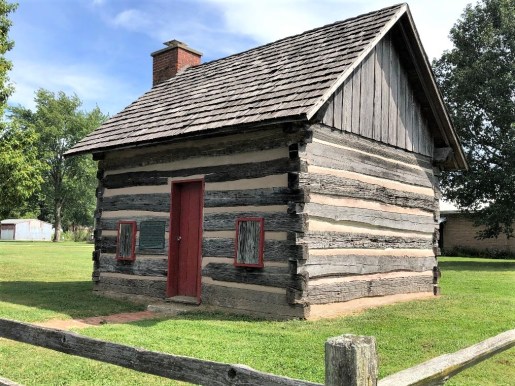
Shelbyville, Indiana is a small town in central Indiana and was home to Thomas A. Hendricks, Vice President to Grover Cleveland. A replica of the Hendricks family log cabin is on display at the Shelby County Fairgrounds.

Reconstructed log cabin made from original logs from the Hendricks family cabin

Thomas A. Hendricks was a politician and lawyer who served as the 16th governor of Indiana from 1873 to 1877 and the 21st vice president of the United States from March until his death in November 1885. Hendricks also served Indiana in the U.S. House of Representatives and the U.S. Senate. He was born in Ohio and his family moved to Shelbyville in 1822.

Information plaque mounted on the cabin

Vintage postcard of the original cabin, courtesy Indiana Historical Society

Thomas A. Hendricks


Hendricks was married to Eliza Morgan, and they had one child, a son who sadly died at age three. Hendricks was very popular with the people, and unfortunately he died on Thanksgiving night during his first year in office as Vice President. Hendricks is buried in Crown Hill Cemetery in Indianapolis.


Have never seen tombstones like these

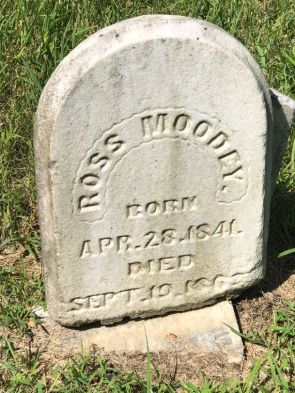
It is always fun to find a different cemetery to explore. Even more so when you find very different tombstones than you normally see. This was the case at the Ross Cemetery in Decatur County, Indiana. Three stones were apparently hand inscribed in wet concrete at some late date, with names and birth/death dates. These might be replacement stones.

Hand inscribed name/dates

Two additional hand made “stones”


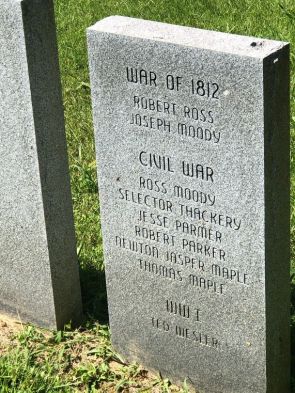
This cemetery also has other oddities. There are two different granite stones that serve as listings of others interned here, many are family groupings. The back side of one of these also proudly lists military veterans who are resting in this lovely country cemetery.

Lists of burials in Ross Cemetery

A listing of vets buried here

21 year old killed in action 1862


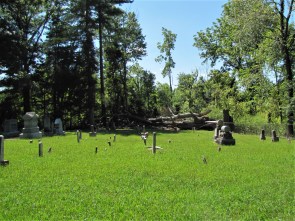
There are many interesting stones at Ross Cemetery. What is fascinating is the range of size and quality of gravestones. Some are large and beautifully made. Others are simply what appear to be just rocks stuck in the ground. Family names are seen across many different stones, and dates of internments start in 1845 and according to a date on gate arches stopped in 1979.

Variety of marker size, quality clearly seen

Another view of the peaceful cemetery

Cemetery entrance gates

The historic Ross Cemetery can be found south of New Point in Decatur County, Indiana. It on the southwest corner of the intersection of E Co. Road 300 South and S Co Road 850 East. The gate is on 300 South and there is parking on the side of the road.