
Declaration of Independence as painted by John Trumball in 1819
Roadtirement wishes you and yours a very safe and happy 4th of July holiday.
Declaration of Independence as painted by John Trumball in 1819
Roadtirement wishes you and yours a very safe and happy 4th of July holiday.

Original 1927 movie poster
Several actors and actresses played the parts of Tarzan and Jane while bringing Edgar Rice Burroughs’ many novels to the big screen. One of those actors was a man named James H. Pierce. He was discovered by Burroughs himself at a party at the Tarzana Ranch and was hired to play the jungle hero in the 1927 film Tarzan and the Golden Lion.
The next year Jim Pierce married Edgar Rice Burroughs’ daughter Joan. The happy couple starred as the voices of Tarzan and Jane for the Tarzan radio show from 1932 to 1936.
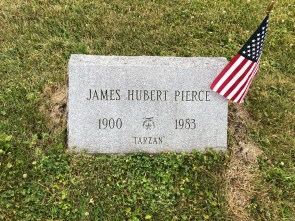
“Tarzan”
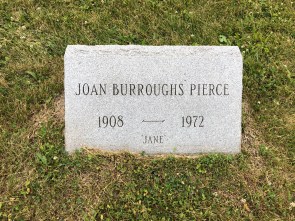
“Jane”
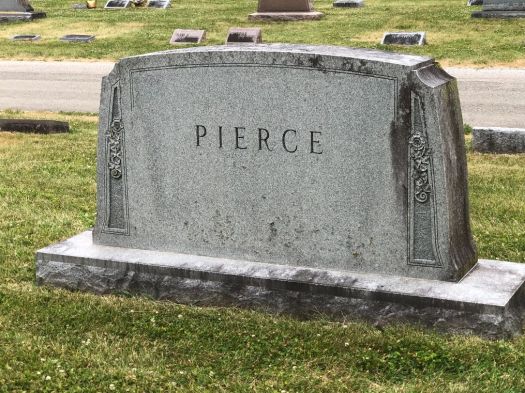
Jim pierce was originally from Shelbyville, Indiana. He and wife Joan and other relatives are buried in Forest Hill Cemetery in Shelbyville. Their family plot is similar to many in the cemetery. However, only on Jim and Joan’s gravestones will you find the names “Tarzan” and “Jane”.
May they Rest In Peace
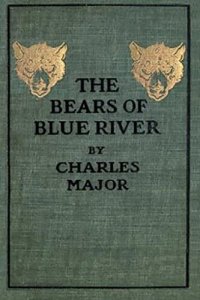
Vintage book cover
When I was in 4th grade I, like most every other 3rd to 5th grader in Indiana was introduced to and told to read The Bears of Blue River by author, lawyer and politician Charles Major. The website Yesterday’s Classics shares a concise summary of the book: “Balsar, a pioneer lad, enters manhood at the age of 13 when he encounters a great bear while fishing on the river and proves his mettle. This book, full of harrowing adventures, great danger, and many acts of valor, tells of Balsar’s subsequent encounters with bears, wolves, Indians and the legendary one-eared ‘demon’ bear, offering a dynamic portrait of the daily life in Indiana during the 1820s.”
Charles Major lived most of his life in Shelbyville, and his influence has been most appreciated in the community for years. Major’s first book was published in 1898, When Knighthood Was In Flower which was very successful, having been adopted into both theater and film. He published The Bears Of Blue River in 1901.
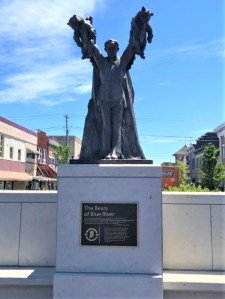
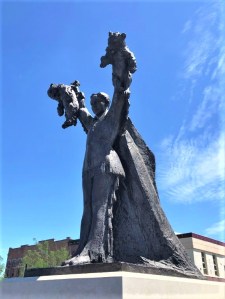 The statue of Balsar holding his pet bear cubs Tom and Jerry was placed in front of an elementary school named for the author. After the school was demolished in the sixties, the statue remained in storage until it was placed on the town square years ago. Once the new downtown project to redo the square was designed, the statue of Balsar and the cubs was restored and placed in the center of the structure housing the fountain and nice seating.
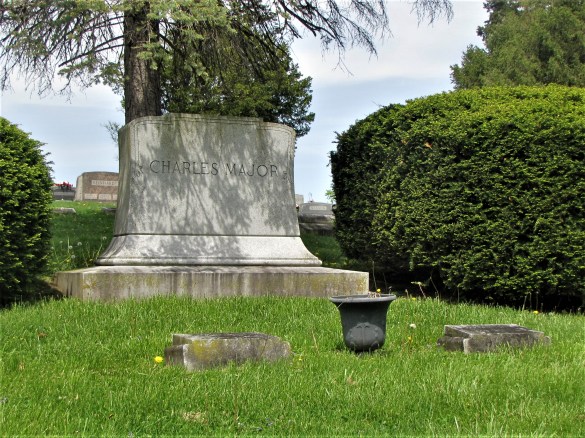
Graves of Charles Major and his wife, Alice, in Forest Hill Cemetery, Shelbyville
Back when Sher and I were in elementary school, reading The Bears of Blue River was a requirement. I so remember being totally absorbed while reading the book. What a series of adventures Balsar enjoyed. I’ll always remember the excitement and danger of the stories. (Wait ’til you read about the Fire Bear!) I’d suggest if you have family in the 7 to 10 year old range, get them a copy of The Bears of Blue River. Heck, get one for yourself. You might enjoy an exciting trip back to Indiana in the 1820’s.

Looking North on CR 675 E

Looking south, entrance road to Hays Cemetery is on the horizon

ID plaque with details of the history of the bridge
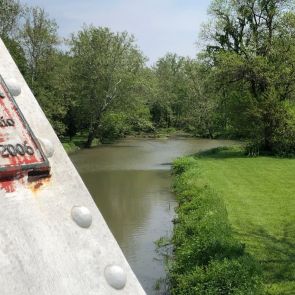
Sugar Creek, looking East from bridge
This bridge is 92 feet in length and is described as a “Fixed, Metal 6 Panel Pin-Connected Pratt Through Truss”. The bridge was designed by Winfield Fries, an engineering firm in Greenfield, the Hancock County Seat. The Columbia Bridge Works of Dayton, Ohio constructed the bridge in 1887. It spans Sugar Creek.

Cut stone abutment and wingwall

Original wood decking has been replaced with open grating
Almost as a mate to the rumors of haunts at nearby Hays Cemetery, the legends of paranormal activity also are attached, at least locally, to this, the Hays Bridge. Reported have been sightings (after dark of course) of forlorn cries of a baby and the vision of a ghostly woman pushing an old fashioned baby carriage across the north end of the bridge. Locals still refer to this as the Baby Doll Bridge.
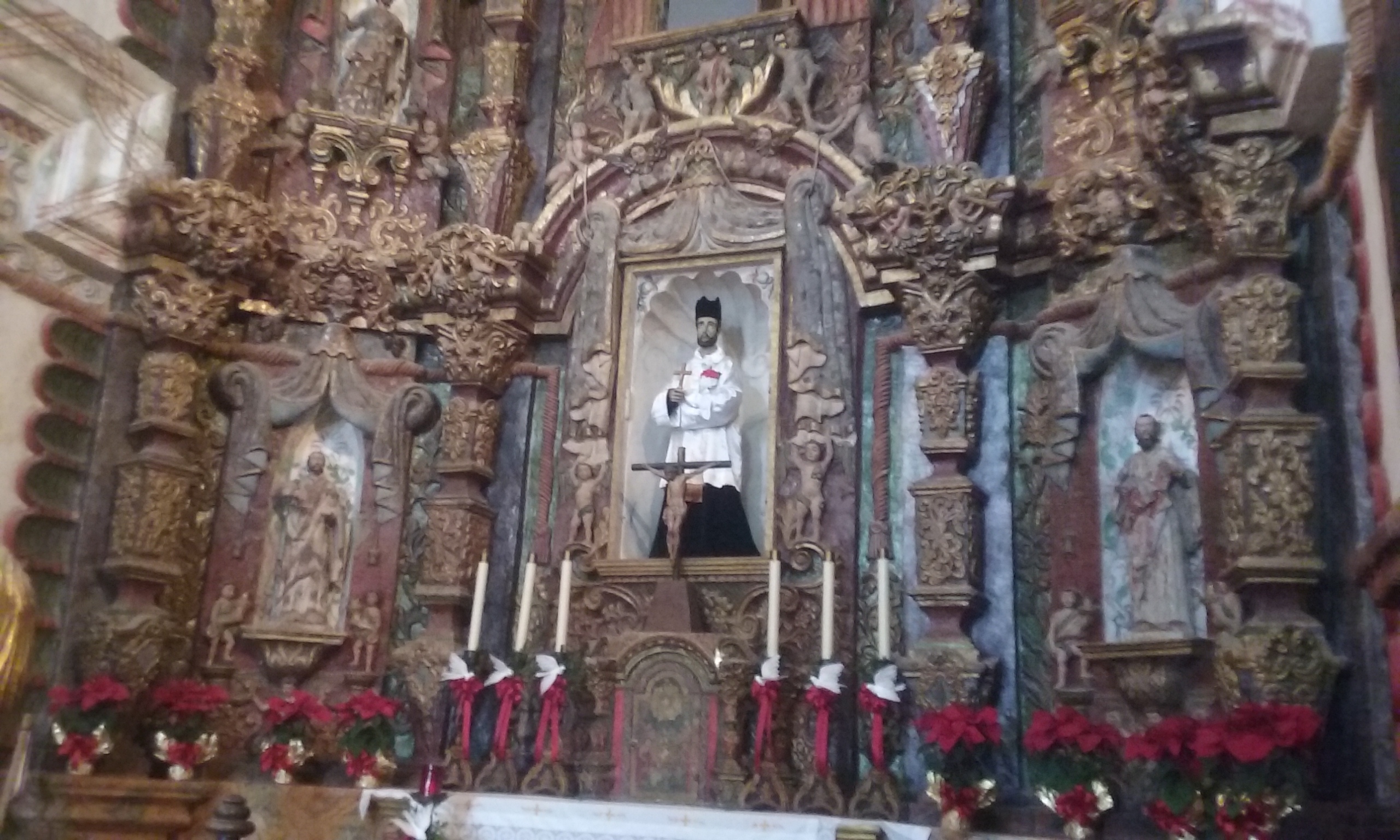 About 10 miles south of Tucson, Arizona you will find the “White Dove of the Desert” also known as the Mission San Xavier del Bac. This magnificent Spanish mission was completed in 1797. The first Spanish missionary, Father Eusebio Kino, arrived at the site in 1692. Throughout the years the location has been part of New Spain, Mexico, and finally a part of the U.S. after the Gadsen Purchase of 1854.
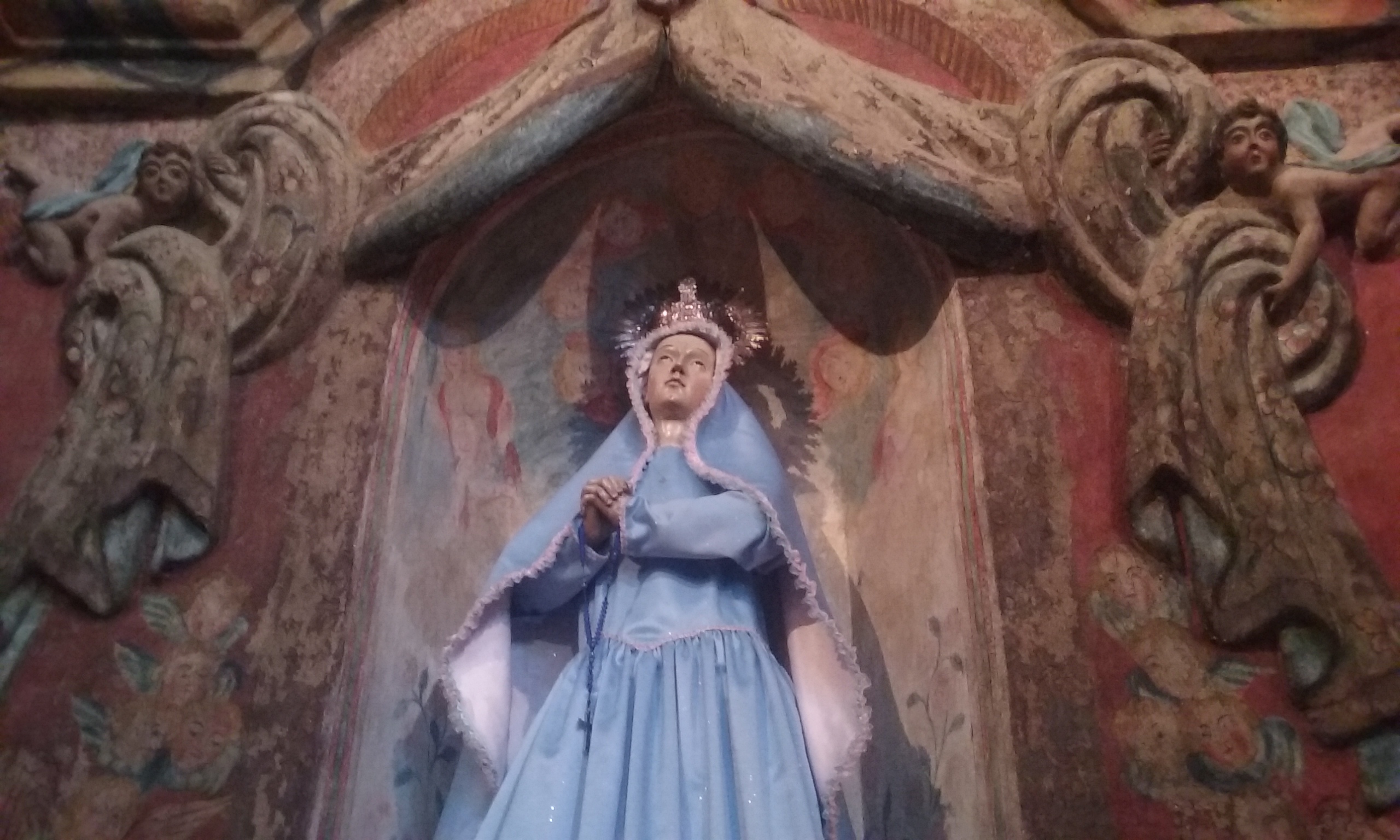
When you enter the church you cannot help but be amazed by the incredible amount of 18th century statuary and murals. The impact varies for everyone who walks the interior of this powerfully spiritual place. Candles are always lit and displayed. A shrine to St Francis is a prominent feature and one of solemn devotion.
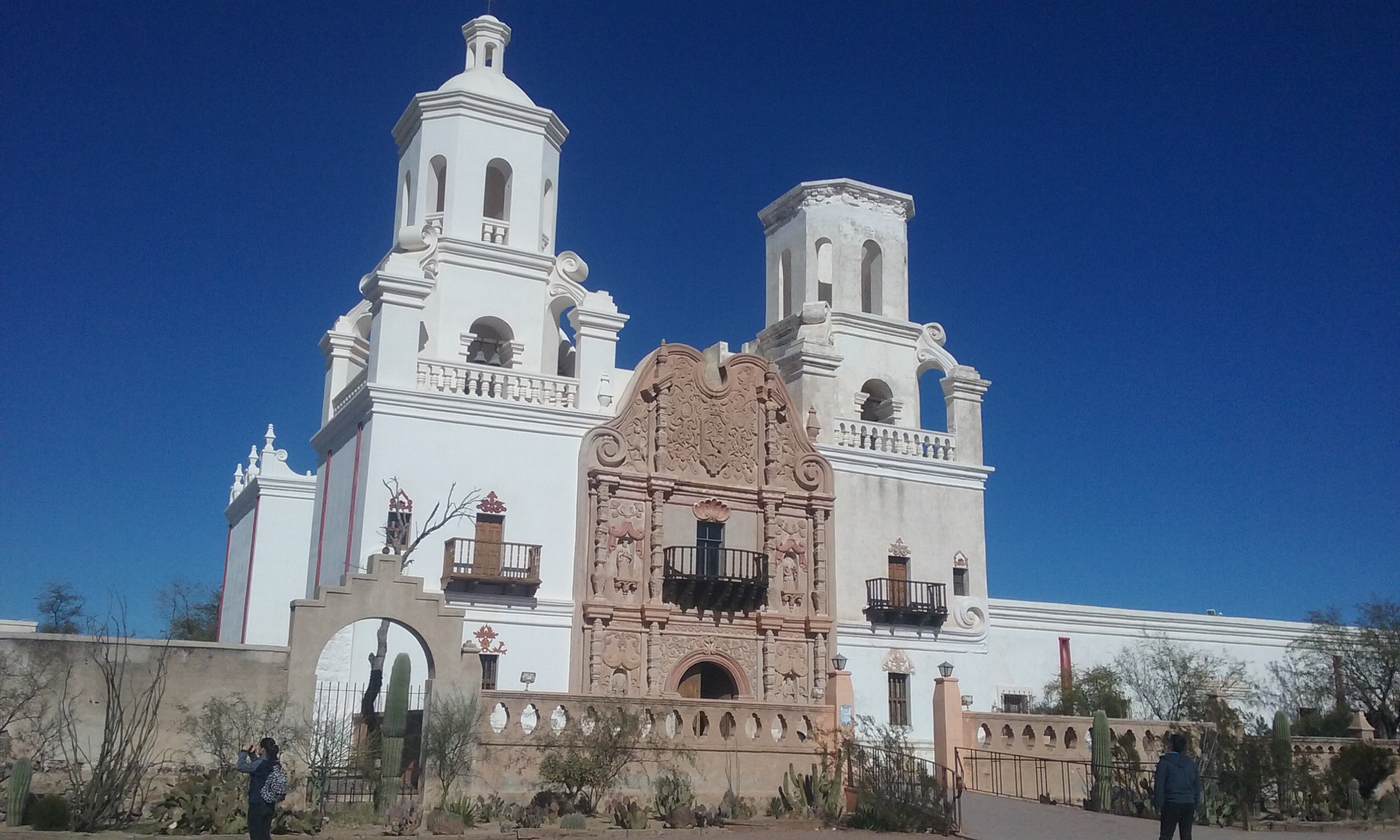
Mission San Xavier del Bac
The edifice is still a functioning Catholic Church that primarily serves the Tohono O’odham tribe, formerly known as the Papago. There is a museum the shows the history of the church however it ws under construction during our visit so we missed much of the displays. There is also a gift shop.
Being one of the most popular tourist stops in Tucson, we were fortunate to visit when there were very few people there. It was almost as if we had the place to ourselves. This is a site that is filled with history as well as a sacred place for contemplation, meditation and prayer. Do not miss a chance to visit San Xavier. You will be moved.
The San Xavier website is packed with information for your visit planning assistance.

Prayer chapel and garden

