Memorial Day haunting quatrains honoring war dead

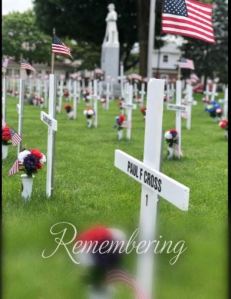
Memorial Day in 2023 will be held on May 29th. Originally called “Decoration Day” it started after the end of the Civil War and became an official Federal Holiday in 1971. Memorial Day is observed all across the nation in towns large and small. Many courthouse lawns are decorated with crosses bearing the names of local men and women who gave their lives serving in the armed forces while protecting our freedoms.
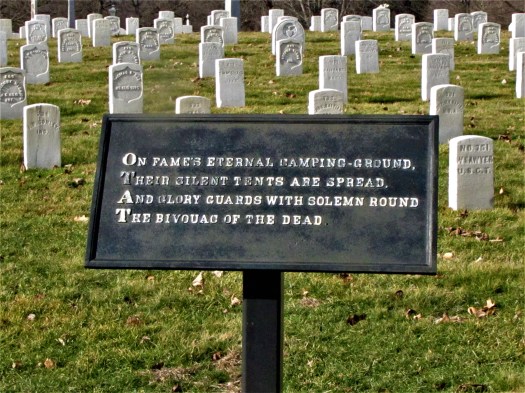
One of two National Cemeteries in Crown Hill Cemetery, Indianapolis, Indiana with 2nd quatrain, 1st stanza of O’Hare’s poem displayed

Theodore O’Hara (1820 – 1867) was a poet, lawyer, soldier and adventurer from Kentucky. He penned a haunting poem, “Bivouac of the Dead” honoring the dead from Kentucky killed in the Mexican War of 1847. At the end of the Civil War it became a memorial to Confederate dead, however the second quatrain of the first stanza has become an honor to any soldier killed in battle. That quatrain can be found in cemeteries across the nation and even the gateway to Arlington National Cemetery bears an inscription from O’Hara’s most noted poem.

Following is the complete poem, 12 stanzas with two quatrains per stanza. It is worth reading from start to finish.

“BIVOUAC OF THE DEAD”

The muffled drum’s sad roll has beat
The soldier’s last tattoo;
No more on life’s parade shall meet
That brave and fallen few.
On Fame’s eternal camping-ground
Their silent tents are spread,
And Glory guards, with solemn round,
The bivouac of the dead.

No rumor of the foe’s advance
Now swells upon the wind;
Nor troubled thought at midnight haunts
Of loved ones left behind;
No vision of the morrow’s strife
The warrior’s dream alarms;
No braying horn nor screaming fife
At dawn shall call to arms.

Their shriveled swords are red with rust,
Their plumed heads are bowed,
Their haughty banner, trailed in dust,
Is now their martial shroud.
And plenteous funeral tears have washed
The red stains from each brow,
And the proud forms, by battle gashed
Are free from anguish now.

The neighing troop, the flashing blade,
The bugle’s stirring blast,
The charge, the dreadful cannonade,
The din and shout, are past;
Nor war’s wild note nor glory’s peal
Shall thrill with fierce delight
Those breasts that nevermore may feel
The rapture of the fight.

Like the fierce northern hurricane
That sweeps the great plateau,
Flushed with the triumph yet to gain,
Came down the serried foe,
Who heard the thunder of the fray
Break o’er the field beneath,
Knew well the watchword of that day
Was “Victory or death!”

Long had the doubtful conflict raged
O’er all that stricken plain,
For never fiercer fight had waged
The vengeful blood of Spain;
And still the storm of battle blew,
Still swelled the gory tide;
Not long, our stout old chieftain knew,
Such odds his strength could bide.

Twas in that hour his stern command
Called to a martyr’s grave
The flower of his beloved land,
The nation’s flag to save.
By rivers of their father’s gore
His first-born laurels grew,
And well he deemed the sons would pour
Their lives for glory too.

For many a mother’s breath has swept
O’er Angostura’s plain —
And long the pitying sky has wept
Above its moldered slain.
The raven’s scream, or eagle’s flight,
Or shepherd’s pensive lay,
Alone awakes each sullen height
That frowned o’er that dread fray.

Sons of the Dark and Bloody Ground
Ye must not slumber there,
Where stranger steps and tongues resound
Along the heedless air.
Your own proud land’s heroic soil
Shall be your fitter grave;
She claims from war his richest spoil —
The ashes of her brave.

Thus ‘neath their parent turf they rest,
Far from the gory field,
Borne to a Spartan mother’s breast
On many a bloody shield;
The sunshine of their native sky
Smiles sadly on them here,
And kindred eyes and hearts watch by
The heroes sepulcher.

Rest on embalmed and sainted dead!
Dear as the blood ye gave;
No impious footstep shall here tread
The herbage of your grave;
Nor shall your glory be forgot
While fame her records keeps,
Or Honor points the hallowed spot
Where Valor proudly sleeps.

Yon marble minstrel’s voiceless stone
In deathless song shall tell,
When many a vanquished ago has flown,
The story how ye fell;
Nor wreck, nor change, nor winter’s blight,
Nor Time’s remorseless doom,
Shall dim one ray of glory’s light
That gilds your deathless tomb.

What we saw in 2022

The year 2022 was a very unique time for Roadtirement and, frankly, the entire country. The pandemic fears had greatly decreased and in lots of ways daily life seemed to be back to close to “normal”.  We did have many enjoyable trips in 2022. Here is a quick snapshot of some of those adventures.

Mom says it is time to go

As we predicted last year in July, our travels were altered to include more trips closer to home, and of shorter durations. We did, however, truly enjoy these shorter jaunts and like many,  we discovered many interesting attractions close to home.

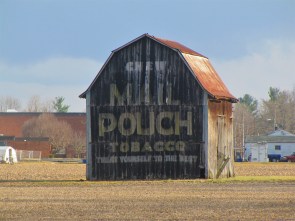
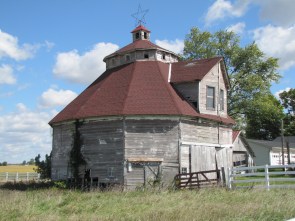
Round barn built in 1910

This barn’s Mail Pouch paint job is fading fast.


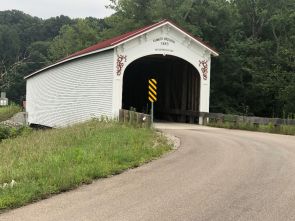
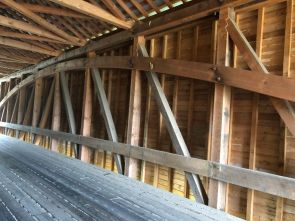
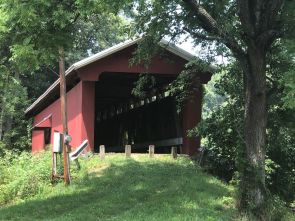
Maj really got into visiting historic covered bridges. Indiana is known for the large number of these beautiful structures. There are several different types of bridge truss systems, and we found several different ones as we ventured around central and southern Indiana an Ohio. Some of the old iron bridges are also interesting pieces of history, and they are disappearing quickly.

Beautiful white reconstructed bridge

The Burr-Arch truss system

Closed to road traffic in 1996, it is now open only to foot traffic.

Howe truss system

Abandoned iron bridge

We also enjoyed going to cemeteries. The history represented in both large and small cemeteries can be very fascinating. Some are part of church properties, others are on land not part of any structure at all. We came across several interesting cemeteries as well as many many fascinating monuments and headstones.

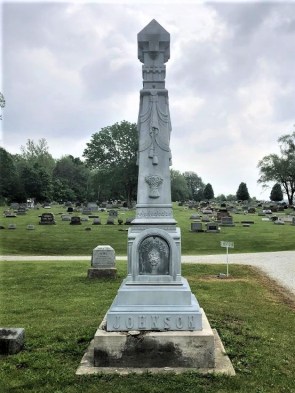
White Bronze metal monument

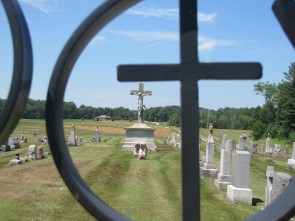
View through a gate

Hope you enjoyed this look back at Roadtirement’s 2022. We’ll keep you updated as 2023 progresses. 

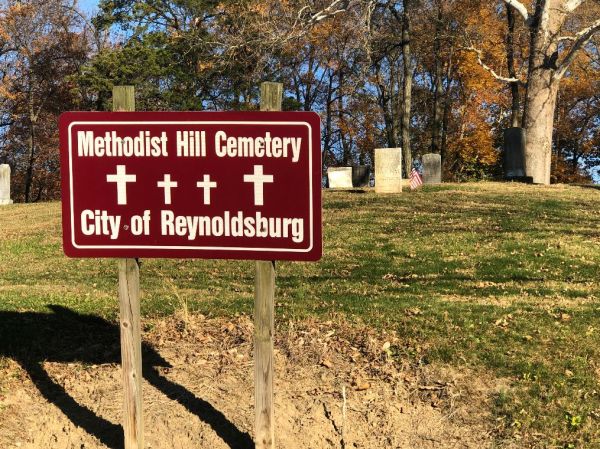
Methodist Hill Cemetery in Reynoldsburg, Ohio

This cemetery caught our eye as we were driving around Reynoldsburg, Ohio. We were actually going to the VFW to see the tank and this cemetery was adjacent to that.

One of several names of this historic cemetery


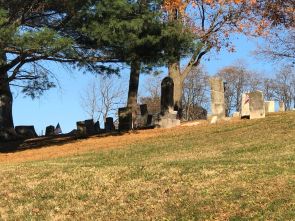
Also known as Hill Road Methodist Cemetery, Historic Hill Cemetery, and Reynoldsburg Cemetery, it is located in Franklin County, Ohio. The first burial is recorded to have taken place in 1816. According to the Franklin County Chapter of The Ohio Genealogical Society the last burial recorded was in 1908.

Stevenson Cemetery aka Old Massie Creek Cemetery

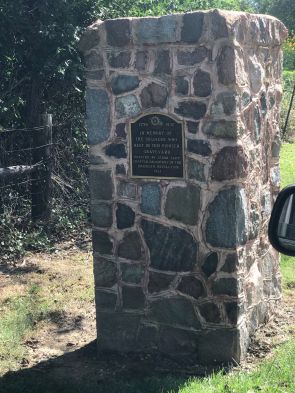
We had just left the Stevenson Road Covered Bridge and were on the way to Charleton Mill Bridge when we saw two stone pillars flanking a gravel road heading into a wooded area. Had to check that out, and when we turned into the road we noticed a prominent sign labeling Stevenson Cemetery. Fortunately the road was open, so we drove in.

One of two stone pillars

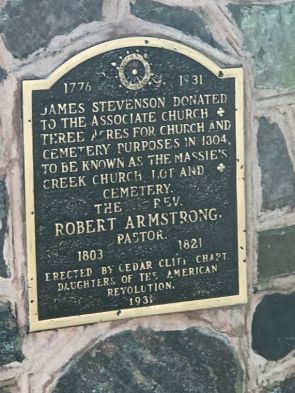
Detail of the second pillar plaque


This cemetery dates back to 1804 when James Stevenson donated 3 acres of ground for a church and cemetery for the existing congregation that had been worshiping in a private home. A Reverend Armstrong had come from Kentucky in 1800 to start a new congregation in Greene County.

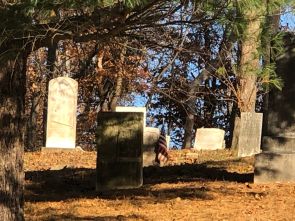
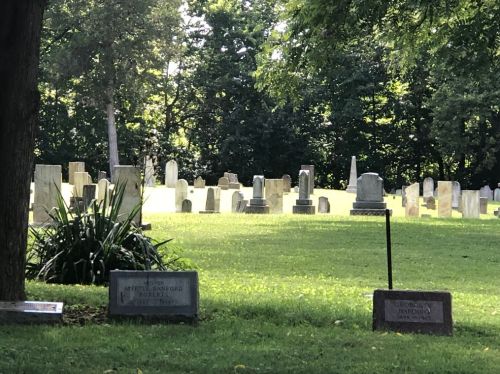
Sunshine lights up a portion of the cemetery

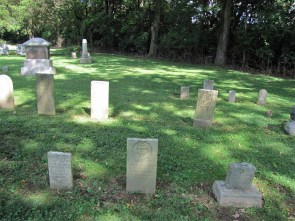
Old stones pictured

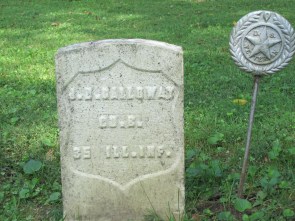
Civil War Veteran


The Stevenson Cemetery is probably the oldest one in Greene County. Rev. Armstrong is buried there. As many as 21 soldiers of the Revolutionary War with at least  seventeen soldiers identified, and recent studies indicate there are more not previously identified. Thirty seven War of 1812 and eighteen Civil War veterans are buried here.  In addition many veterans from 20th century conflicts are at rest in Stevenson Cemetery.

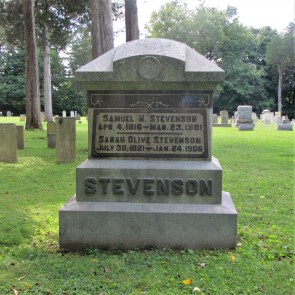
The Stevenson family

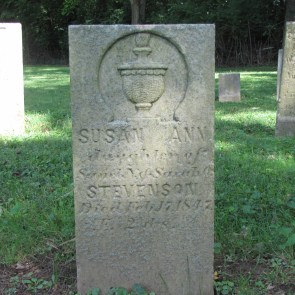
Daughter of the Stevensons, only lived 2 days


The Xenia (Ohio) Daily Gazette ran a detailed article about the cemetery in May 2017. From that article: “The Cedar Cliff Chapter of the Daughters of the American Revolution has made this cemetery a special project for many years. In 1931, an imposing gateway of colored stones was placed at the entry. Inscription on one pillar states that the D. A. R. erected them, the other has the name of James Stevenson, the donor of the site. The cost was $188. In 1975, a large stone which bears a bronze plaque giving the names of seventeen of the Revolutionary War soldiers was dedicated…

The D.A.R. plaque referenced above

This is truly a historic cemetery. The setting is beautiful and it was very enjoyable walking around the grounds and reading the inscriptions on the many stones.

St John the Evangelist Catholic Church

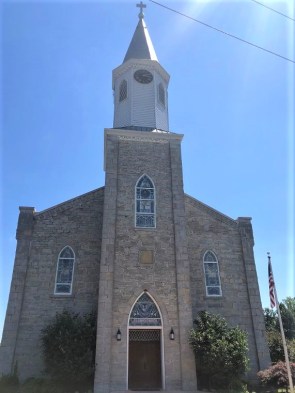
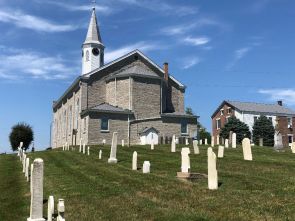
Once again we came across an unexpected visual treat while heading to some historic covered bridges. Near Enochsburg Indiana on Base Road is the beautiful St. John the Evangelist Catholic Church.

The church edifice faces one of the two cemeteries on the grounds

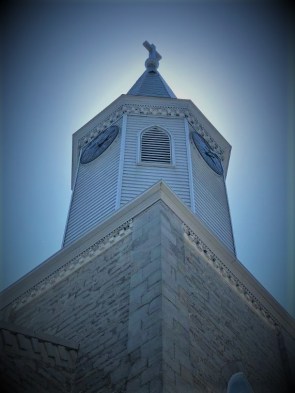
The steeple back-lit by the sun


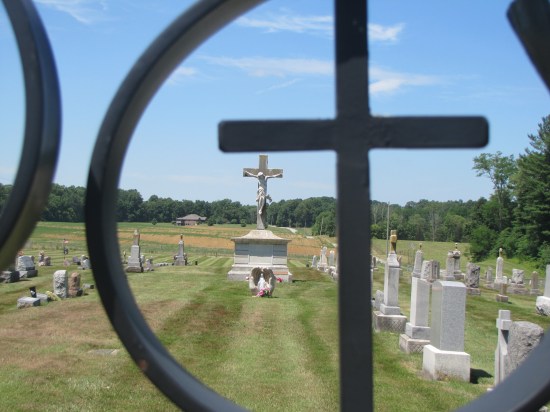
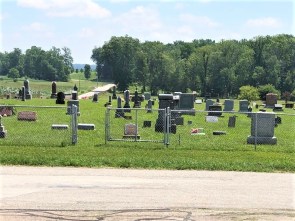
The cemetery across the road is the newer of the two. The iron double gate entrance has two crosses in the design, and this gate highlights the monument in the cemetery. The rolling terrain provides a striking background to this peaceful resting place.

The entrance gates

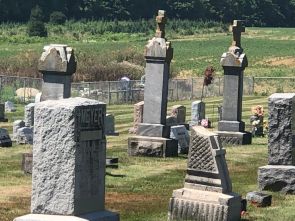
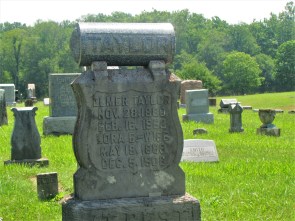
Interesting headstones

View through the gate

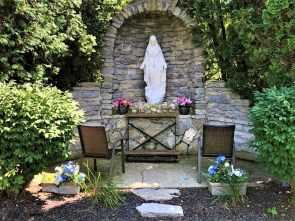
Behind the church on a very hilly plot of ground is the original cemetery. This, the Old St. John’s Cemetery was first used in 1846. This cemetery is officially a Historic Cemetery listed in Indiana’s Cemetery and Burial Grounds Registry of the Department of Natural Resources. At the lower end of the hill and at the end of the cemetery is a beautiful shrine that was installed in gratitude for the safe return of St. John parishioners who served in WWII.

The original old cemetery behind the church

“Our Lady, Queen of Peace” Shrine


St. John the Evangelist Church is one of two Catholic churches that make up the St. Catherine of Siena Parish. From the parish website: “St. Catherine of Siena Parish is a newly formed Catholic parish with two worship sites. St. John of Enochsburg and St. Maurice of St. Maurice were merged into one parish in December 2013 with each site offering very unique resources to create a stronger Catholic community.”


A pretty country church with cemetery

On our adventure yesterday we came across the Rock Creek Baptist Church, a lovely little (and typical) country church and associated cemetery. Many many areas of rural America are dotted with small churches. Before cars, rural churches usually sprang up within an easy buggy trip for most families.

Sher standing beside the Church Marquee

The Rock Creek Cemetery across the road

A distinguished old family monument

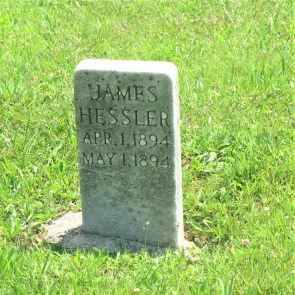
A sad story for James

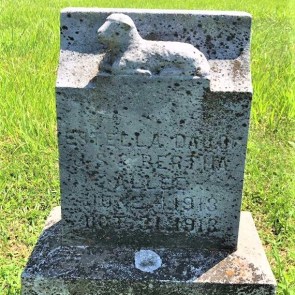
RIP Estella, a loved daughter

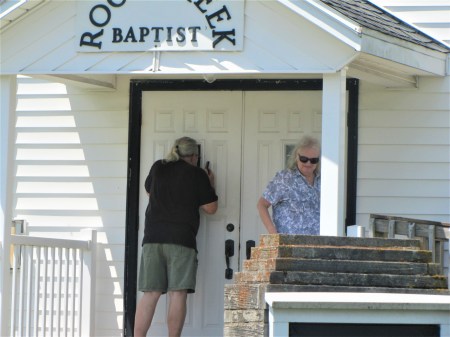
Our son caught us peeking into the sanctuary through the doors!

We noticed that the “Rock Creek Baptist” lettering above the door looked quite a bit like the lettering on many of the old covered bridges we have been visiting. A search online failed to come up with any history of this church, other than it is listed on the American Baptist roles. The church address is 11168 S County Rd 100 W, Westport, Indiana.


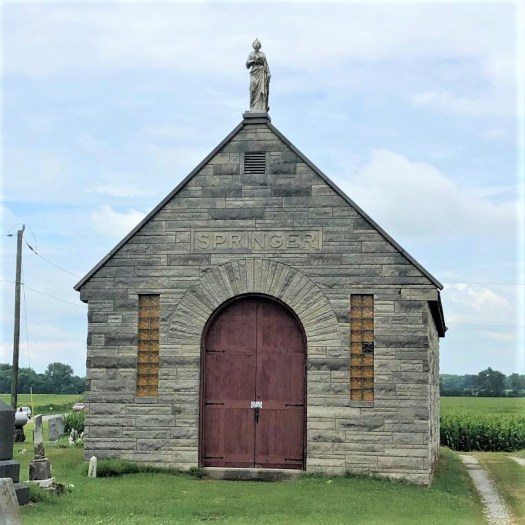
Springer Cemetery , Elizabethtown, Indiana

Elizabethtown is a tiny berg with a little over 500 residents near Columbus, Indiana. The Springer Cemetery is about a mile and a half from town. The first burial was of George Springer in 1857.

The pretty chapel in the cemetery

Civil War veteran and wife

An Indiana Civil War veteran with military headstone


Springer Cemetery is filled with Civil War vets among the other civilians resting here in this small country cemetery. The chapel lends a feeling of spiritual calm and memory of those resting here.


We have changed a bit

Those who have followed us for awhile know that we moved from a big 4 bedroom home with a built in pool to an RV adventure. We had joked as our 5 kids were growing up that we were going to get an RV and park at each of their homes, then when they got tired of us they could pay for our gas to the next one’s home. We have kids that live in Indiana, Ohio, Washington state, and Texas.


We decided when our youngest finished college that we really wanted to do it. The kids were all busy with their own lives and we could travel and stop in to visit them all at the same time. We didn’t really let them pay for our gas.


Then we realized we should really have a small house as a base home. So we now have a very small house with 2 bedrooms and 1 bath. It is quite a change from the big house we were used to, but then we are gone a lot. Our youngest son isn’t married so he lives in the house and takes care of things while we travel.


Then Covid hit and we were stuck. Fortunately we were able to get back to home base just in the nick of time and stocked up with supplies. Like everyone we were shocked at how long it lasted and how bad it was. But, we were safe. Now 2 years later and 2 years older, it is harder for us to travel in the RV cross country like we had been. We still use the RV, but for shorter trips and it is great when we set up at a flea market. We now fly when we go to Seattle or Austin.


We still travel but our interests have changed a little. We like visiting vineyards and winetasting. We’ve gotten interested in old churches and their history. Maj has always been a history buff, so we’ve taken up visiting historical sites.


Our website has changed a bit to compensate for the changes we’re making. Rather then listing all the things we do in each state we are focusing more on the things that interest us today. Oh, and I shouldn’t forget birds! We have taken up bird watching.


I think you will still enjoy following us as we take shorter RV trips, fly out of state and have more personal and fun stories.

Lova Cline’s Dollhouse Grave

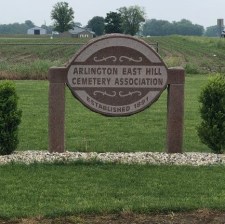
Lova Cline was born in 1902 with a serious neurological disease that confined her to bed. She could not move herself at all. Her father, a carpenter, built her a large dollhouse. Lova’s only enjoyment in life came when she was propped up in bed and gazed at her precious doll house. She died in 1908, and is now buried with her mother and father in Arlington East Cemetery  in Rush County, Indiana.
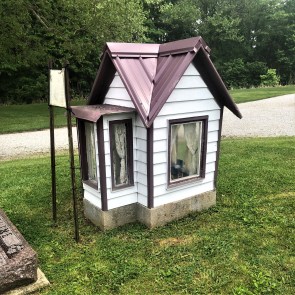
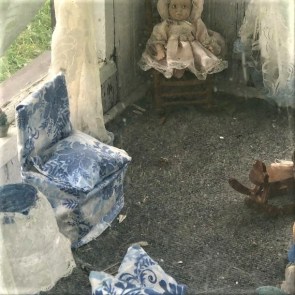
The following narrative is posted on the graves of the Cline family, next to Lova’s dollhouse. We were able to type out a copy from the posted pages. It is worth reading the entire story as it demonstrates true love and commitment.

This is the history of the dollhouse as we know it up to the year 2015
as told by Sheila Hewitt

     Lova Cline was born in 1902. The only child of George and Mary Cline, she
was an invalid from birth, unable to even sit on her own. The only joy in her
life was a dollhouse built for her by her father who was a carpenter.
George Cline was not just a carpenter, but as he insisted, a bridge carpenter.
He built the dollhouse that was a labor of love and heartache. Although the
house is roomy and exquisitely fashioned it has no entrance, only large
windows. Little Lova was able to only look at it from her chair or bed, but it
was the only thing that brought luster to her eyes. He must have known Lova
would not live to enjoy the house long, yet he worked many days and nights
on its construction.
    The dollhouse is 5 feet long and weighs 400 pounds. The roof is gabled and
the weatherboards are popular with a lot of scroll work, which is now
covered. All the original furniture in the house was built by her dad, which
consisted of three chairs, a love-seat all with cushions, a vase of flowers set
on an end table adorned with a lace doily, a crib with a small doll, and some
toys laid around the room. The dining room consisted of a table covered with
a lace table cloth, a vase of flowers in the center, and two chairs with a doll in
one. All of the dolls in the house were Lova’s, put there by her mother along
with dishes and lace curtains for the windows.
     Lova died in 1908 at the age of six, and her dollhouse was placed at the site
of her grave in the west end of the cemetery. It remained there until 1945
when her mother, Mary Cline, passed away. After the death of his wife,
George Cline suggested the dollhouse be destroyed.
    By the time George suggested that the dollhouse be destroyed it was already
an Arlington Legend. Blount Sharp, the Sexton of the cemetery, talked Mr.
Cline out of demolishing the dollhouse. The caretaker moved the dollhouse
and Lova’s remains to their present location, next to Lova’s mother. Blount
Sharp put the dollhouse on a new foundation and painted the outside. His
wife replaced the rug and lace curtains which time and mice had ruined.
    George Cline died in 1946, one year after his wife, and was buried beside her
and little Lova. His will designated Lova Ward-Wooten to serve as caretaker
of the dollhouse. Lova Ward-Wooten had been named after Cline’s daughter.
Lova’s parents were close friends of the Clines and related by marriage. The
Clines would often bring Lova Ward-Wooten gifts when she was small.
    The years went by and the dollhouse stood much as it always had except for
the once a year cleaning that Lova would do. Grown-ups and children alike
would go over and peak in to see what was inside. Then in 1973, an article
about the dollhouse and its antique furnishings appeared in the Trader
Magazine. Then shortly after that, thieves broke into the dollhouse and stole
all of the original furniture and dolls, which are still missing.
    The dollhouse did not stand ravished for long. The Posey Township 4-H
Club replaced the curtains and rug. Nick and Ivanna Pike of Arlington
offered their assistance in restoring the house to its former condition. Mrs.
Pike made three new China dolls to take the place of those stolen. The
original dolls and furniture could not be duplicated because no photographs
of them were ever taken. The new dolls were authentic reproductions of
antiques. Not long after the dolls were placed in the house, one was stolen.
The two that were left were a tiny doll in a baby bed and another doll, which
appeared to be a sister or mother, watching over the baby. Nike Pike welded
together a doll buggy from coat hangers and scrap metal, copying a picture
out of an old catalog. Percy Turner, who died in 1975, built new furniture for
the dollhouse. Chairs set around a little table set with dishes and silverware
as if ready for dinner that never came. A small oil lamp kept an eternal vigil
in the bay windows.
    In the year 1979, another article was written with a picture of the dollhouse
and not long after that vandals struck again. Carl Hutchinson, who was
caretaker of the cemetery at the time, and Lova decided the outside of the
dollhouse needed to be restored. He removed the house and took it to
Tweedy Lumber Company in Carthage. They reworked all the windows,
covered the roof with metal, the sides with aluminum, and caulked the
cracks. The dollhouse looked brand new. Carl also had a large foundation
built and had the dollhouse bolted down when it was finished. These steps
were taken to help against vandalism.
    Lova asked me, her daughter Sheila Wooten-Hewitt, if I would help replace
the furniture. Some friends and I decided to make the furniture out of
cardboard making the furniture of no value. We covered the furniture with
upholstery materials. The dining room chairs were covered in beige and the
table made of cardboard had a lace table cloth. The chairs and sofa were all
covered with materials and had cushions placed in them. End tables were
covered and then a hole punched in them for pencils to be placed to be used
as lamps and Downy lids for shades. A bed was made out of sponge and then
covered with material and little hand made pillows. A lot of time and effort
was taken to make these pieces just so there would be something in the
dollhouse. I made lace curtains, Kathy Schuck donated a piece of carpet to
replace the one stolen, and Joan Williams donated little flower vases to sit on
the windowsills. Everything was then gathered up by Lova, me and my
husband, Dean, and the furniture and curtains were placed in the dollhouse.
At this time there were no dolls but Susie Hewitt, my daughter, had a little
china doll and she wanted to put it in the house. That doll is still there today.
This furniture was left alone, to no one’s surprise.
    On memorial day in 1999, I, Dean and my sister, Aleta, refurnished the
dollhouse with purchased miniature doll furniture and new lace curtains that
were once again made by me. This furniture was really too small and did not
simulate the time period that the dollhouse was built.
    Lova’s dollhouse was also cause for a song that was written in 2001 titled
“Lova’s Doll House with God’s Love.” A gentleman in Greenfield, Indiana,
wrote it. Our little house is filled with God’s love, for over the years it has
caused joy for so many. To be working on the little house and have people
ask me the story or to see little one’s faces light up when they see the
dollhouse gives me so much joy.
    In June of 1999, Lova Ward-Wooten passed away. She asked me to become
the caretaker of the dollhouse. People from everywhere stop to see the little
monument that made Lova’s short life a little happier. Many people over the
years have told the story of the dollhouse in our cemetery. It is more than
just a story of a father’s love for his only daughter. It is also the story of a
community’s affections for a little girl they never knew and how these
feelings have rescued a sentimental memorial. In April of 2002, I once again
made furniture, but this time out of Popsicle sticks which I covered with
material and is more to the size of the original furniture. That is the furniture
that is in the dollhouse today. In June of 2014, Tim Hill asked if I would care
if he put a new metal roof on the dollhouse. I said I did not mind and he
surprised me and did the work on a Friday and Saturday. Troy Warrick had
the materials and Troy, Bill Fox, Robert Schauck and Tim Hill worked and
put on the new roof. After Troy left, Bill, Robert and Tim painted the
dollhouse. I went to thank the boys and asked why they did all of this and
they said the dollhouse is a part of the community and they wanted to
contribute from the community. The love that George felt for his daughter
will live on through the dollhouse and all that visit the dollhouse can feel that
love.
    I found a doll dressed in clothes of the era the dollhouse was originally built
and in May of 2015 the doll was place inside the dollhouse. I will keep up on
the dollhouse as long as I am able and my granddaughters, Jessica and Logan
Hewitt will, I hope, someday take over caring for the house as I have. Enjoy
our little house and remember it is with God’s love we have it to remember.

By Sheila Hewitt
May 2015


What a remarkable tribute. May Lova and her mom and dad rest in peace.

Tarzan and Jane final resting place

Original 1927 movie poster

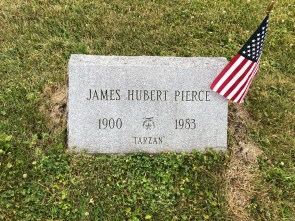
Several actors and actresses played the parts of Tarzan and Jane while bringing Edgar Rice Burroughs’ many novels to the big screen. One of those actors was a man named James H. Pierce. He was discovered by Burroughs himself at a party at the Tarzana Ranch and was hired to play the jungle hero in the 1927 film Tarzan and the Golden Lion.

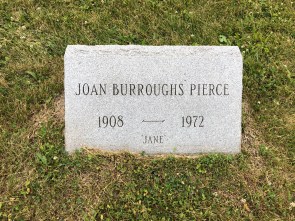
The next year Jim Pierce married Edgar Rice Burroughs’ daughter Joan. The happy couple starred as the voices of Tarzan and Jane for the Tarzan radio show from 1932 to 1936.

“Tarzan”

“Jane”


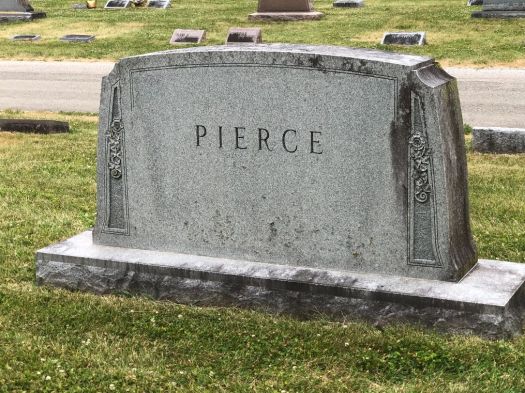
Jim pierce was originally from Shelbyville, Indiana. He and wife Joan and other relatives are buried in Forest Hill Cemetery in Shelbyville. Their family plot is similar to many in the cemetery. However, only on Jim and Joan’s gravestones will you find the names “Tarzan” and “Jane”.

May they Rest In Peace