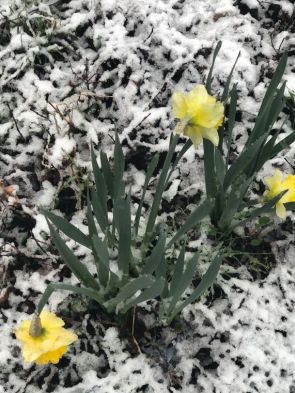
We woke up this Monday after Easter to a surprise scene out the windows. This late snow, rare in Indiana in April, was a wet and heavy type. A few of the daffodils could not take the weight of the accumulated ‘slush’ and suffered collapse.


We woke up this Monday after Easter to a surprise scene out the windows. This late snow, rare in Indiana in April, was a wet and heavy type. A few of the daffodils could not take the weight of the accumulated ‘slush’ and suffered collapse.


Today we noticed a squirrel checking out the suet in the feeder. This little guy seems to have two different color coats: gray and light brown. Any ideas why or how?


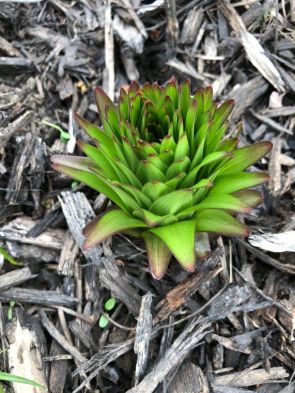
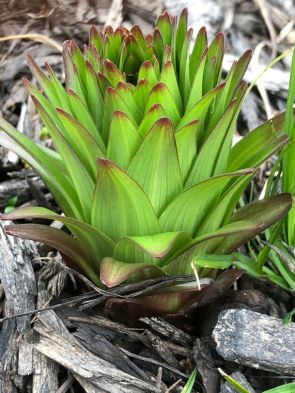
These Asiatic lilies are emerging again in our flower beds. This is the second season for these bulbs to emerge. We split some lilies from our front yard and replanted those bulbs. These images are the result of those replanted bulbs. The lily in the header image emerged today.
As long as this little guy eats weeds and grass, not good garden stuff!

There is just something a tad bit creepy about the turkey vulture soaring above the abandoned old barn. Kind of expect to see Hitchcock in one of the windows…

A 1915 Purdue University guide to concrete fence posts
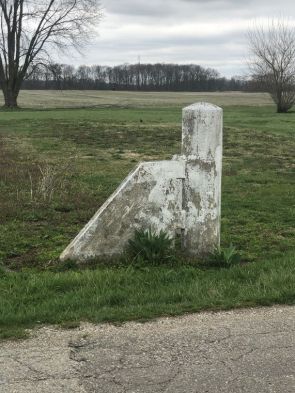
Take a drive on most any rural Indiana road or some other Midwest states and it won’t be long until you spot some rather massive concrete pillars apparently serving no purpose. These are in fact old, now abandoned concrete fence posts. Decades and decades ago almost all farmsteads raised livestock, including work horses, thus strong “cattle and horse tight” fencing was an absolute necessity.
Constructing livestock fencing that is functional and remains functional year after year is a skill that farmers and ranchers had. One of the important parts of a good fence is the end post and/or corner posts. These posts anchor the wire fence that stretches along the length of the particular fence line. If the end and corner posts do not hold, the fence wire will sag and livestock will get out, causing quite the kerfuffle.

Remnants of fence wire is still wrapped around this post

This post had white wash and weeds clipped
Old concrete fence posts can be seen alongside many roads in the country. Sometimes you can tell from the locations of these relics coupled with the position of mature trees where once stood an old house and barn yard. Some will be painted, others will be nearly covered with weed and bush growth. They do stand as a reminder of the days when all farm families raised livestock as a part of their livelihood.
This is the link to the 1915 pamphlet pictured above.

Seems like it has been a while since the bulbs popped out of the ground. (It was actually March 18th when the first sign of the green showed up.)


Ready for “Hello, Dolly! at Indy’s Beef & Boards