
Looking like lavender. Such a deep, rich and royal color!
Looking like lavender. Such a deep, rich and royal color!
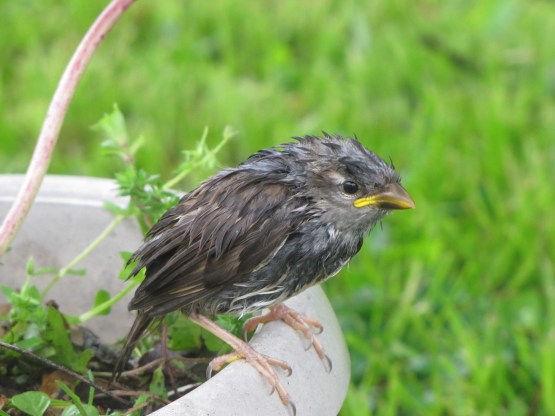
After a pretty good rain storm a while back we noticed that a hatchling had fallen out of a nest in a tree limb in our backyard. This little fella looks quite wet and disheveled. One of the parents did come down to the ground in front of the hatchling, and the last we saw of the two (adult and youngster) they were still together across the yard. We can only hope that this story had a good ending.

This shows the beginning of our set up for the Highway 40 yard coming this week. The sale is an annual event and it follows old US 40. Hundreds of folks set up and thousands shop along the route.
We’ll keep you posted as the week goes on. Sher and I always enjoy this event. We missed it last year due to Covid-19.
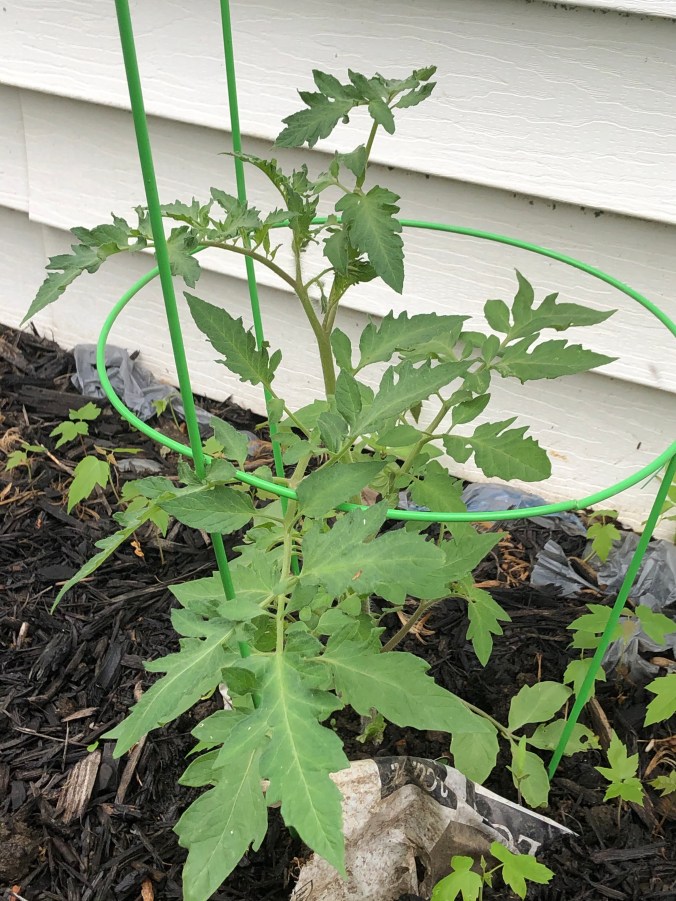
One of two store bought plants we planted. Maybe we’ll get some good tomatoes 🍅🍅😀
Who hasn’t seen this early bird getting the worm in the morning in your yard? This classic backyard favorite bird ranges from coast to coast in the US and Canada.
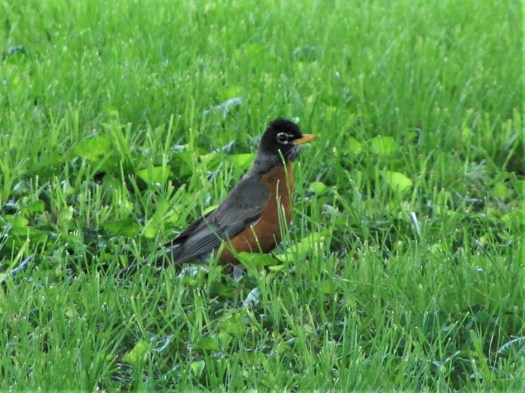
Did you know robins can raise three broods each season? Probably a good thing, as only 40% of the nests successfully produce young. People say that robins are a sign of spring. They actually winter over, however and spring is when you’ll see “the first” robin in your yard!

These were transplanted from our front flower beds to our herb and flower garden in the back. They have done well, and are preparing to bloom. Note the sage behind the lilies.
That is right. Downy Woodpeckers do not sing like most birds. They communicate by “pecking” or drumming on wood or even metal. Surprisingly these woodpeckers make very little or no sound when going after their insect prey. They are capable of feeding on insects that larger woodpeckers cannot catch, like fly larvae in weed stems.
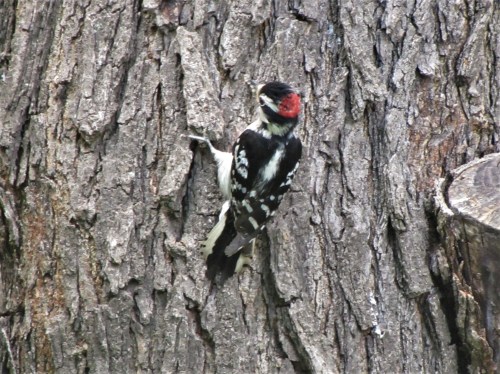
Male Downy, the female does not have the red on her head
We see both male and female Downy Woodpeckers quite often in our backyard. They like the suet feeders, and we have spotted a male on our hummingbird feeder. Like the White-breasted Nuthatch, Downy Woodpeckers like to flit from branch to branch, lighting on the suet feeder, grabbing a bite or two and then off they go.

These four sparrows enjoyed a meal together on the feeder. It is most enjoyable watching the birds on the feeders and picking through the seeds on the ground as well.
This little guy has a beautiful song and quite a loud one at that. He likes to come to the feeders (really likes the suet) several times a day. He doesn’t stay long, regardless of how many other birds are around at the time. He likes to flit around from branch to branch, grabs some morsels and then off he goes.
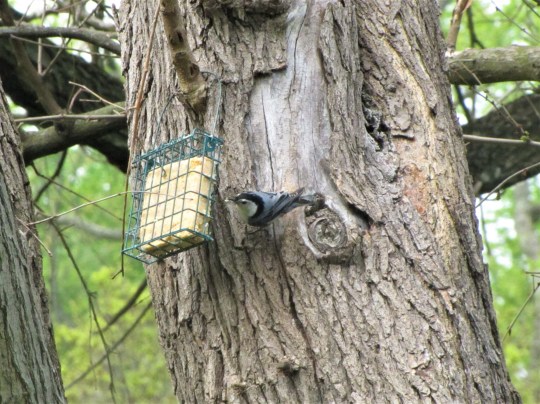
The common name Nuthatch comes from a unique behavior. The primary diet is insects and large meaty nuts. They will take large nuts and acorns and jam them into the bark of trees. Then with their sharp bills they peck open the nuts, or “hatching” them. They are also known for storing seeds and nuts in tree bark in preparation for winter.
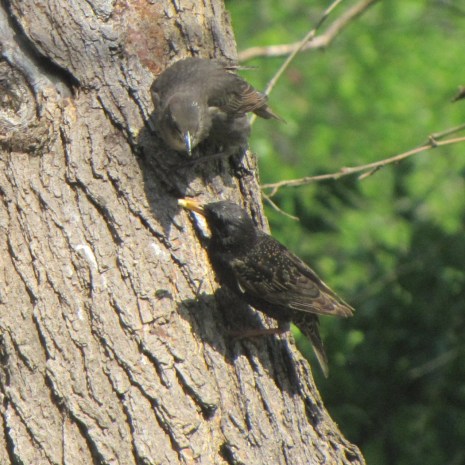
The starling parent, below, has a morsel ready for to feed its juvenile, above. The youngster is perfectly flight capable, and follows the parent around demanding to be fed.
 Roadtirement