This has survived over 5000 years

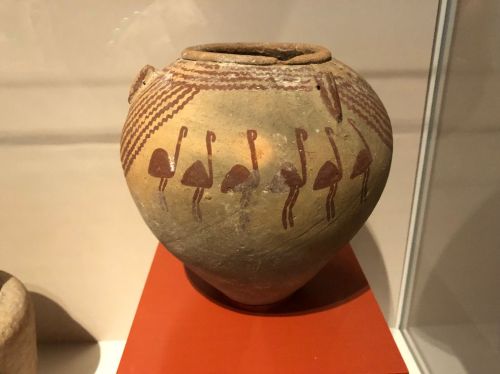
This Egyptian vessel has survived for over 5000 years. It is amazing that you can still observe it close up in the Newfields  museum in Indianapolis.

This pot is about 14 inches tall

This artifact is identified in a museum information label as a Nagada II Vessel, titled Flamingos. It is dated 3400-3200 B.C. The pictures of the flamingos and the geometric lines are typical of other pots of the same vintage.

A turn of the century sanitarium for addiction treatments

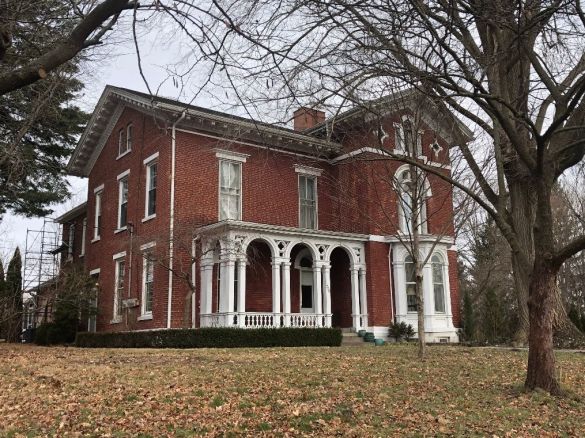
This stately brick home was built in the 1860’s in what was then the outskirts of Shelbyville, Indiana. In 1906 the son of a local judge opened this home as a hospital for the treatment of those with addictions.

The Hord Sanitarium building as it is today

View in 1906 Postcard from The Indiana Album

Back of postcard from The Indiana Album


Dr. Luther Hord operated The Hord Sanitarium Park from 1906 until well into the 1940’s. The Hord Sanitarium was known throughout the Midwest as one of the premier hospitals for the treatment of alcohol and drug abuse. Currently it appears that the multistory house is being used as apartments.

Great bourbon starts with the good water at Lawrenceburg

Driving along US 50 through Lawrenceburg, Indiana, it is hard to miss the large complex of tall red brick buildings and multiple silver tanks that are part of the former Seagrams Distillery plant that straddles the Lawrenceburg and Greendale city boundaries. The current owner/operator of the facility is now MGP Ingredients, based out of Kansas.

This building has six floors (two of which are underground) of aging racks for the 550 pound barrels of whiskey

The Cincinnati Magazine published a fascinating and detailed story about the history of the Seagrams Distillery, its current owners, and the ins and outs of the distillery business around the country. Read that article here. 

This paragraph is from the Cincinnati Magazine article.  “According to (Master Distiller Greg) Metze, it all starts with the water. MGP Ingredients sits on an aquifer, just a short walk from the Ohio River (most of the facility is actually in Greendale). That 56-degree water—low in sulfur and iron, high in calcium, and limestone-filtered—lets MGP make a lot of whiskey, and also have a continuous source for cooling the equipment. That’s why there were so many distilleries in Lawrenceburg in the 1800s. MGP’s began life as the Rossville Union Distillery in 1847; after Prohibition, in 1933, it was purchased by the legendary Canadian company Seagram. Right next door was Squibb, which opened in 1846 (though another distillery, Dunn and Ludlow, was on that patch of land in 1807) and became part of the Delaware company Schenley in 1933.”

The tower houses multi-story continuous column stills

We drove by the facility last weekend during our day trip in the area. It is huge, and what we found was that unfortunately it does not offer public tours of this historic distillery. At one time the Seagrams plant employed over 2800 at the distillery and bottling plant. It is truly an iconic business with a rich and colorful history.

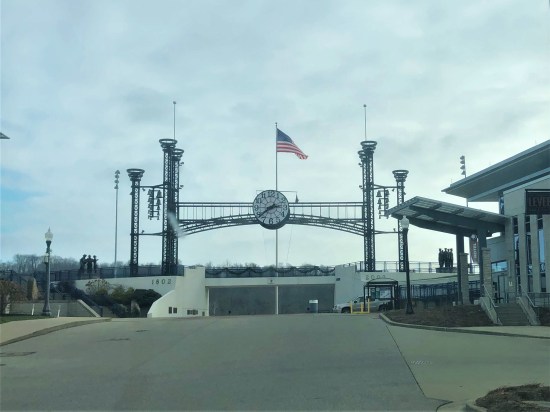
Lawrenceburg Indiana Bicentennial Monument

Lawrenceburg Indiana is on the Ohio River across from Kentucky. The pictured riverside monument was erected for the city’s 2002 bicentennial celebration. Two 12 foot diameter clocks face both the river and the land. A 30 bell carillon plays every hour with the peal of bells honoring the struggles of the “everyday man.” Stylized smokestack-styled columns frame the monument symbolizing Lawrenceburg’s long river heritage.


Honoring all branches of the service

Honoring first responders

The monument features bronze statues of soldiers and sailors of all branches of the service. On the opposite flank is a bronze statue honoring the police and firefighter first  responders in the act of rescuing a child and passing him to an EMT. The center of the monument is open to the riverfront, however there are flood gates that may be closed, as the monument is also part of the flood control levee protecting the city.

Old Kentucky tobacco barn

We spotted this old tobacco barn from the I-275 interstate in Kentucky. These barns are used to hang tobacco plants after they are cut at their base. Burley tobacco plants can grow to a height of six feet. The barn’s missing siding boards and roof vents enable the large leaves to dry before they are baled and sold. Beyond the barn is the Ohio River.

Mural remembers an 1885 fire wagon

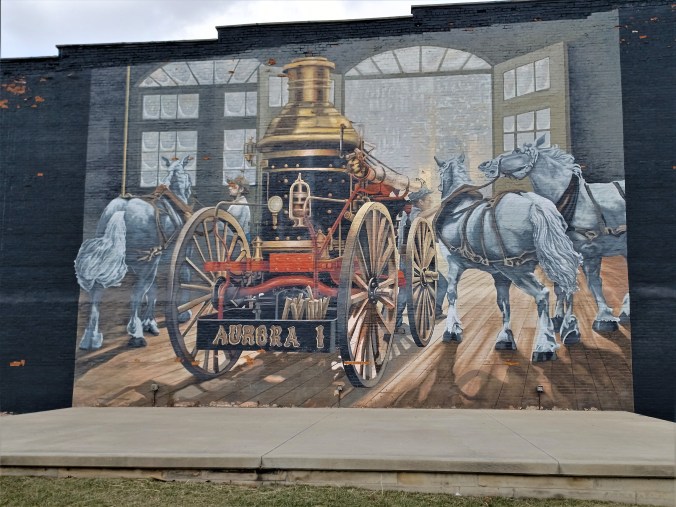
Aurora, Indiana is a quaint and historic Ohio River town about 34 miles downriver from Cincinnati, Ohio. Go back to February, 1885 and see the city spend $3000 for a horse drawn steam pumper suitably christened Aurora. This beautiful horse drawn firewagon served the city well. In 1962 it was loaned to the Cincinnati Fire Museum in trade for professional restoration and the right to display. There Aurora remains.

In 2017 Mr. Don Andrew, a local resident and businessman, commissioned the Christian Dallas Art company to paint a mural on the side of his building depicting the Aurora in her stable with the team of horses being hitched up. Andrew paid $11,000 towards the total cost of $16,000. The rest was paid from the City of Aurora’s 2017 Facade Improvement Grant funded through riverboat gaming. This mural will really catch your attention when you first come into town on the Ohio River Scenic Highway.

A power plant on its last years

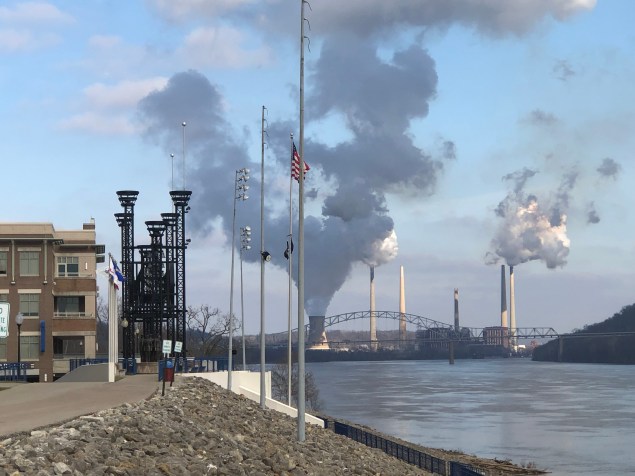
The Miami Fort Power Station is located on the banks of the Ohio River in Hamilton County, Ohio immediately east of the tripoint of Indiana, Kentucky, and Ohio. This power plant is a dual-fuel power generating facility, consisting of a major coal-fired electrical power plant that is supplemented with a small oil-fired facility.

Photo from Lawrenceburg Indiana riverfront, I-275 bridge and Miami Fort plant ln the distance

With its origin dating back to the first coal fired unit in 1949, the most recent coal unit was commissioned in 1978. Oil fired units were commissioned in 1971. The facility was originally owned by Cincinnati Gas and Electric Company (CG&E) which became Duke Energy. Currently Dynegy is the owner.

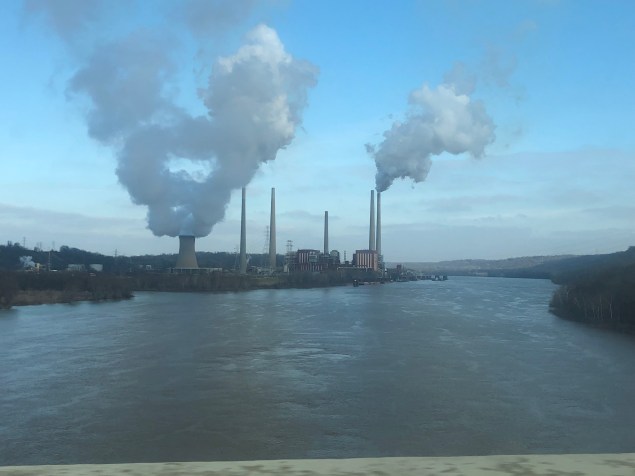
View of the power plant from the northbound lanes of the I-275 bridge

The huge plant is impossible to miss when you are traveling on I-275 crossing the Ohio River. It is east of the bridge and the columns of smoke at times are dominant in the skies. As of this writing two coal-fired units have been decommissioned. It has been announced that by the end of the year 2027 or sooner the Miami Fort Power Station will be retired.

This ferry ran from 1802 to 1978

Aurora, Indiana and Petersburg, Kentucky were connected for nearly two centuries by ferry that transported people, vehicles and goods back and forth across the Ohio River. From the first two horse powered days until the 15 car ferry in service at the end, the Aurora Ferry Company provided uninterrupted service seven days a week.

The history of the ferry

This canoe with the accompanied bronze plaque makes up a memorial marker for a long time icon of the Ohio River. From 1802 to 1978 a ferry ran back and forth across the Ohio. You can see this on the Ohio River Scenic Highway that runs along the river through Aurora, Indiana. The bridge that killed the ferry is out of sight in the background.

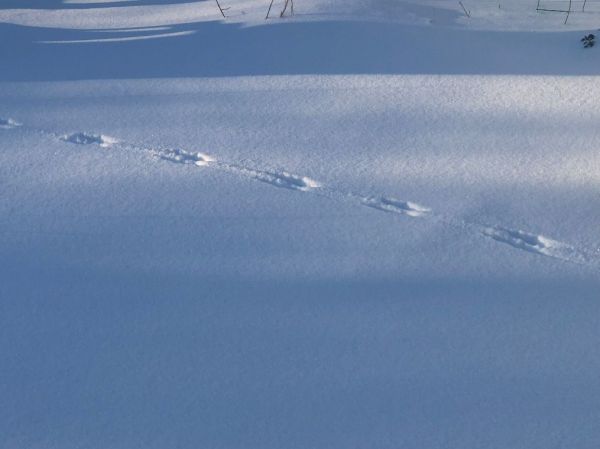
The first real snow of the season

It is not much, but at least it is enough to record. 

Won’t use the swing or table today

The rose looks a little forlorn this morning

We usually always post our photos as the camera takes them, with no editing or special effects. These two snow shots, however, are presented for your viewing pleasure with color editing, so in black and white. The post header photo is not edited, and is of our sage plant in the herb garden.