A recycled SUNOCO sign

Red’s Corner is out in the country in Johnson County, Indiana. The original building appears to be empty. It most recently was a welding shop. It’s also been a pizza kitchen. It was at one time a service station. Yes, you’re right it was a SUNOCO station. Clever that the sign has remained in service, albeit with a different name as the banner.

The arrow piercing the sign originally came in on a horizontal plane. (1920 – 1954) In 1954 the arrow moved and came down at an angle as you see in the picture above. This arrow position has remained to the present day, although the SUNOCO lettering was slanted beginning in 1999.

Unique White Bronze cemetery monuments

When you come across a blueish colored grave monument you can’t help but wonder how it has maintained its lettering and clarity of the dates. No, it is not a later replacement, it is the original zinc metal grave marker. Manufactured by the Bridgeport, CT. Bronze Company, these long lasting  but somewhat fragile monuments were custom made from 1876 until 1914.

When you tap on the surface of these monuments you can immediately tell it is metal. The seams where the individual pieces are joined are also obvious.  Each piece was cast in Bridgeport and then shipped to the cemetery for installation. Customers dealt with sales reps armed with multiple catalogues with unlimited possibilities for choice of monuments.

Name/dates of deceased and panel with “Shaking Hands”

“HOW DESOLATE OUR HOME BEREFT OF THEE”


The zinc-tin alloy used in the castings did not rust and resisted the growth of mold or algae. Each monument was custom ordered, so all are one of a kind. The designs included panels that were screwed in and could even be changed at a later date, if desired.  These were perfect for symbols like the shaking hands, sheaves of wheat or personal messages in addition to the name and dates of the deceased.

A smaller monument

Name/date still legible after nearly 140 years


The material of these was advertised as White Bronze. White Bronze doesn’t exist. These are made with a zinc-tin alloy. The company, however, felt that White Bronze is a much classier and sophisticated name than zinc. They also claimed (of course!) that their monuments would outlast any stone monument. In a way that was true, however these zinc beauties were susceptible to breakage from, for example, falling trees. In addition, very tall monuments could suffer over time from settlement of part of the bases.

This panel would have been custom ordered for the monument

The next time you are enjoying a relaxing walk through a cemetery or graveyard keep an eye out for different looking monuments. Go have a look, it just might be a one of a kind White Bronze monument that was cast in Bridgeport, Connecticut between 1876 and 1914.


A classic 1877 covered bridge still in service

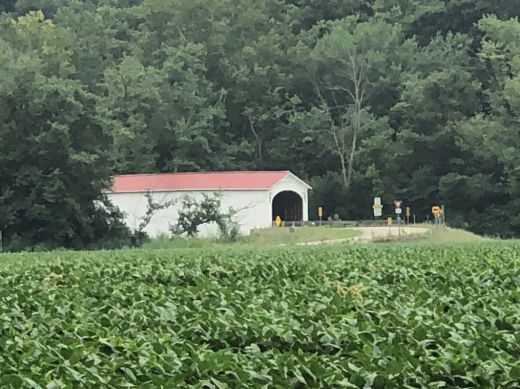
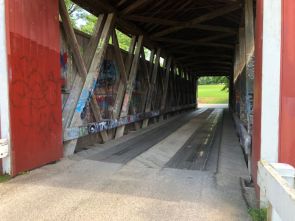
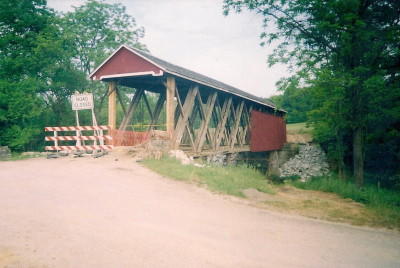
Rush County, Indiana is in the east central part of the state. On CR 150 North an 1877 historic covered bridge crosses over Flat Rock River.

Looking west on CR 150 North

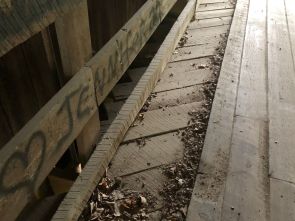
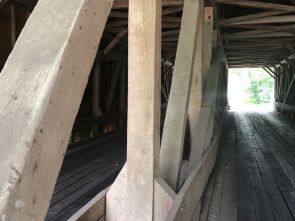
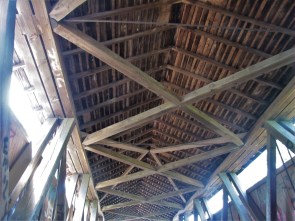
The bridge was constructed by the A.M. Kennedy and Sons company, one of three large bridge construction companies building bridges in Indiana. This bridge is 121 feet long, 15.4 feet wide with a clear height of 13.5 feet above the wood deck. The design of this bridge is a Covered Burr arch-truss style.

Family name proudly displayed

Fancy filigree adds a touch of class

Structural details

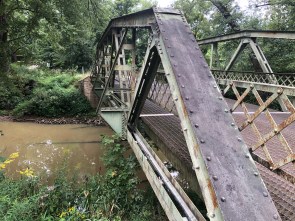
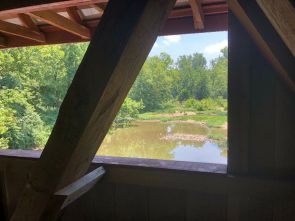
Standing center span, looking upstream


This beautiful bridge was listed on the National Register of Historic Places on February 2, 1983. There is mention that the bridge did suffer some damage a while back when a fire broke out. Repairs included adding several reinforcing steel plates to some structural members. Standing on the wood bridge deck it is easy to imagine hearing the clip clop of horses crossing this bridge long before cars were invented.