Fire destroyed the 1879 grandstand ten years ago

Around midnight on May 19, 2012, Shelbyville, Indiana residents saw flames raising hundreds of feet in the air. The source of the flames, visible from over a mile away, was the historic all wooden grandstands at the Shelby County Fairgrounds. These grandstands were constructed back in 1879, and records show that 6000 board feet of white pine was utilized for the build. Over 130 years later, the wood was tinder dry and the entire structure was fully involved when firefighters arrived on the scene.

New grandstands facing the track

The history of the Shelby County Fair goes way back to original farmer’s markets in the late 1840’s. The legal organization came in 1873 with the writing of the Fair Constitution. Future Vice President of the United States Thomas A. Hendricks took part in the authorship and execution of these documents. The first fair under the Shelby County Fair Association name was in 1874.
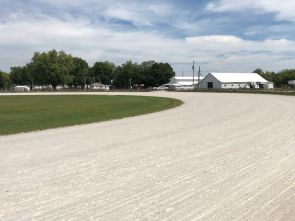
Stables in background, turn 3 in foreground

The backstretch


The grandstand, as mentioned above, was built in 1879 at the same time the race track was being renovated. This track is known as one of the fastest tracks in the state due to it’s design, which was a duplicate of the world-famous Kentucky Derby track at Churchill Downs in Louisville, Kentucky. Horse farms from all over have trained on this track for decades, and still continue to stable and train in this facility.

The old grandstand, photo by Gary Plunkett

The new entrance to the grandstand
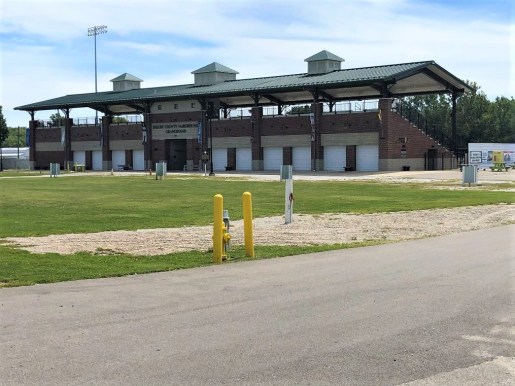
New grandstand facing the fair midway

The burning of the grandstand in 2012 a couple of weeks before the scheduled opening of the fair was a shock to this small Indiana community. The temporary portable bleachers just didn’t quite get it. However, in 2014 the new grandstands were completed. with the same basic design, but now constructed with brick and concrete, both fireproof!

St. Peter’s UCC is a beautiful country church

St. Peter’s United Church of Christ is a lovely church in Ripley County, Indiana. While it has an Osgood address, it is actually closer to Napoleon.

Front of the church

The steeple

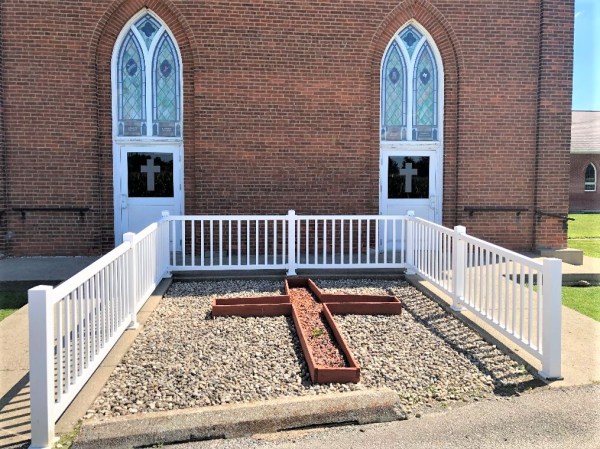
Unique double entrance doors

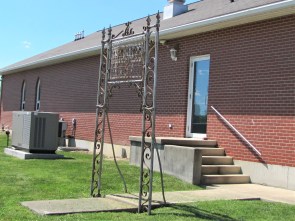
There is a decent sized graveyard behind the church building. Of note is the interesting iron graveyard gate signage over the entrance drive to the graveyard. Also seen is an additional smaller gate entrance piece that has been mounted over a sidewalk entrance to the back of the fellowship hall of the church. It could be guessed that both of these structures have been relocated for original placements.

View of the graveyard

Fancy iron entrance signage

Smaller iron gate arbor


This church is located on the south east corner of the intersection of W County Rd 700 N and N Fink Road in Ripley County, Indiana.


A Vice President’s family log cabin

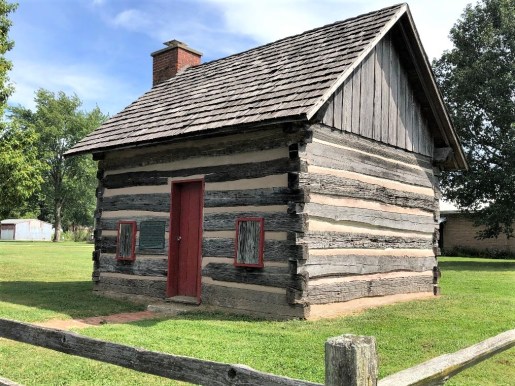
Shelbyville, Indiana is a small town in central Indiana and was home to Thomas A. Hendricks, Vice President to Grover Cleveland. A replica of the Hendricks family log cabin is on display at the Shelby County Fairgrounds.

Reconstructed log cabin made from original logs from the Hendricks family cabin

Thomas A. Hendricks was a politician and lawyer who served as the 16th governor of Indiana from 1873 to 1877 and the 21st vice president of the United States from March until his death in November 1885. Hendricks also served Indiana in the U.S. House of Representatives and the U.S. Senate. He was born in Ohio and his family moved to Shelbyville in 1822.

Information plaque mounted on the cabin

Vintage postcard of the original cabin, courtesy Indiana Historical Society

Thomas A. Hendricks


Hendricks was married to Eliza Morgan, and they had one child, a son who sadly died at age three. Hendricks was very popular with the people, and unfortunately he died on Thanksgiving night during his first year in office as Vice President. Hendricks is buried in Crown Hill Cemetery in Indianapolis.


Mud Pike Baptist Church and Cemetery

We were off on another daytrip in south east Indiana. We did have a couple of specific destinations, but as usual we did enjoy just coming upon interesting sights. One of these surprises was the Mud Pike Baptist Church and Cemetery which we came upon on, you guessed it, East Mud Pike Road. The church is roughly equidistant from Napoleon and Osgood, Indiana, both on US Highway 421, aka Michigan Road.

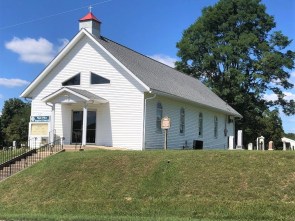
Pretty white church edifice

Remounted bell and one side of the cemetery

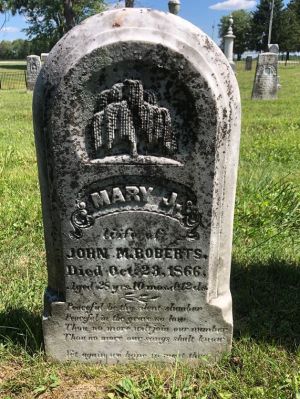
Notice the “Weeping Willow” tree in Mary’s tombstone

The grave of thirty two year old Sarah, passed in 1878

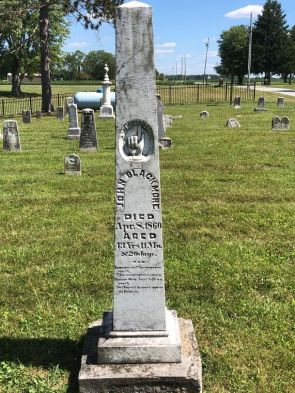
Grave of John Blackmore, Charter Member and church land donor

The bell remounted

Originally Delaware Baptist started in 1842 with 12 members, and Charter Member John Blackmore donated the ground for the church in 1844. In 1911 the bell was mounted in the belfry of the structure. A  fire devastated the church in 1996, resulting in the bell crashing to the floor. It now is mounted in a place of honor next to the flagpole and bench. The church was renamed Mud Pike Baptist Church in 1938, and it celebrated its 175th anniversary in 2017.

Finks Road stone arch bridge

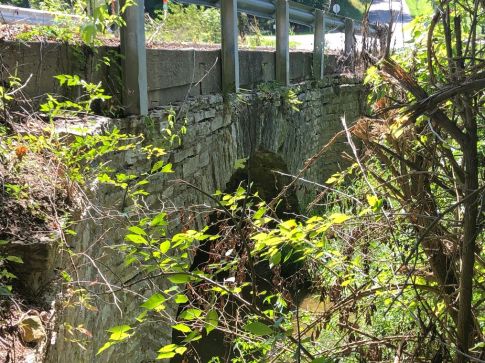
Ripley County, Indiana is allegedly home to 11 stone arch bridges. The Fink Road bridge spans a branch of Laughery Creek, one of the main waterways in the county. This is a smaller single arch bridge that is not really obvious from the road.

Hard to see the stone arch through the vegetation

All you see are guardrails

Courtesy bridgehunter.com by Anthony Dillon

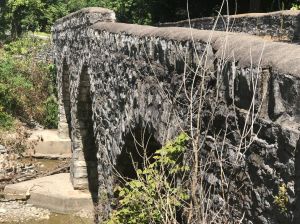
Stonework in B&W

This bridge was probably built around 1900 and refurbished in 1993. This turn of the century time frame saw many stone arch bridges constructed. The Fink Road Bridge, while only 60 feet long, has an unusual full 19 feet wide two lane spacing. It shows the high degree of craftsmanship typical of the times.


A lovely four-span stone arch bridge

Ripley County Indiana is a scenic land of rolling hills, wooded tracts interspersed with farming enterprises. Amongst the unique sites include a wonderful stone arch bridge just outside the tiny village of Friendship. This bridge was constructed in 1909 on the Olean Road where the road crosses Raccoon Creek.

From a distance

The approach to the bridge

Nearly perfect stonework


Side view of the stone work arches


The stonework on the four arches is really a stone mason’s dream. This bridge has spans over 20 feet. The deck is nearly 15 feet wide over the 103 foot length. Stone arch bridges were a very common design for many rural stream and river and there are eleven still standing in Ripley County alone, according to records.

Raccoon Creek is typical of southern Indiana hill country drainage streams. Usually running, it can go dry in droughts. The bubbling sound of the passing of the water adds to the serenity of this environment.


Historic Miller Cemetery

Just a few miles west of Shelbyville in central Indiana, on a road aptly named Cemetery Road, you’ll come across a well-kept and decent sized rural cemetery. Miller Cemetery has roots back in the early 1800’s.

Proud flag and pure white lettering

Corn and soybean fields beyond the graves

Equipment shed, and yes, an outhouse

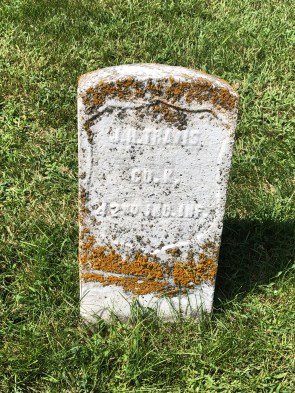
Civil War Veteran of CO.K, 42nd IND. INF


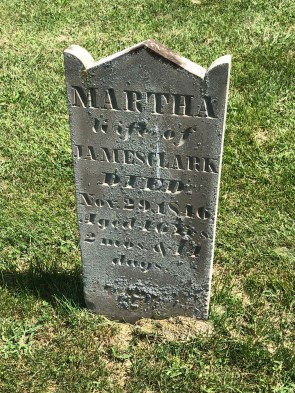
Sad record of the death of a very young wife

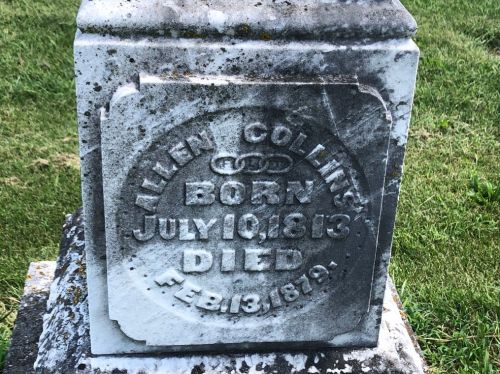
A member of the Odd Fellows, symbolized in the 3 chain links

According to the Cemetery Facebook page farm neighbors formed a loosely knit organization in 1926 for the purpose of upkeep and administration of the grounds. The volunteers still perform their loving tasks. This is one of the best manicured country graveyards you will find.