Connersville Indiana city cemetery contains interesting markers

The City of Connersville’s City Cemetery contains many historic names etched in the stone of the many grave monuments. The remains in two previous city burial grounds were moved to the 14 acre location in 1851. The cemetery was dedicated in a sacred ceremony in that year.

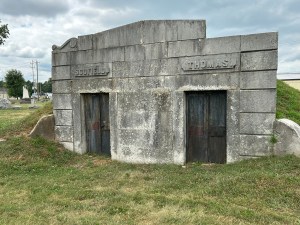
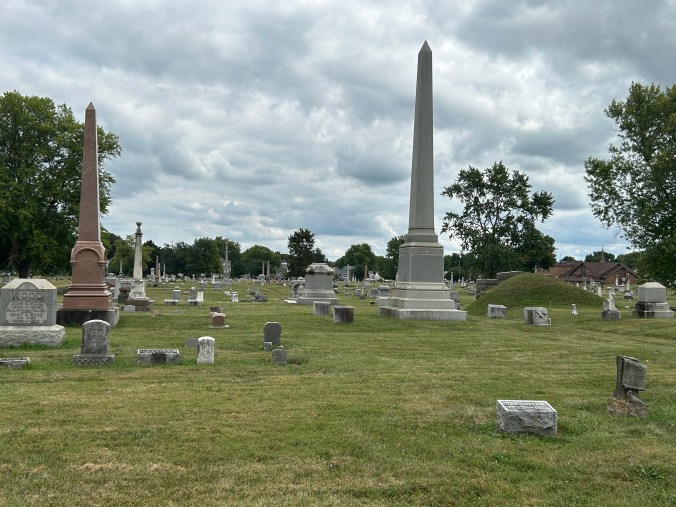
View across the grounds. The mound is the top of a mausoleum.

The only mausoleum was empty.. The reason is still a mystery.

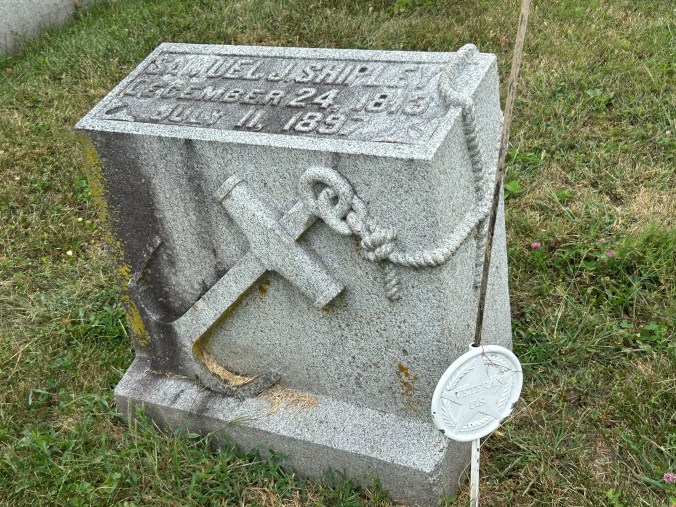
Lt Samuel Shipley was a member of the first graduating class of the US Naval academy. He served as a shipboard  officer in the Civil War.

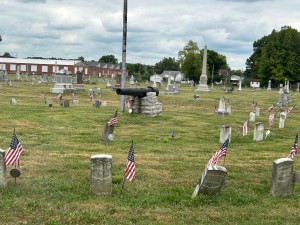
The “Soldier’s Circle” honoring the Civil War Vets

There are many interesting monuments in the cemetery. Politicians, businessmen and their families and other folks have made the Connersville City Cemetery their final resting place. The grounds have been designated as a local historic district, and guided tours are offered by Historic Connersville, Inc.

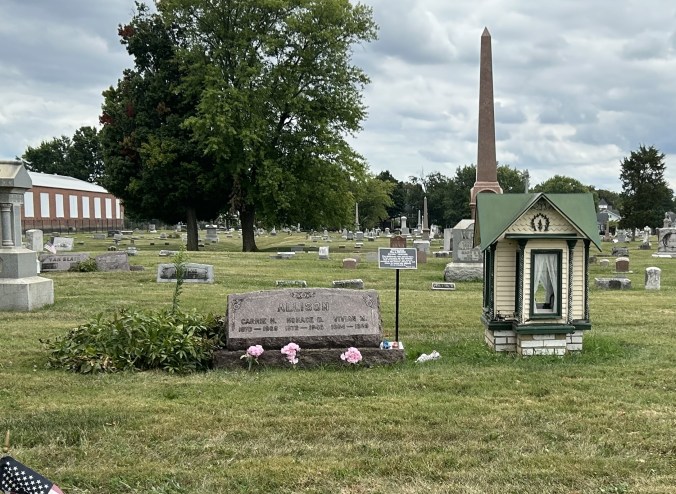
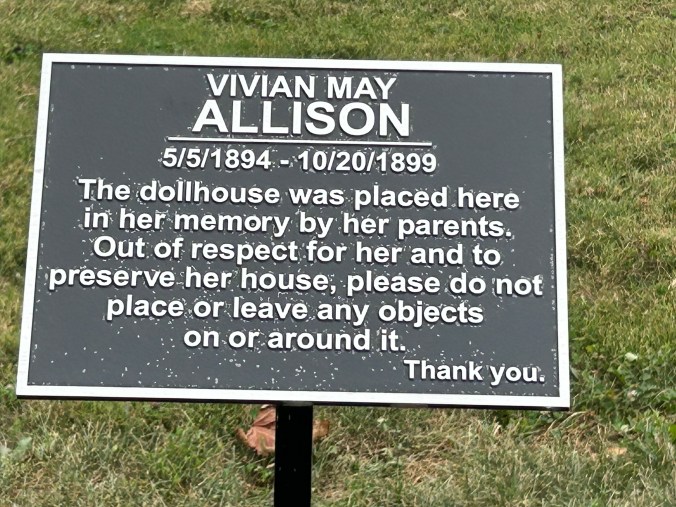
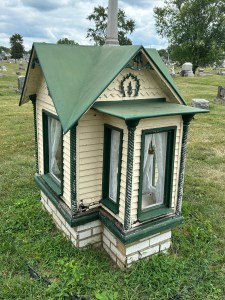
Doll House grave of Vivian May Allison 1884 – 1889

Connersville is a small town in eastern Indiana with a long Hoosier history. Part of the interesting history includes a very unique grave in the City Cemetery. It is now known as the Doll House Grave.

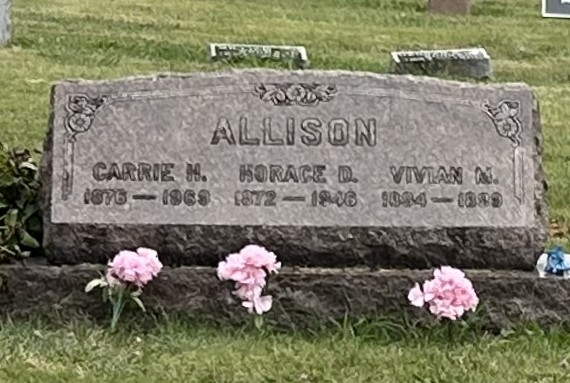
The Allison Family Grave


Public information signage

Vivian’s beautiful doll house

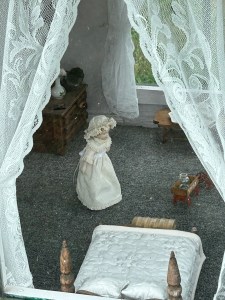
Interior view


Family Headstone

Vivian May Allison was born in 1884. She was taken with a fatal spine disease, cerebro-spinal-fever, and tragically died in 1889 at age 5. The story goes that she wanted a doll house for playtime, but she died before her father could complete it.  Finished, it now is part of the family plot, there for Vivian’s use.

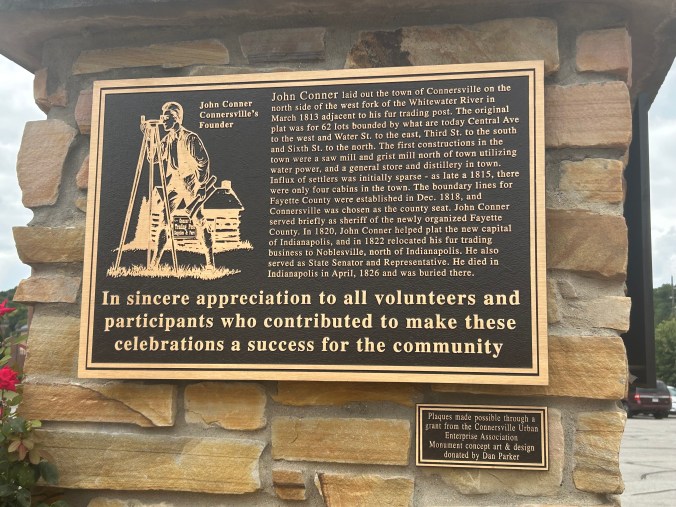
John Conner founded Connersville, Indiana in 1813

John Conner founded Connersville, Indiana, when he laid out the town in March of 1813.  The town was laid out next to Connor’s  fur trading post on the Whitewater River. Conner was an important person in Indiana’s history, as he surveyed many towns and villages, including the layout of the then young city of Indianapolis.


Connersville has lots of history and historic sites to explore. We’ve just started our dive into Connersville!

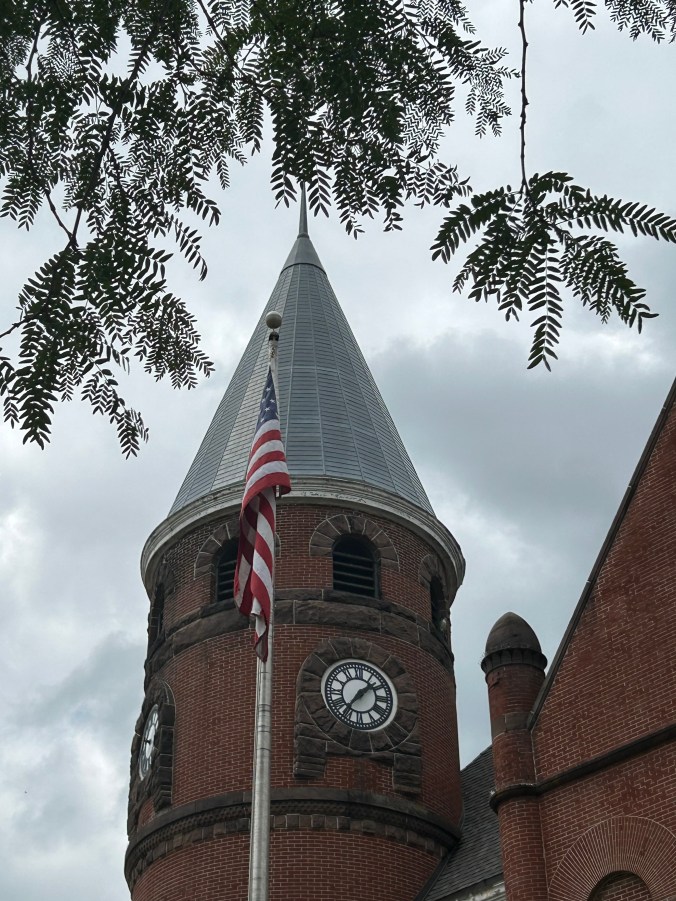
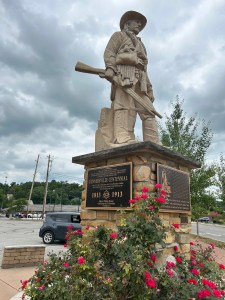
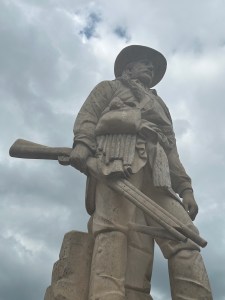
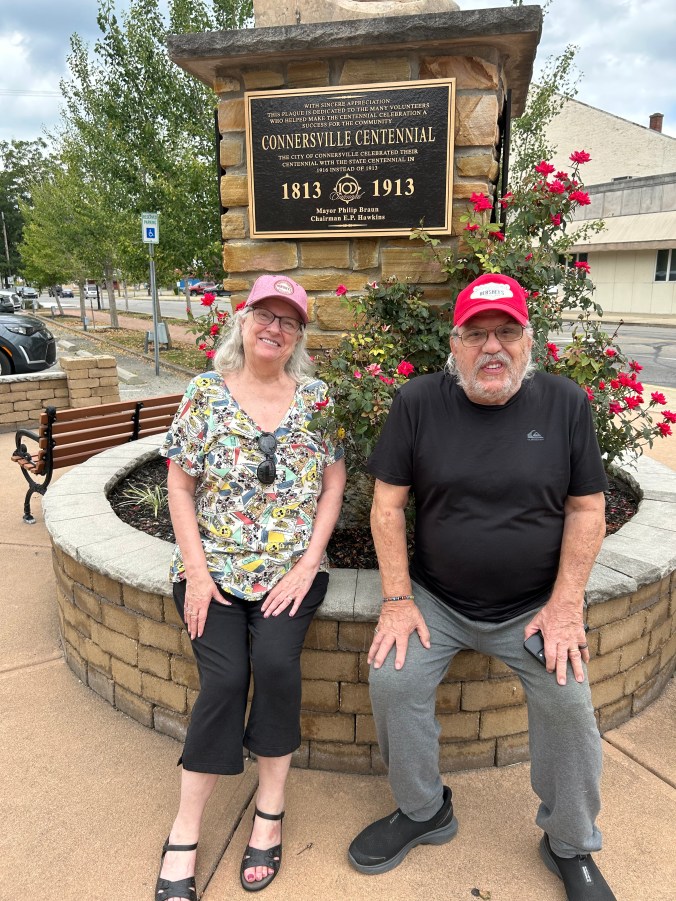
The City of Connersville placed a memorial statue of Connor on a corner of the Fayette County Courthouse parking lot in 2017. Plaques listing Connersville’s history adorn the four sides of the statue’s large base.

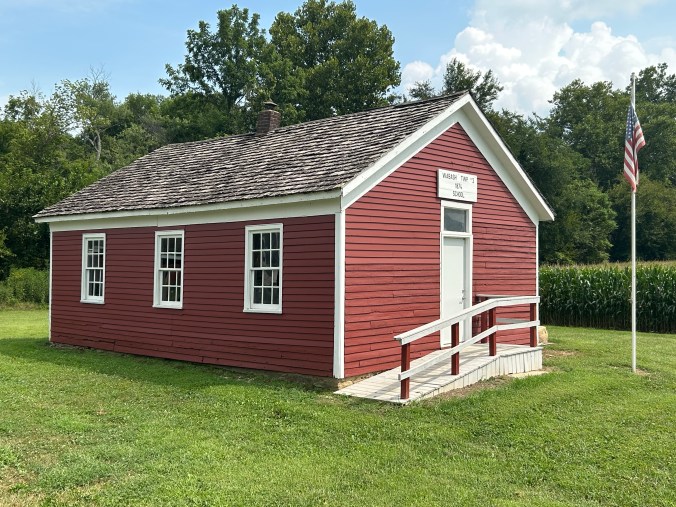
Recreated 1874 one room schoolhouse in Parke County Indiana

Recently Sher, our son and I were enjoying a road trip in Parke County, Indiana to visit some of the 31 covered bridges that dot the landscape. As we approached the last bridge on the Red Route (one of five self driving road sightseeing tours) we saw a small red building.

The one room schoolhouse from 1874

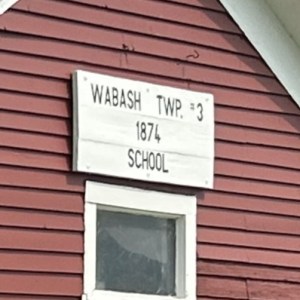
Over the door

The Mecca Bridge reflected in a window


This single story frame structure was identified as a school in Wabash Township #3 with a date of 1874. It was about 30 yards from the Mecca Bridge built in 1873.

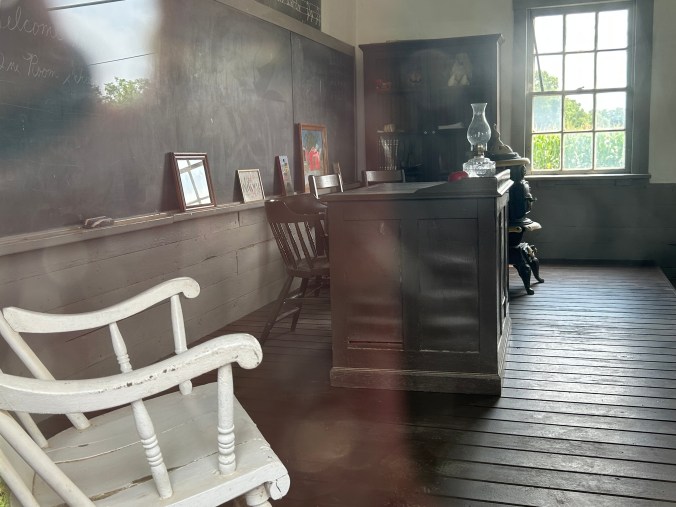
Blackboard, teacher’s desk. rocking chair and wood stove

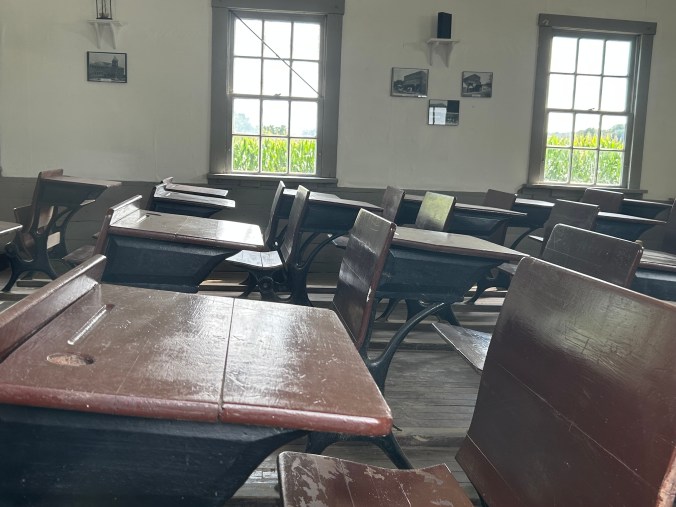
Where the children sat and learned their three “R’s”

The school was locked, but I was able to peer through the windows and get decent photos. You can imagine the kids attending the school, with one teacher covering all of the grades.  No lights, no AC, and the only heat from a wood stove at the front of the room.


Indiana’s Wilbur Wright Birthplace Museum

The address is Hagerstown, Indiana, but the Wilbur Wright Birthplace Museum is out in the middle of Hoosier farmland. This fascinating museum has two different focuses: Wilbur’s birthplace and living conditions of the mid 1860’s and the success of Wilbur and Orville’s history making powered human flight at Kitty Hawk North Carolina in 1903.
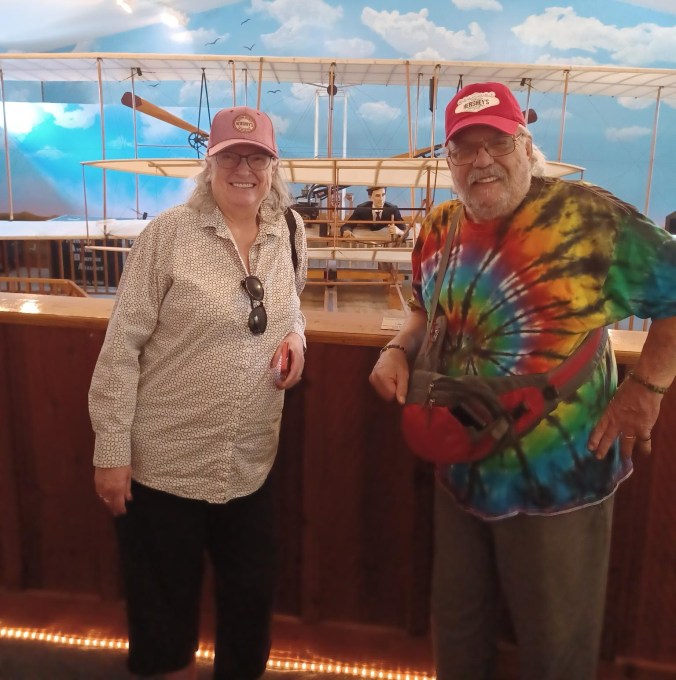
Yes, that is the Wright Flyer in the background

The flight museum and other Wright Brothers artifacts are housed in a separate building next to the family home and the visitor center. The exciting focus of this is the full life size and historically accurate reproduction of the original “Wright Flyer”.
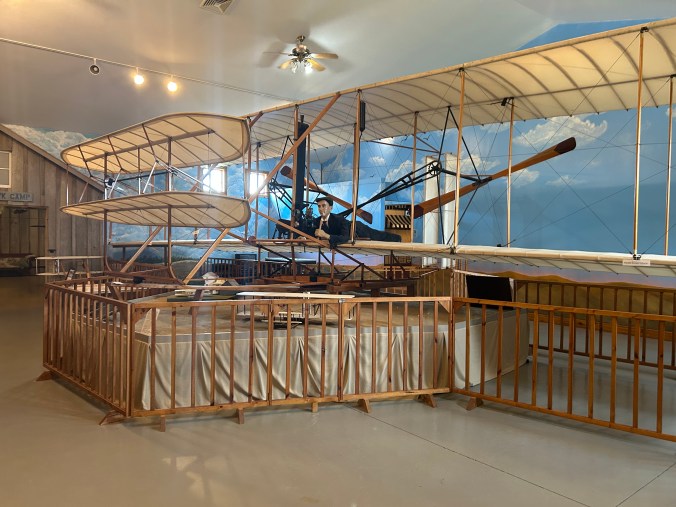
Floor level view of the Wright Flyer
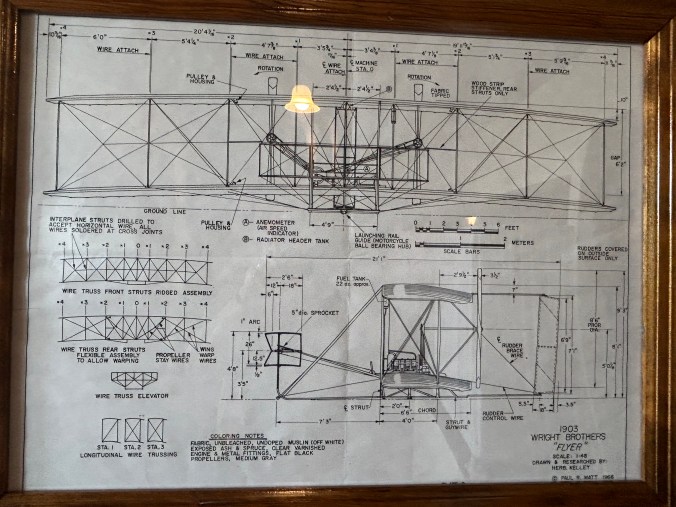
Wright Flyer Specification Drawing

This construction of  the Wright Flyer was completed after referencing the original specifications drawings from the Smithsonian.  The plane and other displays are in a lower level providing a striking view as you stand on the landing at the top of a short flight of stairs.
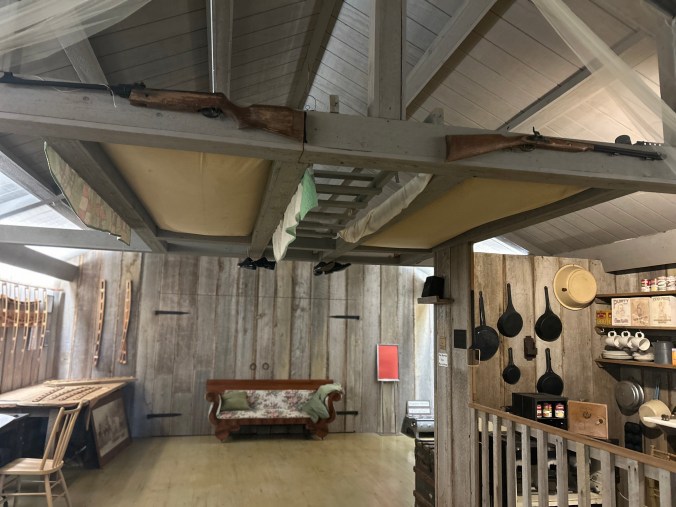
Kitty Hawk Camp work shop and living quarters (note the cots pulled up in the rafters)
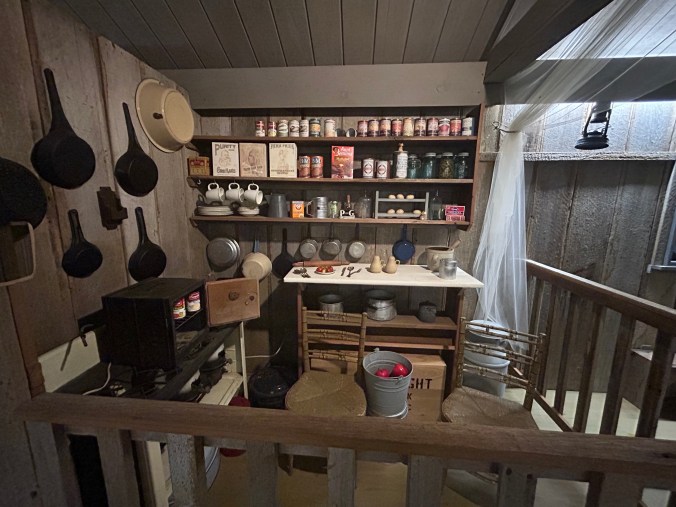
Kitchen in the shop/living quarters

In addition to the plane itself, this lower level display also includes a representation of the Brother’s Kitty Hawk Camp. Here is their work and living quarters while at the site of the flight tests. The building had work shop areas, kitchen facilities and sleeping cots that are pulled up during the day.
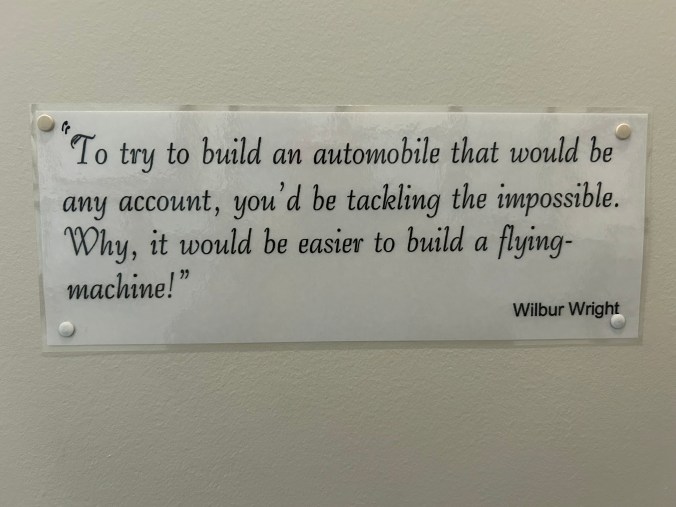
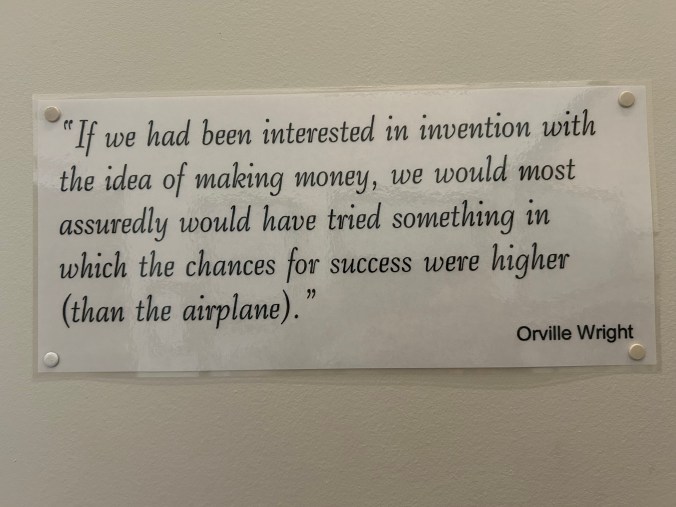
Also included is a display of 1900s storefronts, including the Brothers bicycle shop. We have been to the Kitty Hawk Park and Memorial, where there is a metal reproduction of the Flyer, Orville and Wilbur and other support folks. Seeing the repro plane at this museum was a thrill, as it is of the original materials.
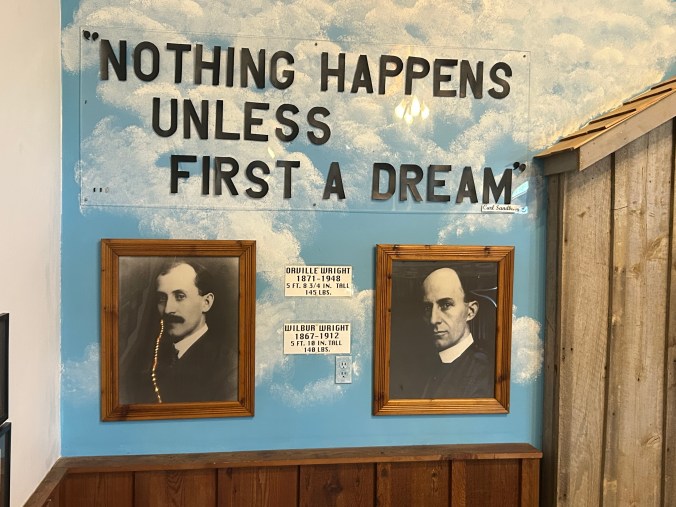
It is remarkable that a mere 66 years after Wilbur and Orville’s first flight man was walking on the moon. Take a trip to the Wilbur Wright  Birthplace Museum. You’ll be amazed at the quality and quantity of the displays.
Morgan County Heroes

There is a remarkable black granite three sided monument dedicated to the men of Morgan County, Indiana who gave their lives in 20th century wars. Starting with the French and Indian Wars up to and including the War on Terrorism, this monument speaks to the ultimate sacrifices made throughout the centuries. The honors are flanked by Old Glory, Indiana’s State Flag, and the black POW*MIA flag.

The Memorial is located in small plaza across street from the courthouse in downtown Martinsville, Indiana. I could not find a date of dedication, , the first reference I found was 2009.

The Willard offers history, food and drink, and a ghost

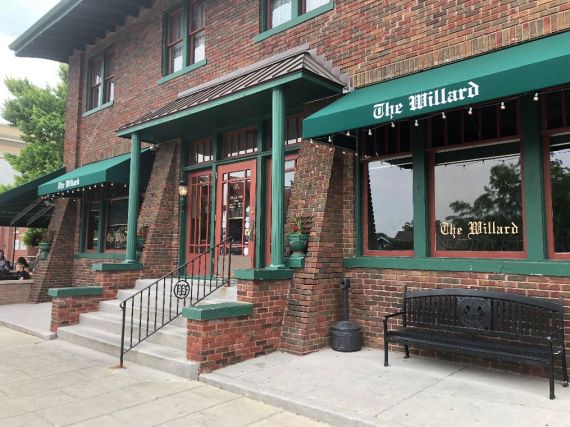
Franklin, Indiana is south of Indianapolis and is the county seat of Johnson County. One of the most noteworthy places in Franklin is The Willard, now a family friendly restaurant housed in an historic brick building a block north of the courthouse. Originally a home, the property has seen several uses and additions over the years. Check The Willard website for a detailed history.

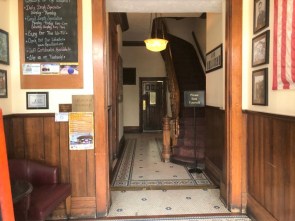
Main entrance of the restaurant

We were in Franklin for a dental appointment and decided to try out the American cuisine at The Willard. There was a decent crowd when we got there, and as we ate there was a constant stream of customers coming in to the facility. We were seated in the main dining room, while lots of folks took advantage of the outdoor seating.

Vegetarian pizza, stuffed w/veggies

Outdoor seating visible left, background


One of Willard favorites is pizza, and Sher did order the small vegetarian pizza. As you see in the photos it was packed with veggies. I had to try the breaded tenderloin and fries. The sandwich breading was different and not as “crunchy” as most recipes. It was tasty however.

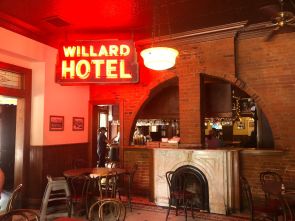
Full service bar past the arched brick wall

From the lobby, curved staircase visible

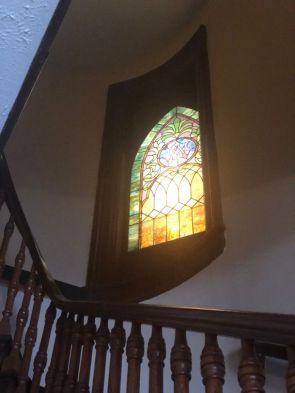
At the top of the main stair

Passageway past the bar and bistro tables


The building has been around since 1860, and quite a few old details make the place very interesting. The main curved staircase has a beautiful stained glass window at the top landing. The marble fireplace and original Willard Hotel sign compliment main dining room where we ate. And even though there is no prominent mention of her, a ghost named Eliza, a former love scorned owner of the property can be seen moving about the building in a rage. Seems she caught her fiancé in a compromising situation with her sister on a table in the kitchen.

When it walks like a duck and quacks like a duck…

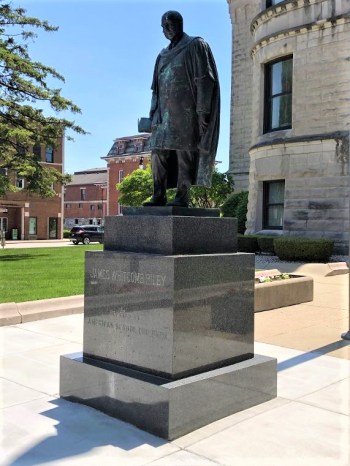
Riley statue at the courthouse

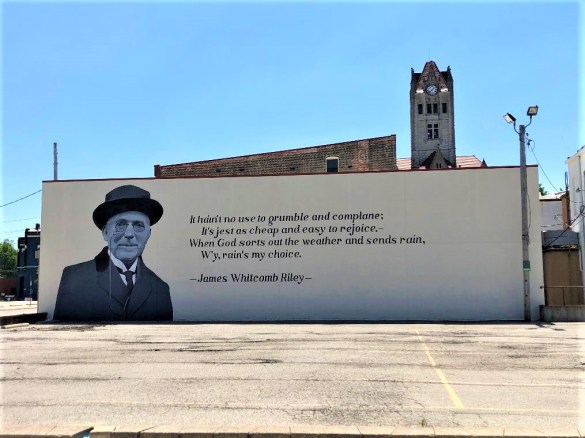
You have no doubt heard the saying “When I see a bird that walks like a duck and swims like a duck and quacks like a duck, I call that bird a duck.” That quote is from James Whitcomb Riley, the Hoosier Poet. He is from Greenfield, Indiana, a small town east of Indianapolis.

Riley was noted for his down home use of dialect that epitomized rural Indiana. He is famous for his remarkable volume of poems. He wrote and published over 1000 verses. His most popular are “Little Orphant Annie”, “The Raggedy Man,” “Our Hired Girl,” “A Barefoot Boy,” “The Bumblebee,” “Granny,” and “When the Frost Is on the Punkin.”

Mural with verses from his “Wet Weather Talk” poem

Chief Tecumseh statue


It is always fun when travelling to come across an interesting attraction. We found this striking likeness of the famous Chief Tecumseh near the Wabash River levee in Vincennes, Indiana. The statue is the creation of Peter “Wolf” Toth, a Hungarian artist, and is the most recent addition (the 74th) to the “The Trail of Whispering Giants” series of statues scattered across the country.