Mission San Xavier del Bac, the White Dove of the Desert

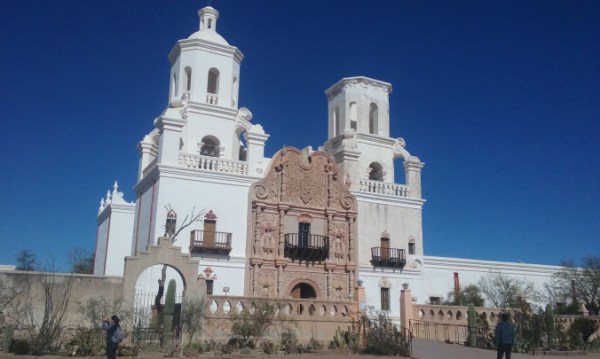
About 10 miles south of Tucson, Arizona you will find the “White Dove of the Desert” also known as the Mission San Xavier del Bac. This magnificent Spanish mission was completed in 1797. The first Spanish missionary, Father Eusebio Kino, arrived at the site in 1692. Throughout the years the location has been part of New Spain, Mexico, and finally a part of the U.S. after the Gadsen Purchase of 1854.
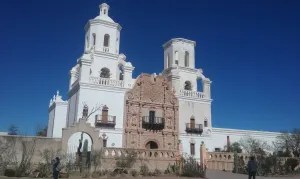
My postcard-like photo of the Mission

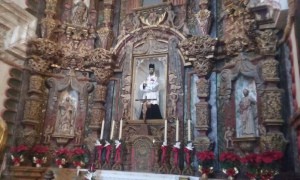
When you enter the church you cannot help but be amazed by the incredible amount of 18th century statuary and murals. The impact varies for everyone who walks the interior of this powerfully spiritual place. Candles are always lit and displayed. A shrine to St Francis is a prominent feature and one of solemn devotion.
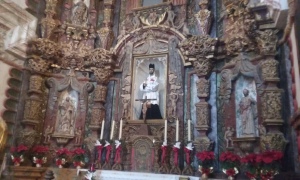
Inside the sanctuary
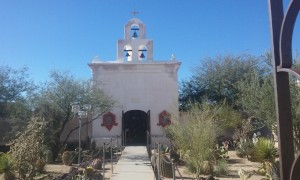
Prayer chapel and garden next to the church

Sacred statuary


The edifice is still a functioning Catholic Church that primarily serves the Tohono O’odham tribe, formerly known as the Papago. Being one of the most popular tourist stops in Tucson, we were fortunate to visit when there were very few people there. It was almost as if we had the place to ourselves. This is a site that is filled with history as well as a sacred place for contemplation, meditation and prayer. Do not miss a chance to visit San Xavier. You will be moved.

The San Xavier website is packed with info for your assistance in visit planning .
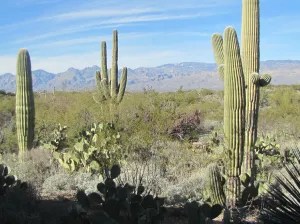
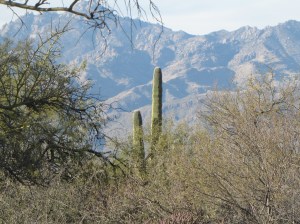
The magnificent Saguaro cactus of the Sonoran Desert

The Saguaro National Park is unique in that it is actually in two distinct locations: The Tucson Mountain District and the Rincon Mountain District. One section is west of Tucson, the other is east of town. First designated as a National Monument in 1933, the monument was officially made a National Park in 1994.

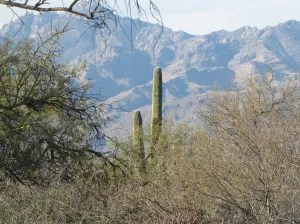
Typical Sonoran Desert scenery

Sher and I went to the Rincon Mountain District one afternoon when we were visiting Tucson. We stopped at the Park’s Visitor Center to pick up some information brochures and a map of the park. We did not have to pay the entrance fee because we have the America the Beautiful Senior Pass.

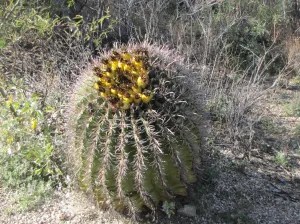
Barrel Cactus beginning to bloom

Classic desert scenery


The scenic loop drive is an 8 mile one way paved road that winds through a portion of the huge park. This drive will give you an up close and personal view of the amazing cacti and other plants that populate the remarkable Sonoran desert environment. You can’t help but feel a connection to the marvels of the desert as you take this drive. There are many pull-offs with “scenic” views. Get out and smell the air and take in the spirit of the desert.

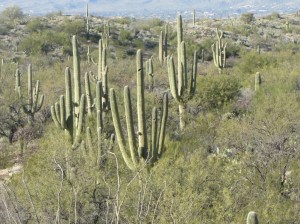
This is a wonderful cluster of old timers!

One thing that stood out to us was the individuality of each of the Saguaro catcti. The younger ones had a simple stalk. The Saguaro doesn’t start to grow the iconic “arms” until it is over 6 feet tall and at least 60 to 75 years old. Those old timers with several arms are in the 150 + year old age group!


White Dove of the Desert

Following are excerpts from an article we posted in January 2016. Hope you enjoy it!

About 10 miles south of Tucson, Arizona you will find the “White Dove of the Desert” also known as the Mission San Xavier del Bac. This magnificent Spanish mission was completed in 1797. The first Spanish missionary, Father Eusebio Kino, arrived at the site in 1692. Throughout the years the location has been part of New Spain, Mexico, and finally a part of the U.S. after the Gadsen Purchase of 1854.

When you enter the church you cannot help but be amazed by the incredible amount of 18th century statuary and murals. The impact varies for everyone who walks the interior of this powerfully spiritual place. Candles are always lit and displayed. A shrine to St Francis is a prominent feature and one of solemn devotion. The edifice is still a functioning Catholic Church that primarily serves the Tohono O’odham tribe, formerly known as the Papago.
The San Xavier website is packed with information for your visit planning assistance.

Dominating the desert

The awesome and iconic Saguaro cactus is truly the dominant feature of the Sonoran Desert in the Southwest. The Saguaro has become the symbol of all things desert. The towering cacti live to be 250 years old and older. They don’t start to grow their “arms” until they are at least 75 years old!


The Saguaro National Park has two sections on either side of Tucson, Arizona.  Both sections offer unbelievable opportunities to enjoy the magnificent and thriving desert environments. Walking trails and scenic roads give ample opportunities to get up close and personal with the Saguaro and countless other species of desert plants. A trip to the Saguaro National Park should be on everyone’s travel itinerary. We’ll be back to Tucson and the desert once our travel is possible.

When Roadtirement meets Indiana’s shutdown order

Sher and I have been in a stay at home situation since we got back a month or so early from our usual stint as Winter Texans. Since our return to Indiana on February 25th we have been really in a stay at home mode courtesy of the COVID-19 pandemic. With our ages and my “underlying health issues” we have to be careful. So we thought we’d share some of what makes up Roadtirement’s self-isolation environment. What do we have,  how do we live day to day, and what’s some of the stuff we’re doing when we can’t go to the casinos, live theater or set up and sell at festivals and flea markets.

Pictured is a very nice and vintage hiking trails map from Tucson. The topographic map is dated 1967 and was published by the Southern Arizona Hiking Club. The map centers around Mt. Lemmon, north east of Tucson, in the Santa Catalina Range.  Mt. Lemmon is a very popular recreation area with miles of trails in the rugged terrain of the mountains.

Details of Mt. Lemmon w/trails

The map legend

We got this map when we were visiting Tucson a few years ago. I spotted it in a listing for an estate sale and was the lucky bidder. I did my graduate work at the University of Arizona in the early 70s and made many of the 2 hour trips from Tucson to the top. That sparked my interest in the map that now lives on our living room wall.

Do you have anything in your house or RV that reminds you of experiences from decades ago?

Saguaro National Park in Arizona

Sher and I are not traveling now due to coronavirus, so we thought we’d share some of our BC pictures with you. (BC = before COVID-19)

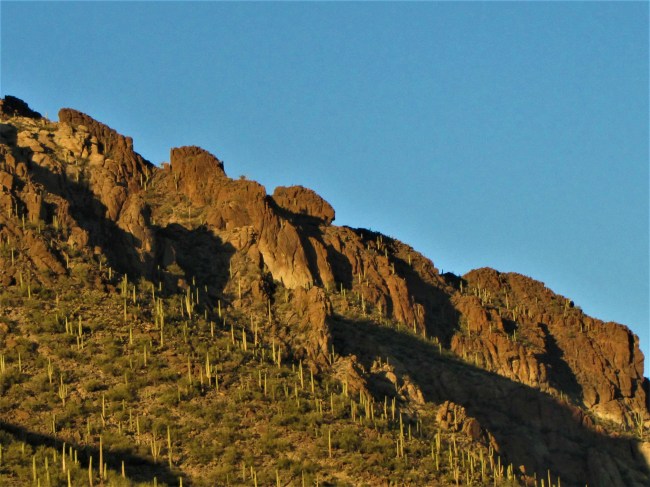
One of my favorite places on Earth is the Sonoran Desert in Arizona. This photo was taken in the Western Mountain District a few minutes before sunset. The stunning landscape is dotted with the magnificent saguaro cacti.

We shared conversation with Alan Cottrill, master sculptor

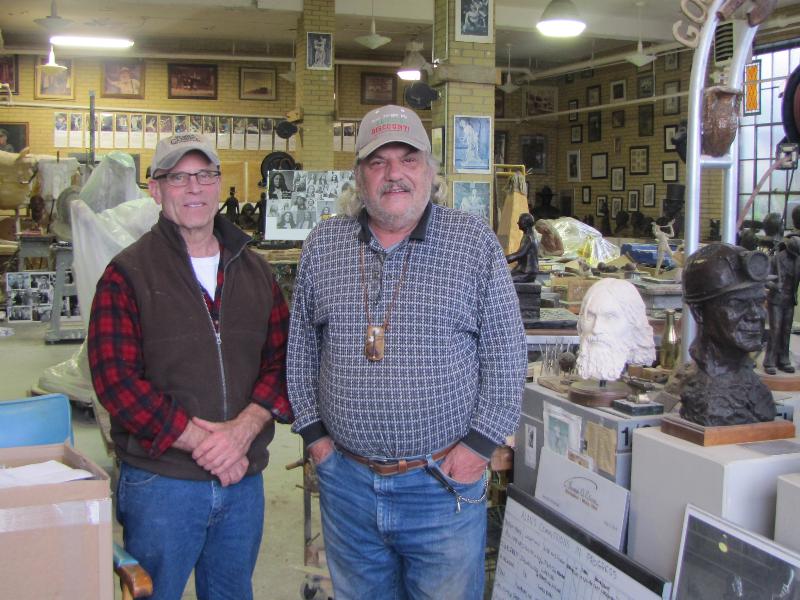
Alan Cottrill, left, with Maj inside Alan's Studio and Gallery

Alan Cottrill, left, with Maj inside Alan’s Studio and Gallery

As soon as we had introduced ourselves Alan immediately noticed the small leather medicine bag that I wore around my neck. Understanding proper protocol he did not ask what was carried within. I knew that Sher and I were in for a treat interacting with this gifted and learned sculptor.

Alan graciously shared with me his history that led to his work in the 3D world of sculpture. From an international multi-millionaire businessman at 30 to a starving artist in New York City at 40, he explained how each came about. Alan really lit up when he recounted the “first time” he “touched clay”. Thus the paint brush was put aside and his true genius showed itself.

Small version with photo of final scupture in place

Small version with photo of final scupture in place

Red Cloud study board

Red Cloud study board


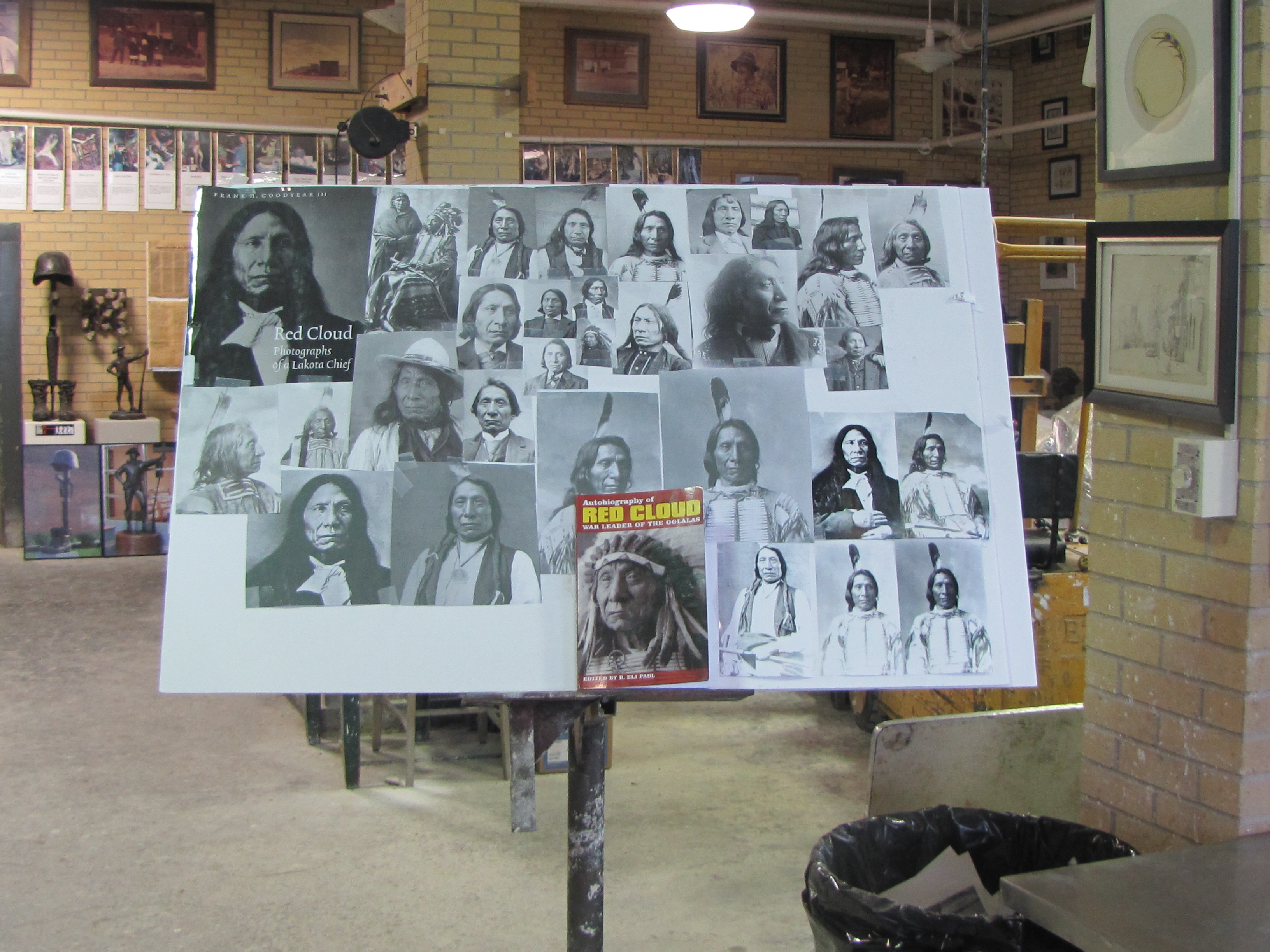
I was fascinated to learn that Alan spends so much time learning everything he can about the person who will be featured in his work. A bust of George Armstrong Custer is displayed on the first floor of the Gallery. A duplicate is now at West Point. Alan spent a lot of research time on the photos, life and times of Custer. Then I noticed a large board on an easel with mutiple photos and a book about Red Cloud, the famed Ogala Souix War leader. Thus I was able to see the beginings of what will in the future be another fine sculpture by Alan Cottrill.

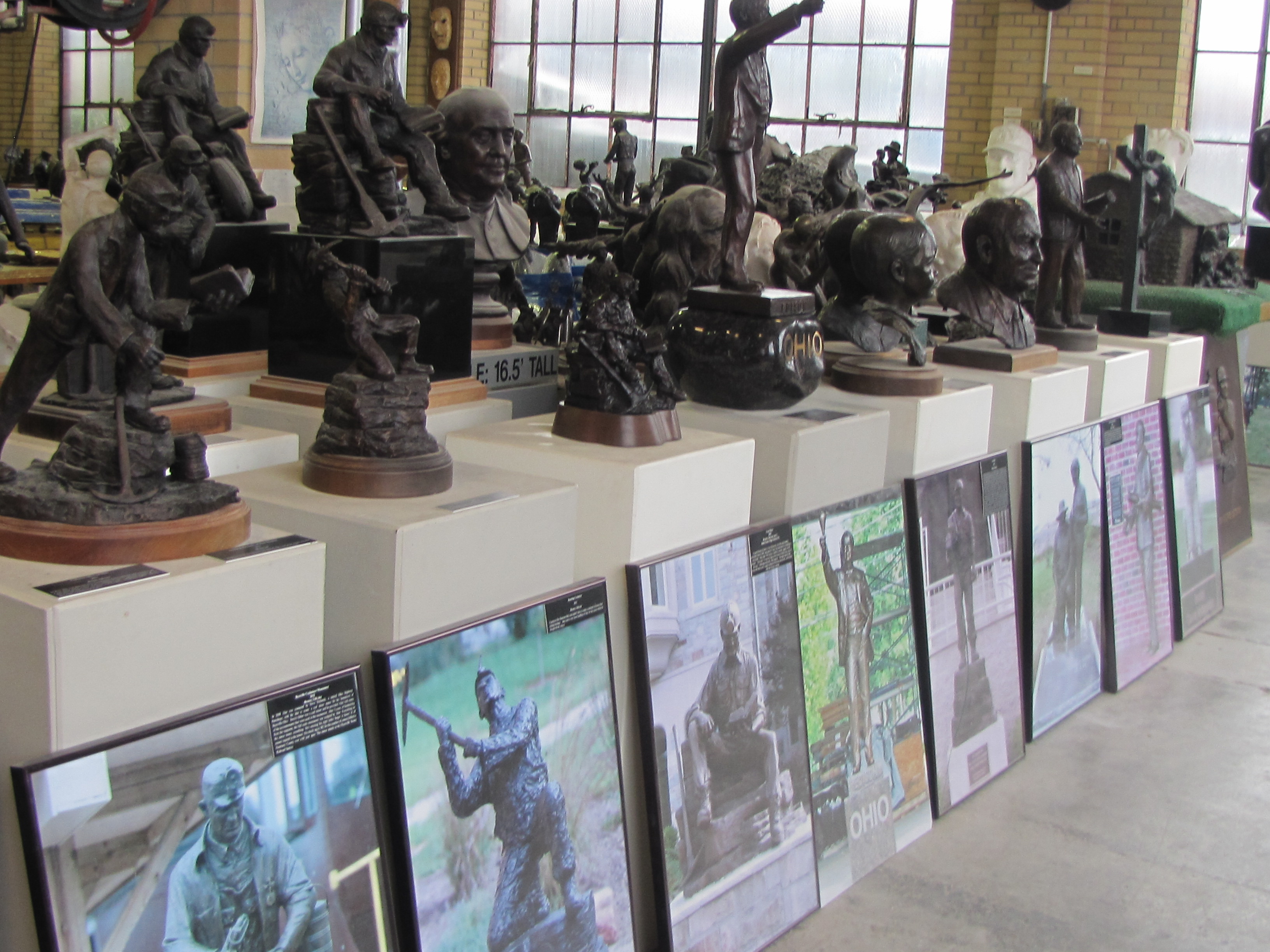
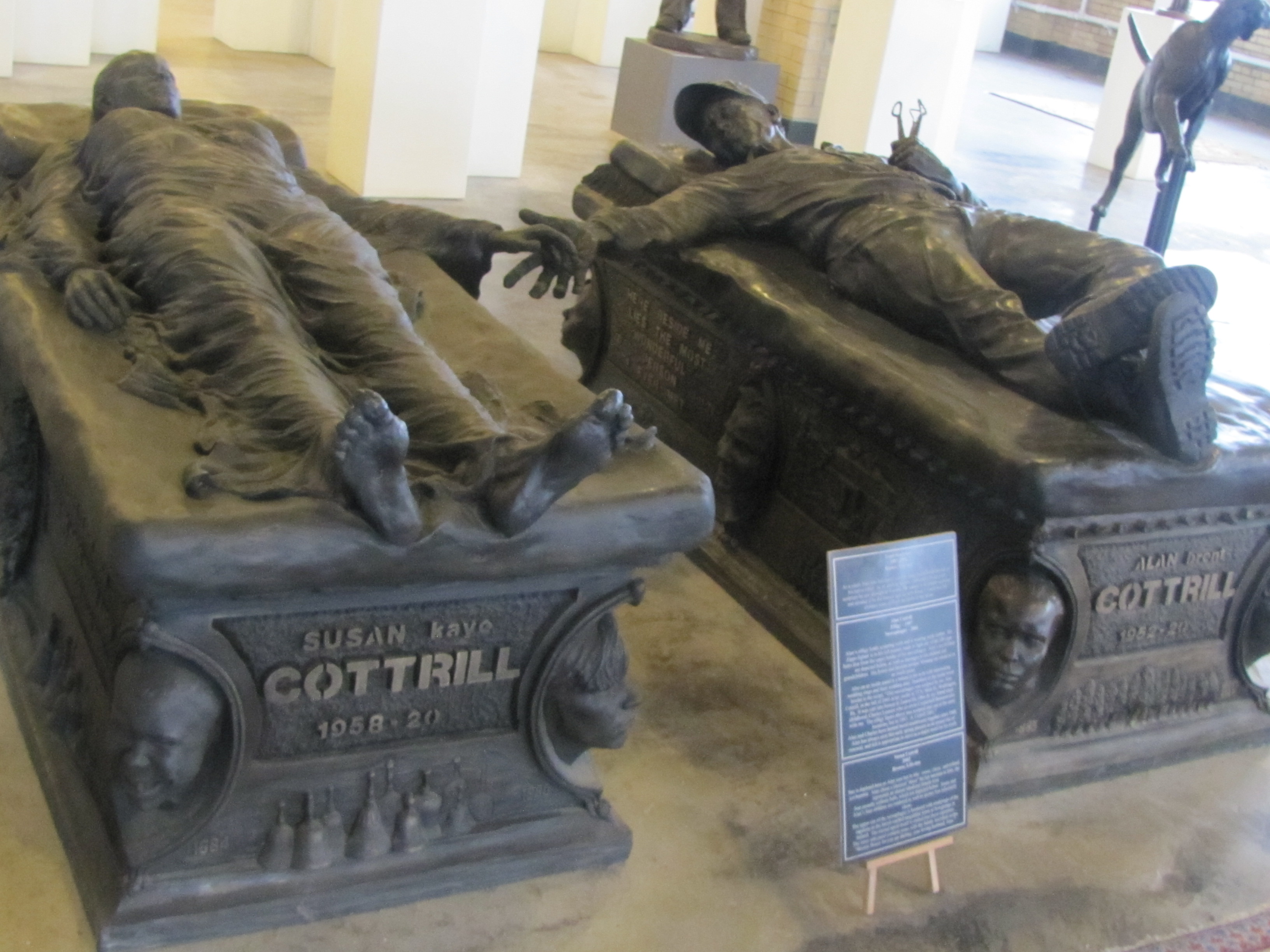
His Gallery in Zanesville, Ohio is filled with hundreds of his works. His early paintings are also displayed. He shared that his favorite works are the two sarcophagi for his wife and himself. His children’s faces adorn the sides of each, and never will you see a more poignant depiction of love of spouse and family.

A trip to Zanesville is in order for anyone who loves art. This is the Gallery website.

The Cottrill sarcophagi

The Cottrill sarcophagi

We could visit Boothill Graveyard in Tombstone

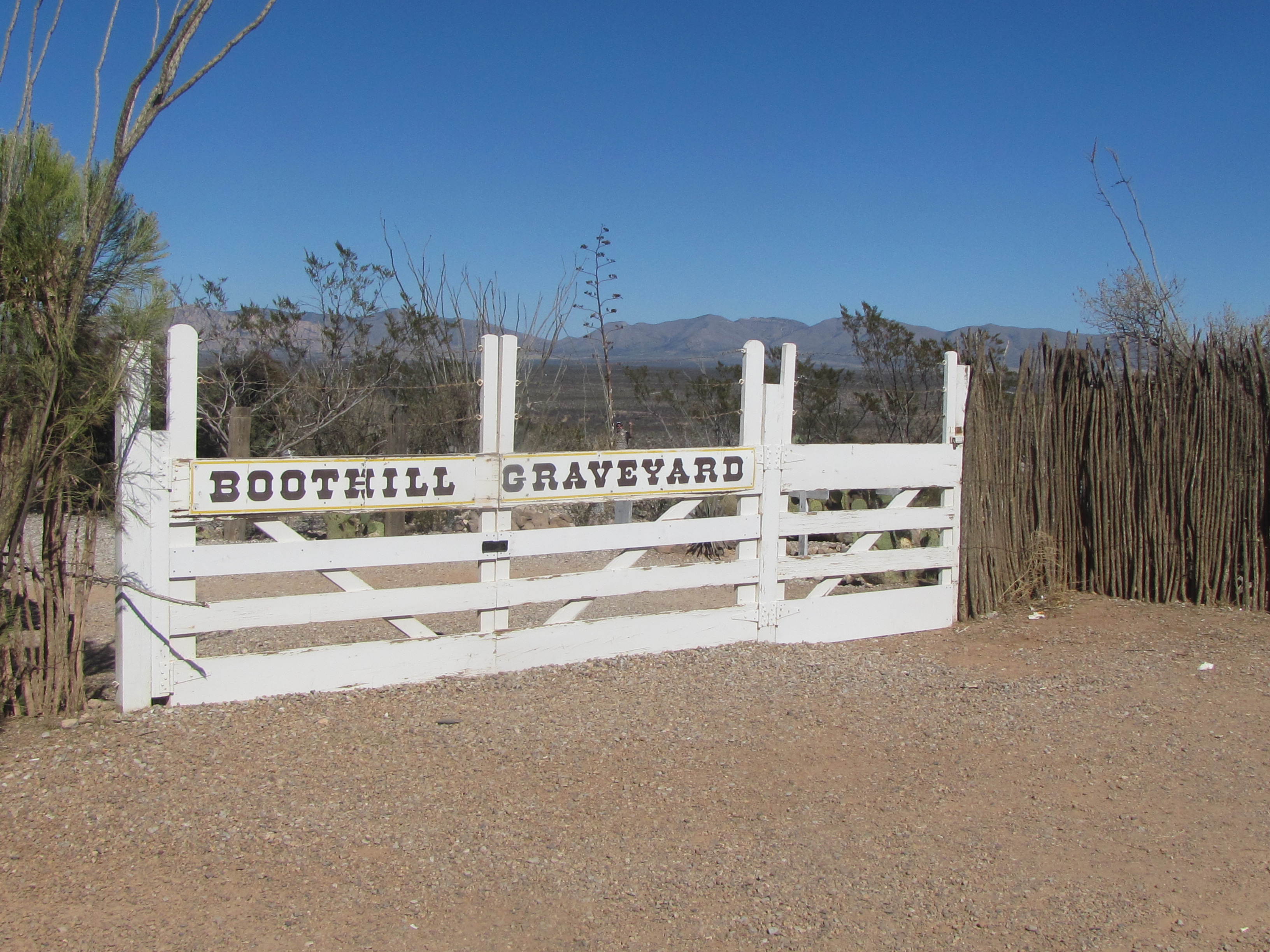
IMG_3915After being disappointed with the town of Tombstone (see article here) I decided to see if we could park at the lot next to the Boothill Graveyard. Boothill is now on the National Register of Historic places. According to a plaque the graveyard was restored by Tombstone residents in the 1920’s.

The final resting place of some of Tombstone’s most colorful people is well maintained now. All of the graves look pretty much the same: a pile of rocks and simple wood markers. A few graves have fencing. The entrance to the graveyard is through a souvenir shop. They request a $3 “donation” for a flyer with the grave locations marked.

This was an interesting attraction. The graveyard is portrayed as being authentic, however you have to wonder about the spacing of the graves. The spacing is almost too perfect. The sayings on some of the graves are pretty humorous.

We were able to park in the lot, however any rig over 25′ will not be able to park here. I was able to find a spot and back in ok.IMG_3928


Tombstone: Too tough to die but hard to visit in an RV

Main street blocked off

Main street blocked off

Sher and I had planned on a visit to the ‘historic’ town of Tombstone since we were in Tucson. We decided to drive there on our way back east.

Well, we were disappointed. There was literally no parking available anywhere close to the main street. Signage directed us to an RV and trailer parking lot that was at the bottom of a very steep hill. This was too steep of a climb. The main street was blocked off to traffic so we could not get a chance to even drive by ‘the sights’.

All of the sites either charged admission or were simply a place to spend your money, either food, drinks, or merchandise. The famed OK Corral was actually walled in with bleachers for the audience. Again admission charged. The town we felt has morphed into a tourist trap.

IMG_3913

The antique store

We did find some street parking (free) across from an antique store a few blocks away from the main street area. It had some interesting things that were priced pretty high, as you would expect.

Perhaps on an off day you can find parking. However with any RV or trailer combo of any length parking will be a problem unless you park in the lower level at the bottom of the hill. Tombstone may be fun for some, but for us the lack of close parking and the commercialism just turned us off.