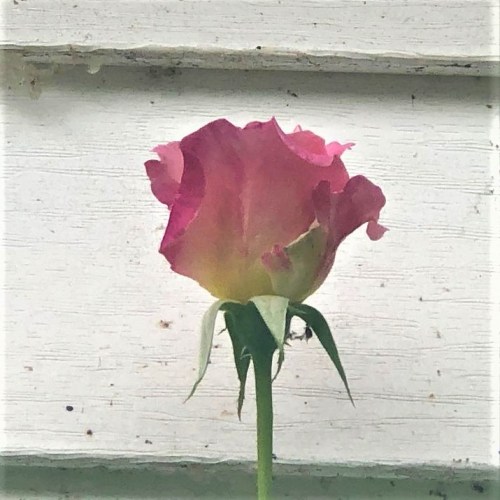
A persistent morning glory vine slowly encircles the rose. Our vine blooms are all white.

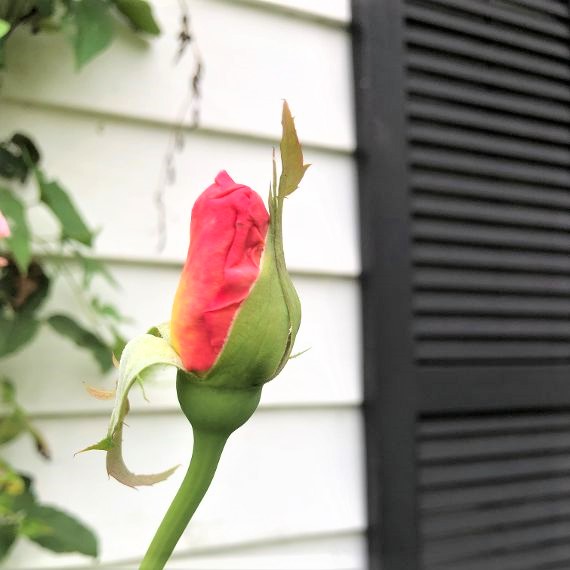
Here’s another bud with a rose on the way. The rose bush is still producing flowers.

A persistent morning glory vine slowly encircles the rose. Our vine blooms are all white.

Here’s another bud with a rose on the way. The rose bush is still producing flowers.

Rose in full bloom

Still putting on tomatoes

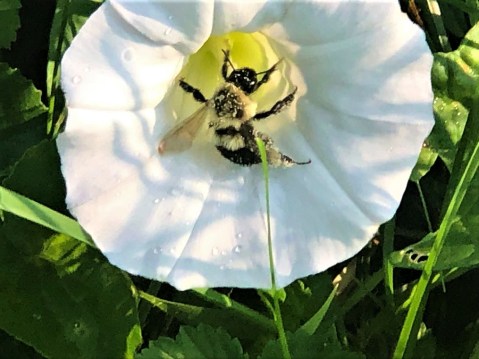
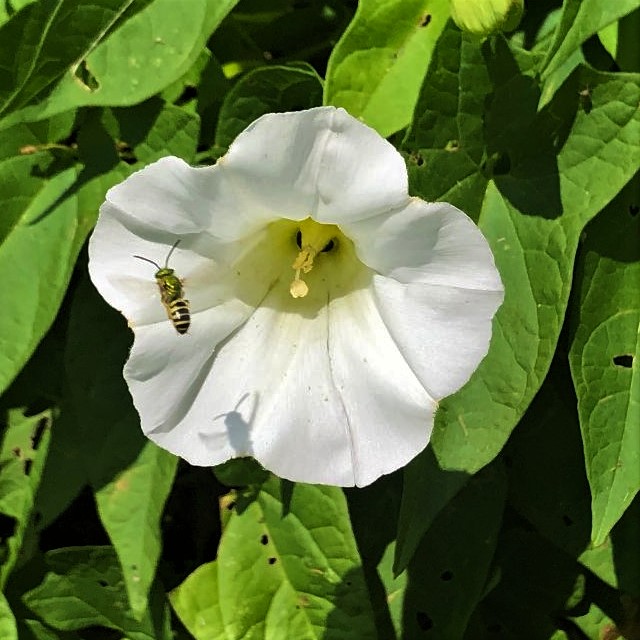
Pollen covered bee in a white morning glory

Healthy sage plant

Flowering mint

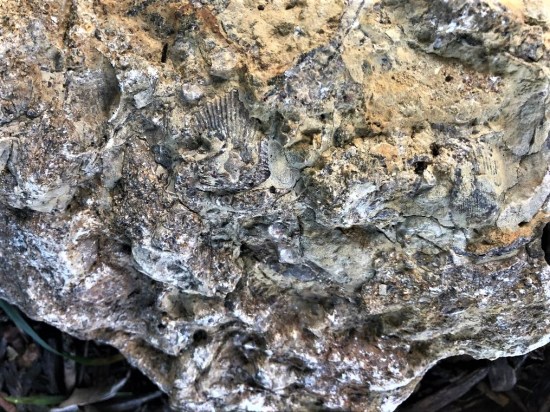
Fossils imbedded in limestone rock

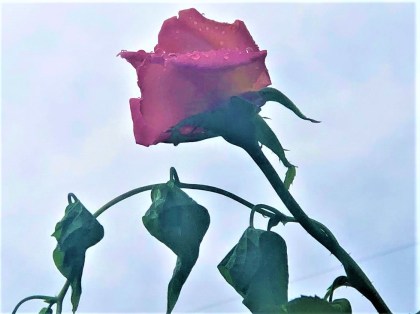
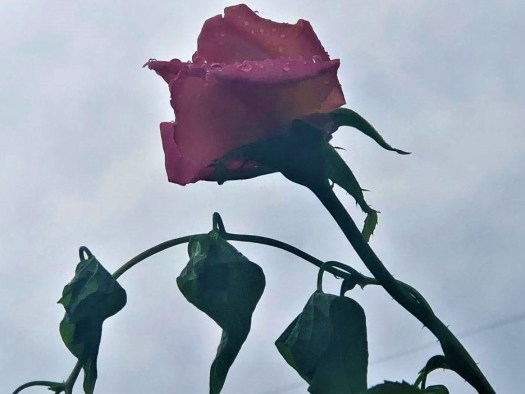
Saturday morning against a gray sky

The same rose Monday morning

Rose against a gray sky, morning glory vine grows under the bloom

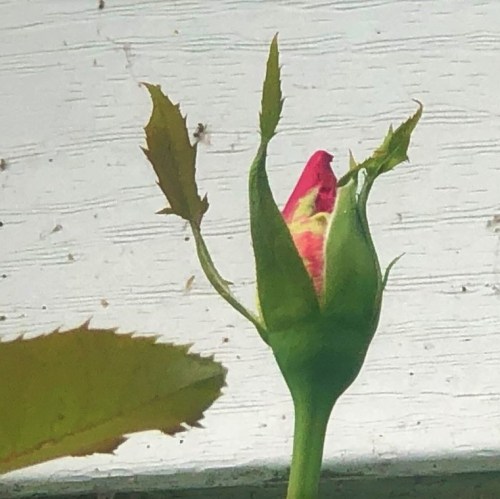
Getting ready to open

Bet there are fresh raindrops caught in the bloom

Color is peaking through, delicate drops perched on the bud
Noticed the morning glories in bloom. The result ended up with a bee photobombing the image. Even caught the shadow of the bee on the white flower petal.

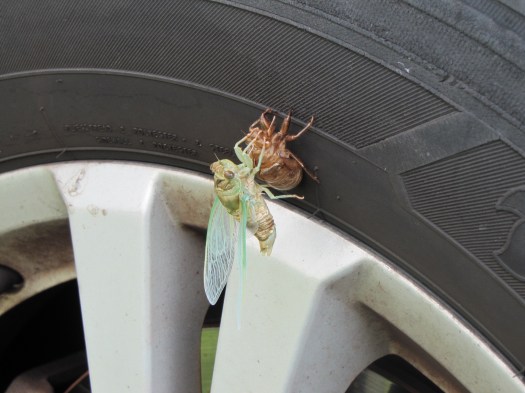
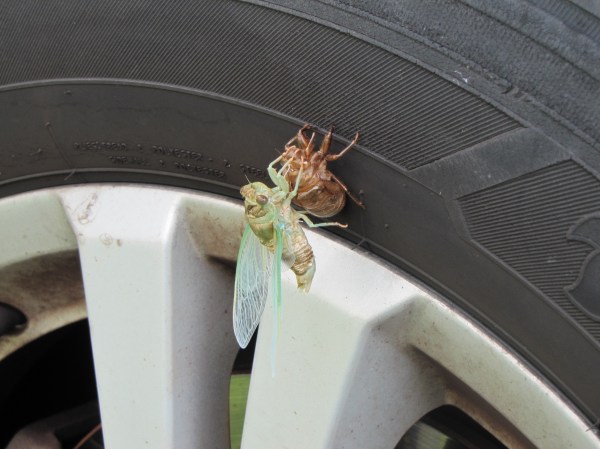
Last year was supposed to be the great 17 year mass cicada emergence across the Midwest and East coast. In our part of Indiana we only saw one cicada shell and heard none of the loud insects. Within the last two weeks we have heard a lot of cicadas at night. We have found four of them on the tires of our vehicle. One is in the photo, above. They missed the big show by a year…

These home grown beauties ripen fast once they start to turn

There were several more that almost made a Fairy Ring…
Our two tomato plants have done quite nicely the past month, giving us, as you can see, some nice fruits. The backyard also was fertile ground, it seems, for quite a few mushrooms that showed up overnight.
Driving through Brown County Indiana’s countryside on a recent day trip we saw quite a bit of wildlife. Off to the left our son spotted a fawn just standing there about 30 yards from the road. Fawns typically lose their white spots 90 to 120 days after birth. It just stayed perfectly still and we drove on after a few minutes.
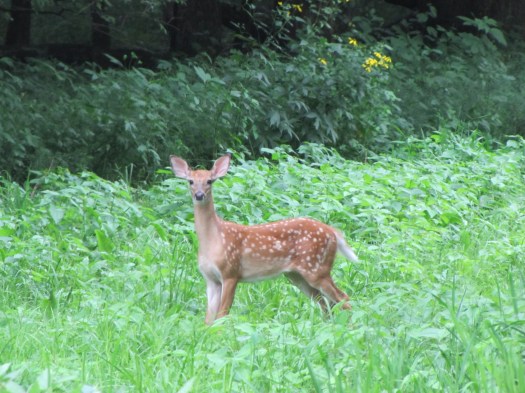
Mother would be watching as the fawn just stared at us
Then Maj saw a doe to the left about 75 yards off the road. We stopped the car and backed up the 50 or so feet until we could see that there was also a fawn with this doe.

They were right on the tree line
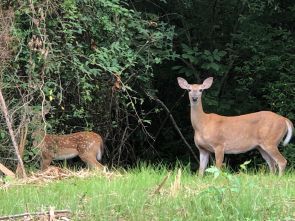
They’re still just looking at us, no movement
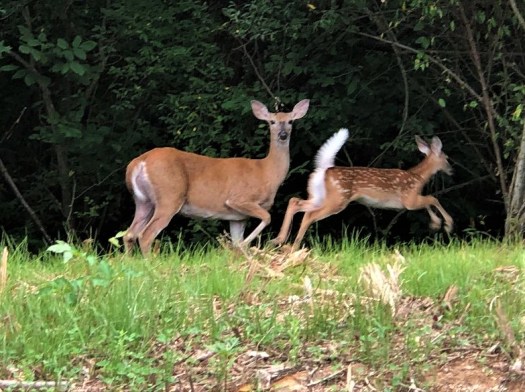
Mom says it is time to go
It is always a thrill to see wildlife. Seeing deer seems especially neat, perhaps because they are so large compared to squirrels or raccoons. Oh, and do you see why these are named whitetail deer?
While on our recent day trip we ended up on a well graded gravel road in Brown County, Indiana. We were on our way to another historic bridge and looking for any other neat things to see.

Up ahead we spotted a large black shape next to a yellow striped warning sign. Yep, that’s a turkey vulture, actually two of them. The second one is behind the yellow sign.

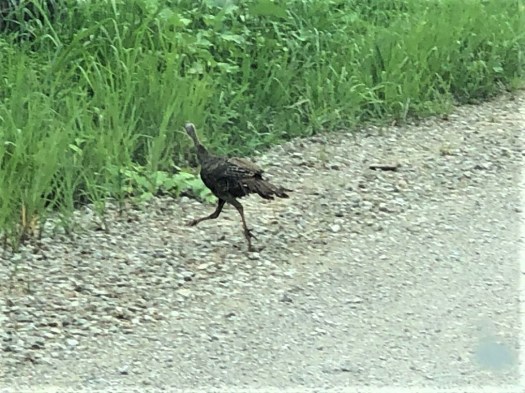
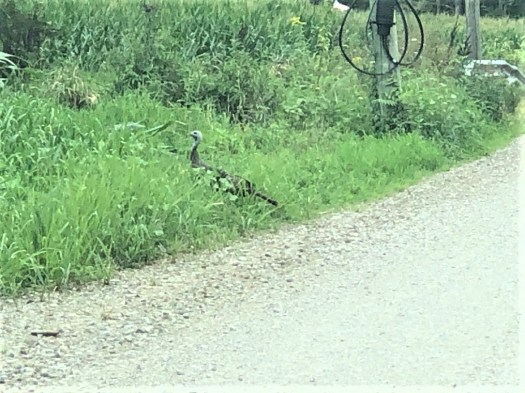
Why did the turkey cross the road?

To frustrate that human with the camera!
As soon as we started moving again we were surrounded by what seemed like a large rafter of wild turkeys running across the road. Dang they were fast! Out of the eight or so individuals we only got a couple of photos, neither of which that good. It’s always fun seeing wildlife during a drive in the country.
In 1858 bridge builder Henry Wolf constructed a double barrel Burr arch truss covered bridge over Ramp Creek on what would become Highway 231 in Putnam County, west of Indianapolis. Time marched on, and in 1932 a new two lane pony truss bridge bypassed Wolf’s covered two lane bridge, which was set to be torn down. Richard Lieber, commonly known as the “Father of Indiana’s State Park system”, ordered it relocated to Indiana’s first state park in Brown County.

Bridge now spans North Fork of Salt Creek

1932 photo of new bridge, left, and old one, right. Photo courtesy Bridge Hunter

Lane two is visible to the left

Clear view of the Burr-arch truss system