Some different and pretty stuff on a day trip

Here’s somewhat of a potpourri of images we captured and then liked.

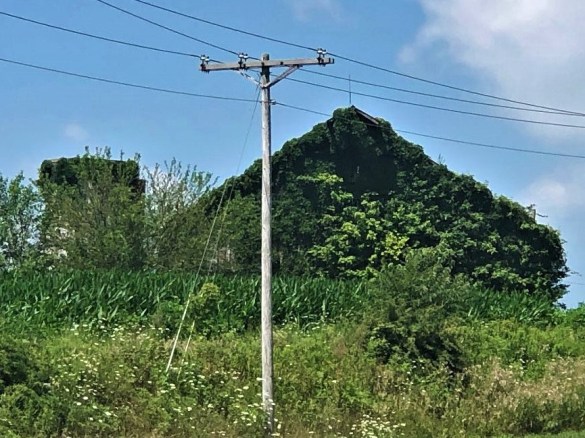
Overgrown barn and silo

Ears developing

In full tassel

Slow flowing Laughery Creek gives a mirror surface

Delicate tiny wild flowers

Oops! Lost an antennae somewhere

Just simply pretty flowers

Day trips or multi day adventures provide so many opportunities to see and experience new things. I guess that’s why everybody has cameras these days…


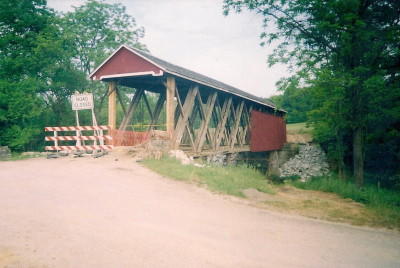
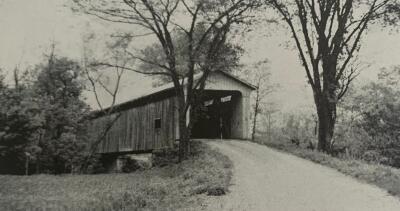
The 1887 Stockheughter Covered Bridge

This covered bridge is in Franklin County, Indiana on the Enochsburg Road. The bridge was built by the Smith Bridge Company from Toledo, Ohio. The Smith Bridge Company was a large and very prolific bridge construction company, building bridges all over the Midwest.

Also known as the Enochsburg Road Bridge

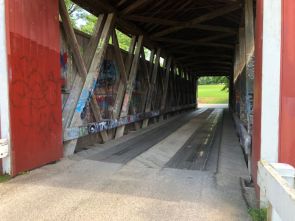
Graffiti is a problem on this bridge

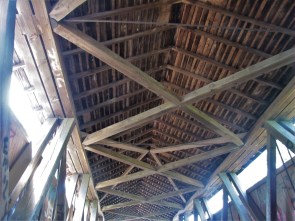
Top chords and roofing details


Note the diagonal deck boards under the wheel tracks

Photo credit Tom Hoffman, 2009 restoration project

This bridge is not very long, at just over 100 feet in length. The covered Howe through truss system used by Smith was also used by other builders, including Hardman. The bridge spans over Salt Creek on the Enochsburg Road. It was constructed in 1887 and underwent an extensive “rehabilitation” project in 2009. It was placed on the National Register of Historic Places on March 20, 2002

An 1885 Thomas A. Hardman covered bridge

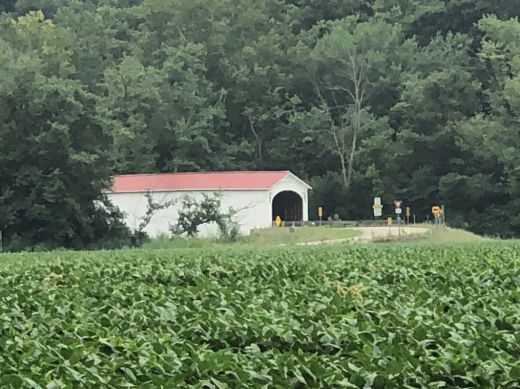
This looks like the bridge was just plopped down on the edge of a forest

We visited another one of Hardman’s bridges at Versailles, Indiana. Hardman uses the Howe truss system, as opposed to the Burr-arch trusses that the Kennedy builders use. This bridge is called the Busching bridge, and is 182 feet long with a 14.1 foot wide deck. It spans Laughery Creek on Ripley County CR 40 South.

Notice this design has an overhang at each end

Busching Bridge name and build date

A look at the Howe truss system

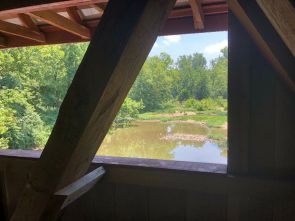
Scenic view of Laughery Creek

Photo taken by Bryan E. Ketcham On Apr. 22,1946 at 10:35 a.m.

Another view with details of the Howe truss system

This is another fine example of a Thomas A. Hardman built bridges. It was restored in 2005 and is well maintained. The bridge was posted to the National Register of Historic Places on March 19, 2019. Coming from Versailles on CR 40 you cross the bridge and enter the valley. The entrance to the Versailles State Park and the new park offices are to the left after you leave the bridge.

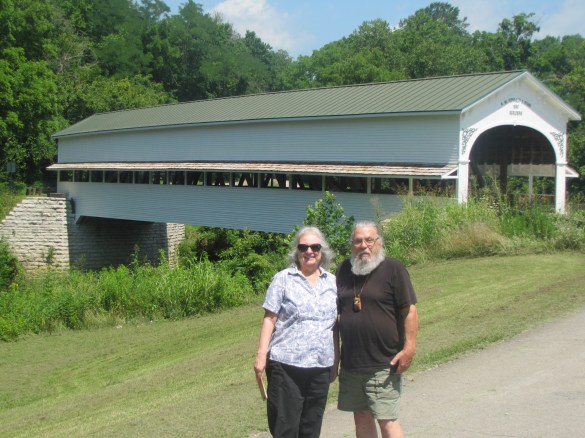
Well maintained and well lit Kennedy covered bridge

Just east of Westport, Indiana, a small community in Decatur County you will come to a beautifully maintained covered bridge. Painted white with a green roof, some will immediately recognize this as a bridge constructed by the Kennedy family of bridge builders, in this case A.M. Kennedy and Sons Builders.

We’re appreciating another magnificent late 19th century bridge

Constructed in 1880, this bridge is a typical Kennedy work utilizing a single span Burr-Arch truss system. This bridge is 130 feet long as it crosses over Sand Creek on Laughton Road. It was actually bypassed in the early 1970’s when a new bridge and road improvements were made on CR 1100S, just downstream from the bridge. The bridge underwent a total restoration in 2004.

Looking upstream towards the bridge

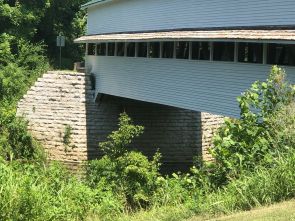
Shows massive abutment the bridge rests on

Typical Kennedy lettering and scroll work

Some have to leave initials. Note the lights…

1945 photo (courtesy bridgehunter.com)

Burr-Arch truss system. Lots of lights everywhere!

As noted in the post title, there are strings of Christmas lights all over the bridge members. Strings of white “twinkle” lights are stretched across the top chords of the structure. Multi-colored lights are placed along the sides of the bridge, and also are draped following the curved Burr-Arches on either side. There is a timer hooked to power on one end, and the lighting seems to be a permanent installation. We talked and said we’d love to come back at night to see this bridge all lit up.


A pretty country church with cemetery

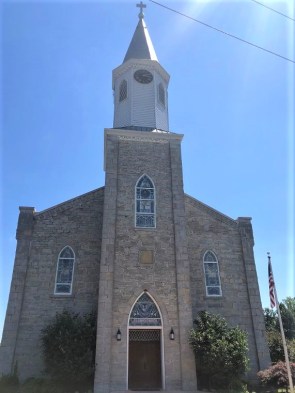
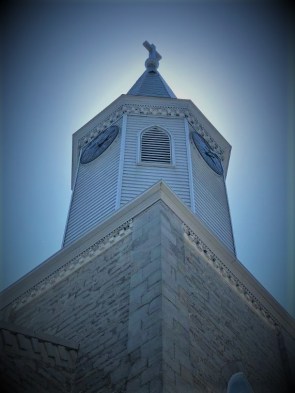
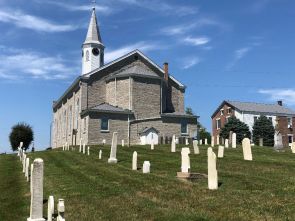
On our adventure yesterday we came across the Rock Creek Baptist Church, a lovely little (and typical) country church and associated cemetery. Many many areas of rural America are dotted with small churches. Before cars, rural churches usually sprang up within an easy buggy trip for most families.

Sher standing beside the Church Marquee

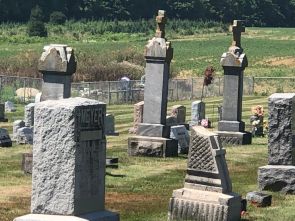
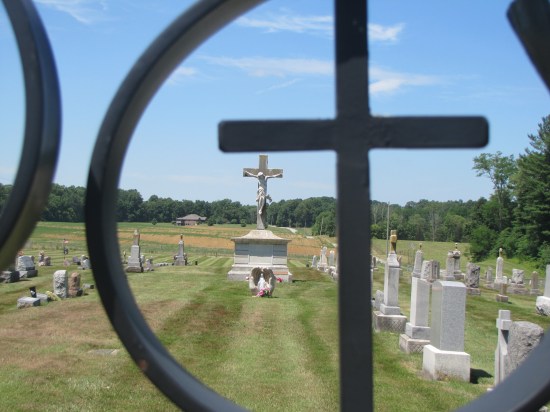
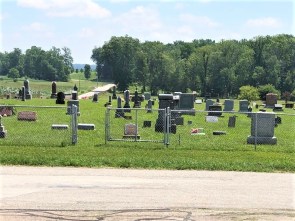
The Rock Creek Cemetery across the road

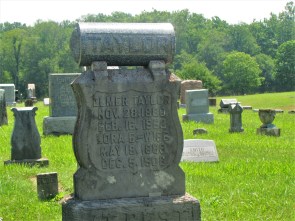
A distinguished old family monument

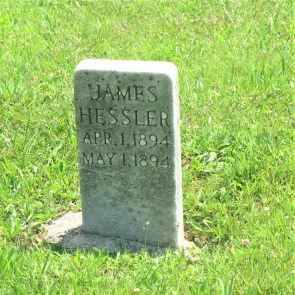
A sad story for James

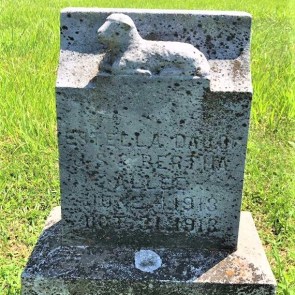
RIP Estella, a loved daughter

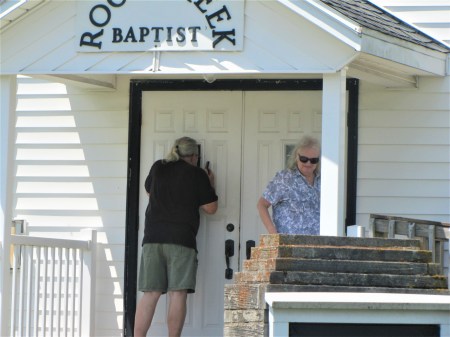
Our son caught us peeking into the sanctuary through the doors!

We noticed that the “Rock Creek Baptist” lettering above the door looked quite a bit like the lettering on many of the old covered bridges we have been visiting. A search online failed to come up with any history of this church, other than it is listed on the American Baptist roles. The church address is 11168 S County Rd 100 W, Westport, Indiana.


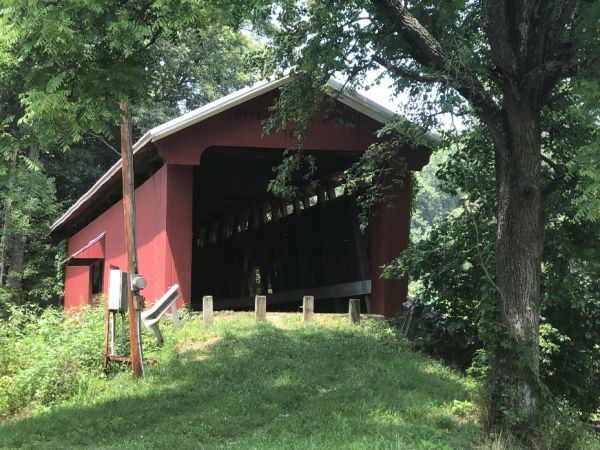
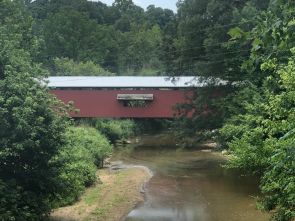
Otter Creek covered bridge

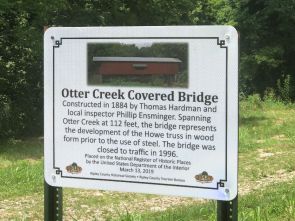
In what some may say is an area “out in the middle of nowhere” in Ripley County, Indiana, travelers will stumble upon a unique and historic covered bridge. Built in 1884 by Thomas A. Hardman, this bridge has a unique history as well.

Closed to road traffic in 1996, it is now open only to foot traffic.

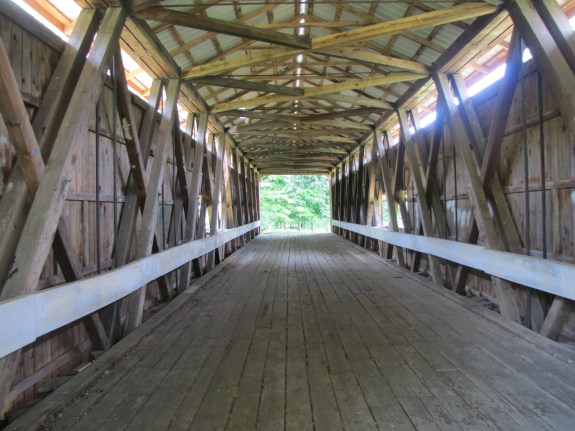
The Otter Creek Bridge, also known locally as the Holton Bridge, is constructed with the Howe truss system. This design was invented by a William Howe, an American architect born in 1803. The Howe truss design, patented in 1840, became one of the most popular structural designs and continued to see use in later metal bridge designs.

View of the 113 foot bridge over Otter Creek

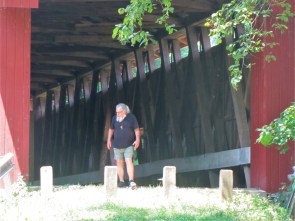
Maj examining the deck timber supports

A good view of the Howe truss system, and the roof supports as well

Nice information signage!

The bridge is in excellent condition

The bridge in 1943 (courtesy bridgehunter.com)

The bridge roof was partially ripped off during a straight line wind storm just months after it was placed on the National Register of Historic Places. Repairs were completed quickly and the structure again opened to pedestrian traffic. This piece of American history is located in a peaceful and beautiful setting and worth the drive to see.


A variety of scenes we saw today

Today we decided to brave the heat and head out for an adventure, mainly to seek out some more covered bridges. We came across some different sights during the day!
The “Tipsy Trolley” was in a barn yard. Perhaps a mobile beer party bus?

This old store front likes B&W treatment

You can’t get away from politics…

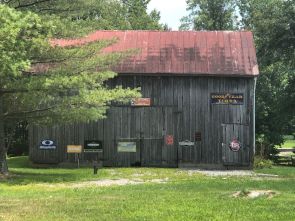
Someone likes old ad signs. So does the barn.

Sun and shadows on a narrow country road

Water reflections, clouds and trees

One thing for sure, you never know what you’ll see in the Indiana countryside.


Dolphin public art fountain in Columbus, Indiana

Columbus, Indiana is known for its very large numbers of public art display pieces. One beautiful piece is the centerpiece of a pretty fountain in the Northwest quadrant of the Bartholomew County Courthouse Square.

The veterans memorial is visible in the left rear

The limestone dolphin in the center of the fountain was sculpted by Indiana artist C.R. Schiefer. It was placed in 1978, a replacement for the original statue that was vandalized in 1976. Schiefer also has animal sculptures displayed in Martinsville, Bloomington and Terre Haute. His works are listed in the Smithsonian Art Inventories Catalog.

The Bartholomew County Memorial for Veterans

A most remarkable scene will greet you when you observe the south lawn of the Bartholomew County Courthouse in Columbus, Indiana. From the sidewalk you will see a series of tall stone columns. This is the Bartholomew County Memorial for Veterans. There are 25 columns, each 40 feet tall and positioned in a 5X5 foot grid. Recessed lights are positioned between the columns. Each column is rock cut Indiana limestone set on black granite.

The memorial is designed to be a tribute to those living and dead who answered our nation’s call during the twentieth century conflicts. It was dedicated in 1997. There are 156 names of local veterans engraved on the smooth sides of the columns. In addition to the names, there are inscriptions of letters sent home from veterans from their places overseas during the wars. Many of these were the last letters written home. Below the letters the date and places where they lost their lives are also recorded.

This memorial is really eye catching and remarkable to see. Allow for enough time to read the names engraved on the columns. Allow even more time to read the letters. So many of them are the last letters that the servicemen wrote home before they perished in combat. This is a most emotional memorial that brings home the gratitude you must express for our servicemen and women. Prepare to shed some tears.