The gray bird landed, and we did not recognize what kind of bird it was. Soon however two grackles showed up and it was obvious that they were here to feed their offspring.
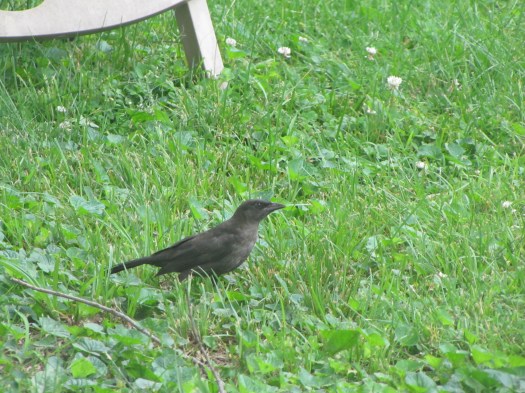
We did not recognize this species
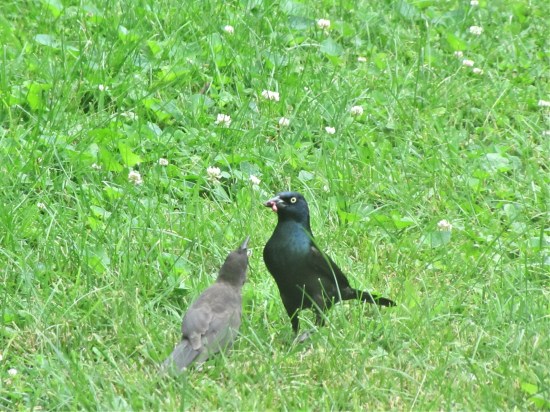
Ah, looks like a parent is here to feed the youngster
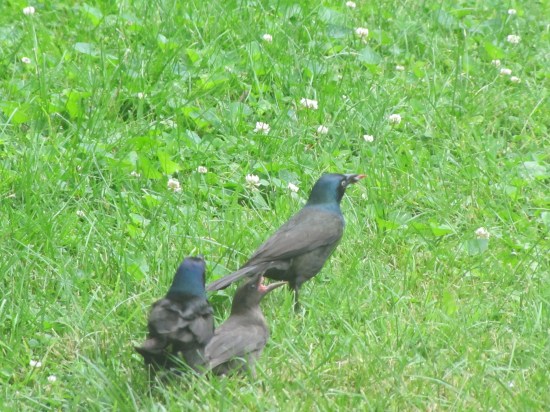
There is the second parent and the youngster demanding more to eat
This was an interesting and enjoyable event for us to observe. It was the first time we had seen an immature grackle. There is always something going on with the wildlife in our backyard! We enjoy sharing our photos with you.
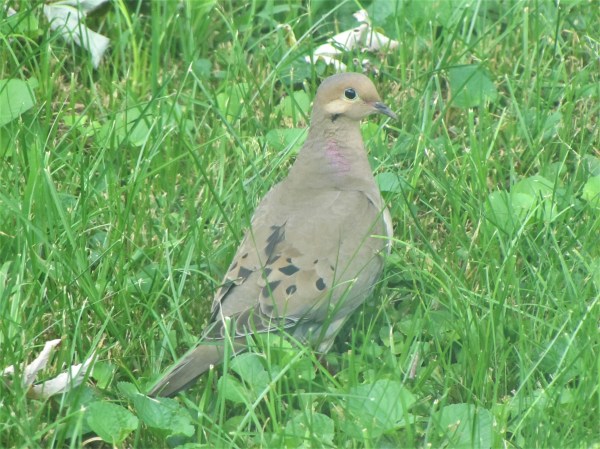
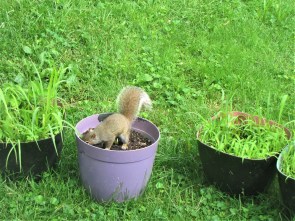
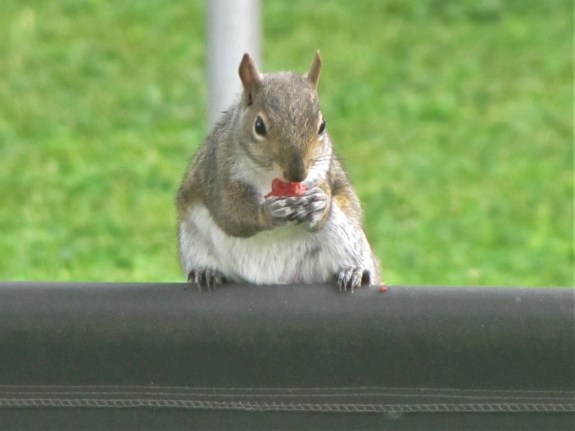
 Hmmm- I wonder what is in here
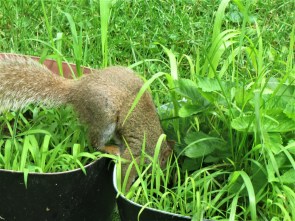
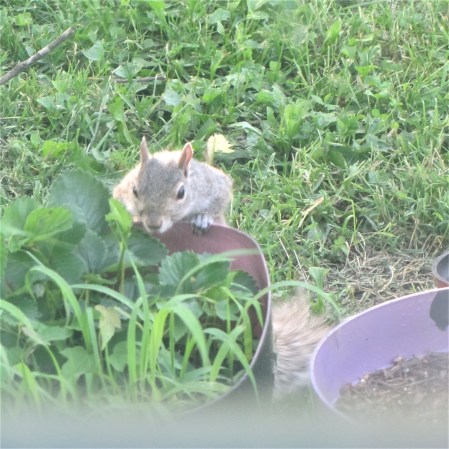
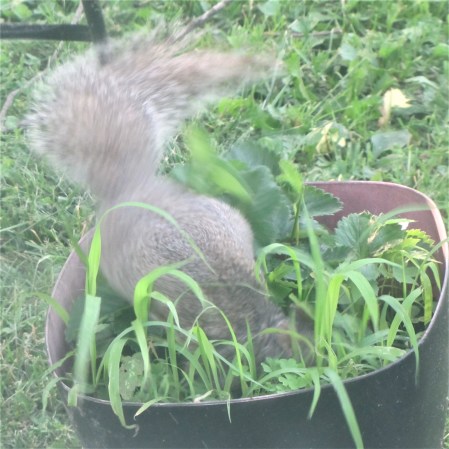 Hey – There’s something down here!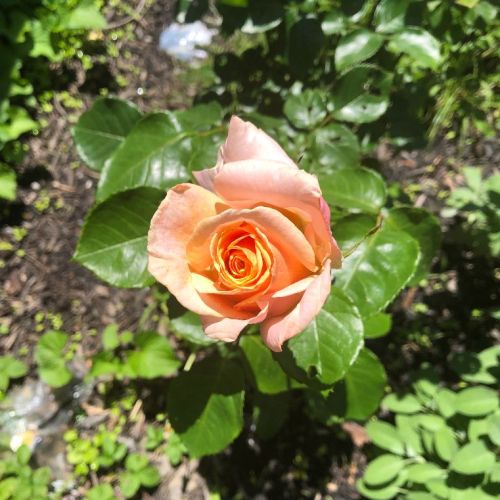
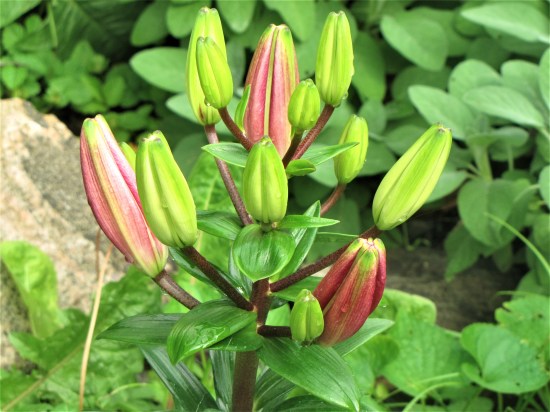
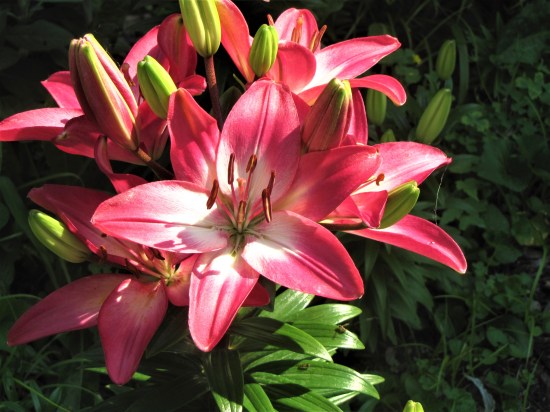
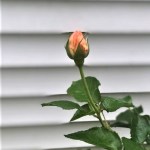 Remember back on May 24th we posted this picture (on the left) of a rose bud and said the rose was “on the way”. Well, here we are 5 days later and we have been blessed with a beautiful blooming rose that did get here. It is remarkable how Nature brings about so many dynamic examples of growth and development. There is something just so mystical about roses…



 Roadtirement