
The chives have bloomed!

Thought the peony was gone, but no!

Hummingbird silhouette looks on

Another rose on the way

Rose has an unknown loiterer, it seems
The chives have bloomed!
Thought the peony was gone, but no!
Hummingbird silhouette looks on
Another rose on the way
Rose has an unknown loiterer, it seems
There are over 600 species of mayflies in the United States, and over 3000 species worldwide. They spend most of their life in the water, and come out as for a very short two or three days in order to mate.
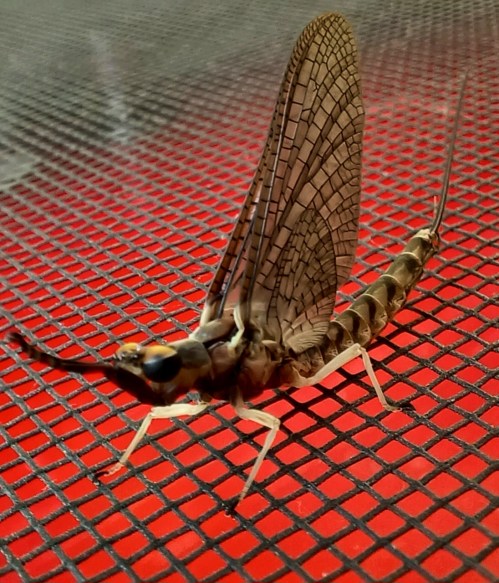
An interesting view of this remarkable insect

Same bug, good look at the eyes

After molting, even the tail shape is retained
Mayflies have an interesting life cycle that includes molting. We spotted this insect a couple of days ago and his molted shell showed up this morning. There is lots of good information on these insects on the web. Hit up “life cycle of mayflies” on a search.

Saw this bug today. The image is the result of grabbing the camera! Quite frightening looking rows of spikes or hooks on the front two pairs of legs on this guy.
Sometimes you never know what you are going to find when you’re out and about. Here’s some stuff we saw today while we were out looking for bridges and other history.

Creepy tree, best presented in B&W
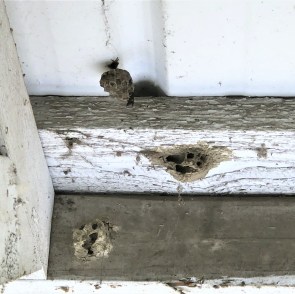
Mud daubers and paper wasp nests

Two different paper wasp nests
Some wasps make their nests out of mud, thus the name. Others make very light nests with paper like material, again thus the name. At least that’s what we called them.

Crawdad house entrance
The crawdad builds a tower like structure with the material it excavates to make its home. These towers can get to be about a foot tall sometimes. Ok, this small lobster like critter gets its name depending on where in the country you happen to be. In the Midwest we call them crawdads. From Louisiana? You’ll no doubt call them crawfish. You’ll call ’em crayfish if you’re up North. They are all the same critter. Yes, you can eat them, but cook them well first. Don’t ask why…
I was lucky to even see this little green bug. Talk about camouflage. He kept moving around hiding on the branch (like squirrels do on tree trunks) as I tried to get this image.
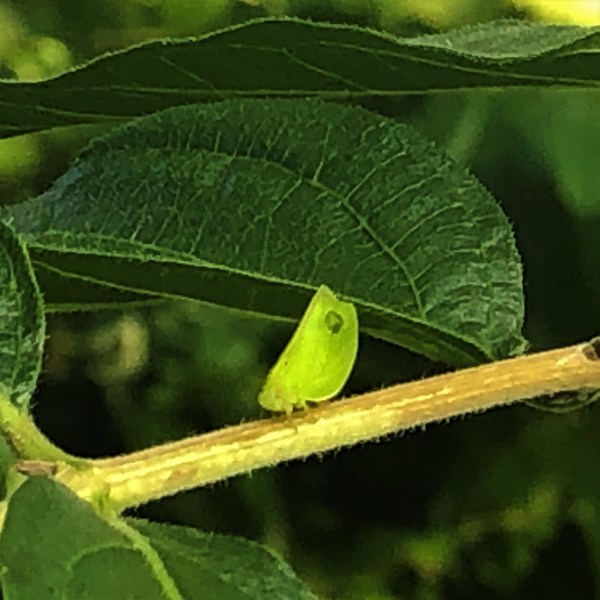
He’s about a half inch tall
After doing a search on a bug identification site, I came to the conclusion that this guy is a planthopper. No, not a leafhopper, but a planthopper. According to the experts, planthoppers have fewer leg spines and a “more interesting head” than leafhoppers. I didn’t make that up. Thank heavens, at least my bug has an interesting head. Whew…

We were on the hunt for a Geocache at a nearby park when we saw this praying mantis on an asphalt walking path. It didn’t move when I got down with the iPhone for a close up.
 Roadtirement