Brownstown Indiana Ewing Depot Restoration

In 2013 Brownstown Township in Jackson County Indiana funded a wonderful project to relocate and restore a portion of the original Ewing Depot. The structure was moved by truck and trailer to a newly prepared site on Front Street near the high school.

Moving the building, photo courtesy Brownstown Township website

The finished project

The building was not open the day we drove by. The depot is in great condition. There is a RR traffic signal installed as part of the display. More information and photos are available at the Brownstown Township website.


Newly discovered 2000 year old Roman frescoes in Pompeii

CBSNews reports: Stunning Roman frescoes have been uncovered by archeologists in Pompeii, the ancient city destroyed by an eruption of the volcano Mount Vesuvius in the year 79 AD. Experts say the newly discovered frescoes are among the finest ever to emerge at the renowned archeological site. … The works of art line the high walls of what was once a large banquet hall. The walls themselves were painted mostly black, and the figures on the frescoes appear to emerge from the shadows.

A fresco discovered on the wall of a banquet hall in the volcano-destroyed ancient Italian city of Pompeii depicts the mythological meeting of Prince Paris and Helen of Troy. Photo courtesy BBC-Jonathan Amos

The recent excavations have revealed that at the time of the eruption a construction project was ongoing at the property. Tool and building materials were found waiting for workers to continue work. The destruction of Pompeii in 79 AD, while it was deadly at the time, has provided amazing archeological sites for the study of Roman life of the times.


Memorial Day haunting quatrains honoring war dead

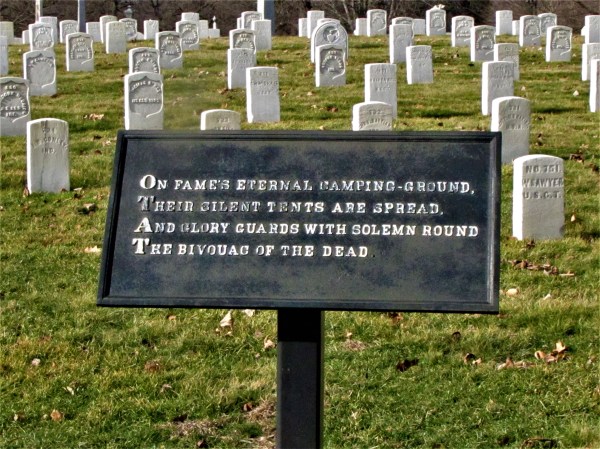
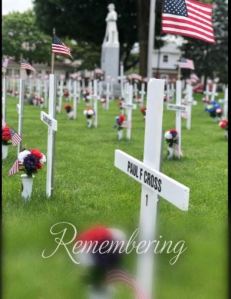
Memorial Day in 2023 will be held on May 29th. Originally called “Decoration Day” it started after the end of the Civil War and became an official Federal Holiday in 1971. Memorial Day is observed all across the nation in towns large and small. Many courthouse lawns are decorated with crosses bearing the names of local men and women who gave their lives serving in the armed forces while protecting our freedoms.
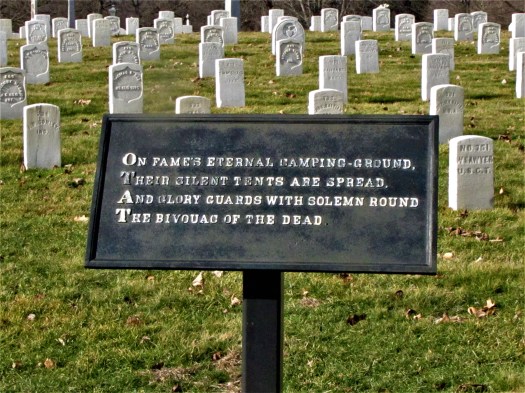
One of two National Cemeteries in Crown Hill Cemetery, Indianapolis, Indiana with 2nd quatrain, 1st stanza of O’Hare’s poem displayed

Theodore O’Hara (1820 – 1867) was a poet, lawyer, soldier and adventurer from Kentucky. He penned a haunting poem, “Bivouac of the Dead” honoring the dead from Kentucky killed in the Mexican War of 1847. At the end of the Civil War it became a memorial to Confederate dead, however the second quatrain of the first stanza has become an honor to any soldier killed in battle. That quatrain can be found in cemeteries across the nation and even the gateway to Arlington National Cemetery bears an inscription from O’Hara’s most noted poem.

Following is the complete poem, 12 stanzas with two quatrains per stanza. It is worth reading from start to finish.

“BIVOUAC OF THE DEAD”

The muffled drum’s sad roll has beat
The soldier’s last tattoo;
No more on life’s parade shall meet
That brave and fallen few.
On Fame’s eternal camping-ground
Their silent tents are spread,
And Glory guards, with solemn round,
The bivouac of the dead.

No rumor of the foe’s advance
Now swells upon the wind;
Nor troubled thought at midnight haunts
Of loved ones left behind;
No vision of the morrow’s strife
The warrior’s dream alarms;
No braying horn nor screaming fife
At dawn shall call to arms.

Their shriveled swords are red with rust,
Their plumed heads are bowed,
Their haughty banner, trailed in dust,
Is now their martial shroud.
And plenteous funeral tears have washed
The red stains from each brow,
And the proud forms, by battle gashed
Are free from anguish now.

The neighing troop, the flashing blade,
The bugle’s stirring blast,
The charge, the dreadful cannonade,
The din and shout, are past;
Nor war’s wild note nor glory’s peal
Shall thrill with fierce delight
Those breasts that nevermore may feel
The rapture of the fight.

Like the fierce northern hurricane
That sweeps the great plateau,
Flushed with the triumph yet to gain,
Came down the serried foe,
Who heard the thunder of the fray
Break o’er the field beneath,
Knew well the watchword of that day
Was “Victory or death!”

Long had the doubtful conflict raged
O’er all that stricken plain,
For never fiercer fight had waged
The vengeful blood of Spain;
And still the storm of battle blew,
Still swelled the gory tide;
Not long, our stout old chieftain knew,
Such odds his strength could bide.

Twas in that hour his stern command
Called to a martyr’s grave
The flower of his beloved land,
The nation’s flag to save.
By rivers of their father’s gore
His first-born laurels grew,
And well he deemed the sons would pour
Their lives for glory too.

For many a mother’s breath has swept
O’er Angostura’s plain —
And long the pitying sky has wept
Above its moldered slain.
The raven’s scream, or eagle’s flight,
Or shepherd’s pensive lay,
Alone awakes each sullen height
That frowned o’er that dread fray.

Sons of the Dark and Bloody Ground
Ye must not slumber there,
Where stranger steps and tongues resound
Along the heedless air.
Your own proud land’s heroic soil
Shall be your fitter grave;
She claims from war his richest spoil —
The ashes of her brave.

Thus ‘neath their parent turf they rest,
Far from the gory field,
Borne to a Spartan mother’s breast
On many a bloody shield;
The sunshine of their native sky
Smiles sadly on them here,
And kindred eyes and hearts watch by
The heroes sepulcher.

Rest on embalmed and sainted dead!
Dear as the blood ye gave;
No impious footstep shall here tread
The herbage of your grave;
Nor shall your glory be forgot
While fame her records keeps,
Or Honor points the hallowed spot
Where Valor proudly sleeps.

Yon marble minstrel’s voiceless stone
In deathless song shall tell,
When many a vanquished ago has flown,
The story how ye fell;
Nor wreck, nor change, nor winter’s blight,
Nor Time’s remorseless doom,
Shall dim one ray of glory’s light
That gilds your deathless tomb.

Bivouac Of The Dead by Theodore O’Hara

O’Hara’s quatrain posted at one of two National Cemeteries in Crown Hill Cemetery, Indianapolis

Theodore O’Hara (1820 – 1867) was a poet, lawyer, soldier and adventurer from Kentucky. He penned a haunting poem honoring the dead from Kentucky killed in the Mexican War of 1847. At the end of the Civil War it became a memorial to Confederate dead, however the second quatrain of the first stanza has become an honor to any soldier killed in battle. That quatrain can be found in cemeteries across the nation and even the gateway to Arlington National Cemetery bears an inscription from O’Hara’s most noted poem.

Following is the complete poem, 12 stanzas with two quatrains per stanza. It is worth a complete read.


“BIVOUAC OF THE DEAD”

The muffled drum’s sad roll has beat
The soldier’s last tattoo;
No more on life’s parade shall meet
That brave and fallen few.
On Fame’s eternal camping-ground
Their silent tents are spread,
And Glory guards, with solemn round,
The bivouac of the dead.

No rumor of the foe’s advance
Now swells upon the wind;
Nor troubled thought at midnight haunts
Of loved ones left behind;
No vision of the morrow’s strife
The warrior’s dream alarms;
No braying horn nor screaming fife
At dawn shall call to arms.

Their shriveled swords are red with rust,
Their plumed heads are bowed,
Their haughty banner, trailed in dust,
Is now their martial shroud.
And plenteous funeral tears have washed
The red stains from each brow,
And the proud forms, by battle gashed
Are free from anguish now.

The neighing troop, the flashing blade,
The bugle’s stirring blast,
The charge, the dreadful cannonade,
The din and shout, are past;
Nor war’s wild note nor glory’s peal
Shall thrill with fierce delight
Those breasts that nevermore may feel
The rapture of the fight.

Like the fierce northern hurricane
That sweeps the great plateau,
Flushed with the triumph yet to gain,
Came down the serried foe,
Who heard the thunder of the fray
Break o’er the field beneath,
Knew well the watchword of that day
Was “Victory or death!”

Long had the doubtful conflict raged
O’er all that stricken plain,
For never fiercer fight had waged
The vengeful blood of Spain;
And still the storm of battle blew,
Still swelled the gory tide;
Not long, our stout old chieftain knew,
Such odds his strength could bide.

Twas in that hour his stern command
Called to a martyr’s grave
The flower of his beloved land,
The nation’s flag to save.
By rivers of their father’s gore
His first-born laurels grew,
And well he deemed the sons would pour
Their lives for glory too.

For many a mother’s breath has swept
O’er Angostura’s plain —
And long the pitying sky has wept
Above its moldered slain.
The raven’s scream, or eagle’s flight,
Or shepherd’s pensive lay,
Alone awakes each sullen height
That frowned o’er that dread fray.

Sons of the Dark and Bloody Ground
Ye must not slumber there,
Where stranger steps and tongues resound
Along the heedless air.
Your own proud land’s heroic soil
Shall be your fitter grave;
She claims from war his richest spoil —
The ashes of her brave.

Thus ‘neath their parent turf they rest,
Far from the gory field,
Borne to a Spartan mother’s breast
On many a bloody shield;
The sunshine of their native sky
Smiles sadly on them here,
And kindred eyes and hearts watch by
The heroes sepulcher.

Rest on embalmed and sainted dead!
Dear as the blood ye gave;
No impious footstep shall here tread
The herbage of your grave;
Nor shall your glory be forgot
While fame her records keeps,
Or Honor points the hallowed spot
Where Valor proudly sleeps.

Yon marble minstrel’s voiceless stone
In deathless song shall tell,
When many a vanquished ago has flown,
The story how ye fell;
Nor wreck, nor change, nor winter’s blight,
Nor Time’s remorseless doom,
Shall dim one ray of glory’s light
That gilds your deathless tomb.

 

Two Englishmen fight it out in 1870 Louisiana

We noticed a neat park on the Mississippi River levee at the town of Kenner, Louisiana. I turned into the parking lot because I saw an interesting statue. It was, in fact, a statue of a couple of men in boxing stances. I had to see what this was all about. Here is a picture and a little history.

Bronze statue portraying the 1870 boxing contest

On May 10, 1870, a trainload of about 1000 people left New Orleans for the little town of Kenner, a few miles from NOLA. The purpose of the trip was to visit an old sugar house near the banks of the Mississippi River. In that house was a makeshift boxing ring. In that ring a fellow from Beeston, Norwich, England named Jed Mace was the victor over another Englishman named Tom Allen from Birmingham. The 10 round bout was a bare knuckle affair. What made it special was that it was the first World Championship Heavyweight Prize Fight in the United States.

The park offered a great view of the river as well as access to a long trail on top of the levee. Kenner is a quaint little burg with quite a history. In addition to the boxing site, when Kenner was a Native American village it was the site of the landing of French explorer Robert Cavelier De La Salle’s landing in 1682. This was when he claimed Louisiana for France in the name of King Louis XIV.

Memorial to La Salle’s landing on the Mississippi River bank in Louisiana

View of downtown Kenner from the top of the levee