A bright blue iron bridge

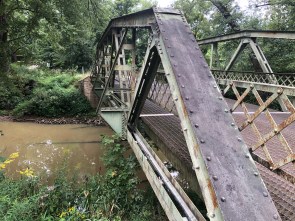
Normally old iron truss bridges are painted in shades of green. Not this one, Shelby County Bridge #117 on CR 600 S. Bridgehunter.com has a 2010 photo showing a rusty green, but a 2016 shot shows a shiny bright blue paint job.

Approaching on CR 600S

The first bridge over Conn’s Creek at this location was a 16′ tall Pratt through truss built in 1892. Ironically it got a new concrete deck in 1912. The irony comes with the historic and horrific disastrous flood of 1913 which washed this bridge away. The original concrete abutments and wingwalls survived the flood and now support the replacement 7-panel, riveted Warren pony truss bridge. This bridge was built in 1925.
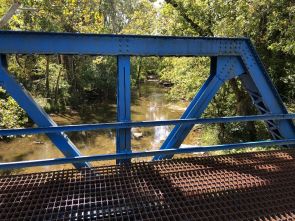
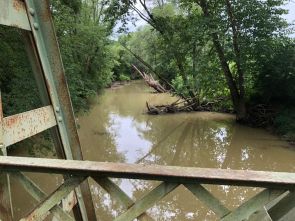
Looking at Conn’s Creek through truss
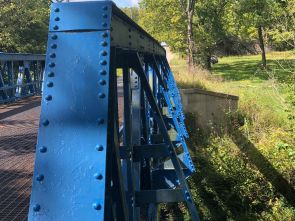
Truss outriggers and abutment and wing wall
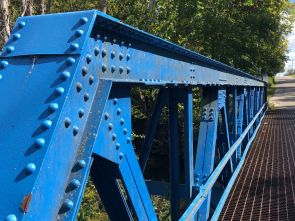
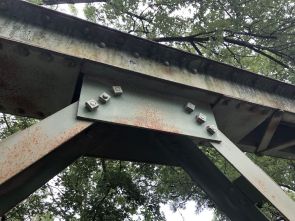
Riveted hip connection

Diagonals, side rails and deck grate
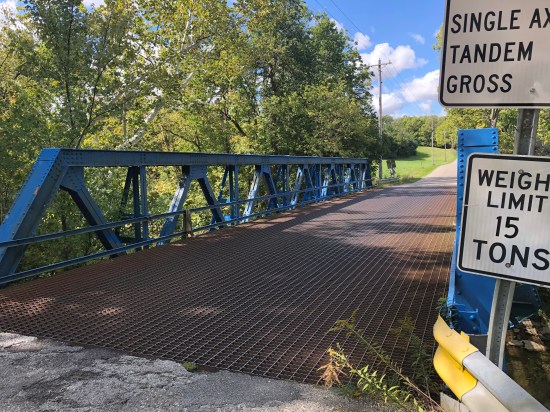
You can see all 7 truss panels and deck grate

It is quite a visual as you approach this bright blue iron bridge. Like referenced above, you usually see green iron bridges, not blue. This is, however, a very nice bridge that spans a pretty little country creek.

For those of you interested in truss design details, HistoricBridges.org describes the design and structure: Concrete abutments and wingwalls support the single-span Warren pony truss. The riveted structure extends 87’6″ in seven panels. Its all-interior verticals are manufactured from pairs of angles riveted together with stay plates and reinforced with external sway bracing. Its diagonals are made from a pair of angles (doubled in the outer panel) also riveted together with stay plates. The I floor-beams are riveted to gussets and the verticals above the lower chord and carry the concrete deck. The weight and varied size of the diagonals, the placement of the floor-beams, and the integration of knee or external sway braces into the verticals indicate a late stage in the design of all-riveted Warren pony trusses.


Pedestrian traffic only on Stevenson Road Covered Bridge

Greene County , Ohio is a bit east of Dayton with pretty rolling hills and well kept farmsteads. This is also the home of the Stevenson Road Covered Bridge, now open to pedestrian traffic only.

View from the new road that bypasses the old bridge

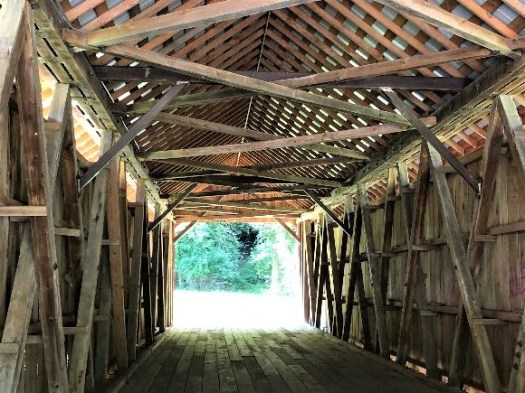
Note the three members of the top chord

This beautifully restored bridge was originally built in 1877 by the Smith Bridge Company of Toledo. The design is designated a Covered Smith through truss. This design was patented by Robert Smith and utilized a system of multiple top and bottom chords depending upon span lengths and load requirements.

Vehicles were prohibited in 2003 with the road course moved in 2004. The bridge deck is 95 feet in length with a width of 16.5 feet. The bridge spans Massies Creek on Stevenson Road (CR 76) in Wilberforce.

This was the first Smith through truss bridge we had seen. While inspecting the bridge truss system, you notice several steel square pipe cross bracing supports. They did not look appropriate for the original structure. Photos on bridgehunter.com taken in 2015 do not show these steel braces, so these might have been added in the 2015 restoration mentioned on the entrance signage.

Note the rust colored steel angle and cross braces

View of the deck supports reflected in the water

Dates of interest

Sher enjoying this pretty bridge


The Stevenson Road Covered Bridge is a lovely addition to the history of Ohio, and to the countryside in which it stands. The approach is quite capable of safe vehicle parking allowing for easy and interesting access to the bridge and its surrounds. This is a stop well worth your time.


Finks Road stone arch bridge

Ripley County, Indiana is allegedly home to 11 stone arch bridges. The Fink Road bridge spans a branch of Laughery Creek, one of the main waterways in the county. This is a smaller single arch bridge that is not really obvious from the road.

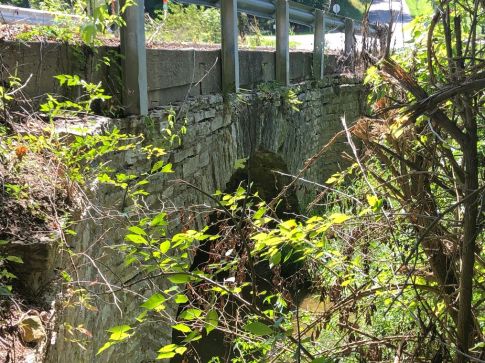
Hard to see the stone arch through the vegetation

All you see are guardrails

Courtesy bridgehunter.com by Anthony Dillon

Stonework in B&W

This bridge was probably built around 1900 and refurbished in 1993. This turn of the century time frame saw many stone arch bridges constructed. The Fink Road Bridge, while only 60 feet long, has an unusual full 19 feet wide two lane spacing. It shows the high degree of craftsmanship typical of the times.


Bond Cemetery Road Bridge, abandoned

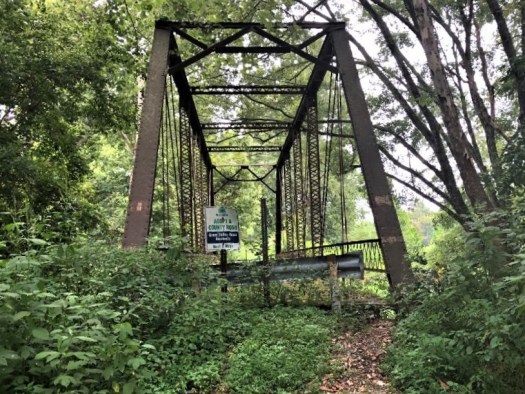
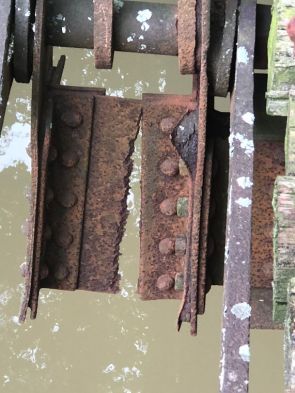
Bond Cemetery Road Bridge, aka Brown County Bridge #36, is a very interesting bridge that has been abandoned and is, frankly, degrading at a fairly rapid pace. The HistoricBridges.org website states: “The bridge is severely deteriorated and the bridge is at an increasing risk for collapse. One of the plates that is part of the floorbeam and hanger system is cracked so badly it is split nearly in half. (see photo below) Many diagonal and vertical members have extremely severe section loss at the heads. Restoration of this bridge would likely need to include disassembly and restoration of these parts in a shop setting.”

Abandonment is, ah, obvious

This historic bridge was constructed in 1908 by the Pan-American Bridge Company of New Castle, Indiana, who were very prolific iron bridge constructors in Indiana. The technical design name of this bridge is a single-span, pin-connected Pratt through truss with an “I” beam approach to the south. The bridge rests on metal abutments, wingwalls and round caisson piers.

The concrete filled metal caisson foundation

The cracked plate referenced above

Looking through the decorative lattice guardrail at North Fork of Salt Creek

Bridge behind camera looking down old Bond Cemetery Road


This bridge spans the North Fork of Salt Creek and is a couple of hundred yards south of Green Valley Road on what is left of Bond Cemetery Road. The old road bed continues towards Highway 46 past the cemetery of that name. There was discussion in the early 2000’s about building some type of trail along the road, including refurbishing the bridge as part of the trail. Too bad nothing ever came of that plan.

Note the “interlaced” I beam verticals, and the moss growing on the deck boards.

This is one of those stories that apparently will not have a happy ending. The private owner of the bridge does not seem to care if the bridge collapses. According to the experts at HistoricBridges.org it is not a matter of if, but when this classic 1908 bridge goes down. What a shame.


The Bean Blossom covered bridge

The Bean Blossom covered bridge is located near the village of Bean Blossom on Covered Bridge Road and it spans, you guessed it, Bean Blossom Creek. This is one of the favorite photo op sites in Brown County, Indiana.

Approaching the bridge

This bridge was constructed in 1880 by a Capt. Joseph Balsey for the sum of $1200. The covered bridge design is that of a Howe-single through truss. The supported approach deck is unique due to the topography as the road approaches the stream bank.

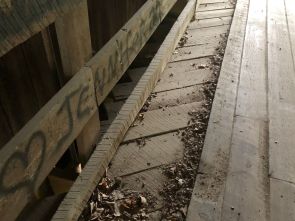
Too bad about the graffiti

Supports for the approach

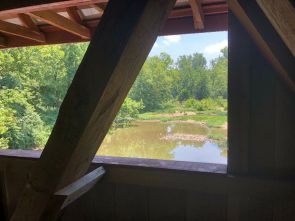
Overlooking Bean Blossom Creek

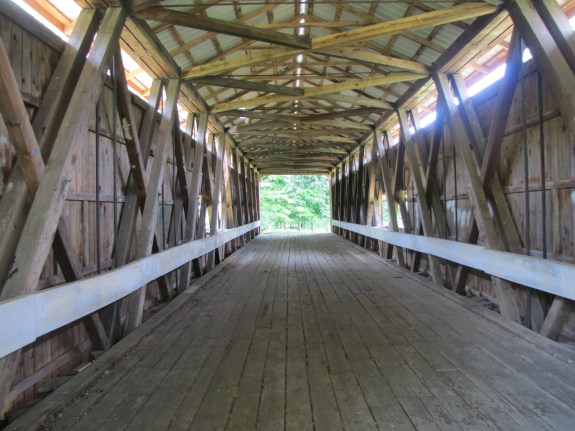
Detail of the deck lumber

Interesting story here?

We had to chuckle a bit when we noticed the graffiti just inside of the bridge. Seems that Molly likes to bring her boyfriends here. Have to wonder, was Molly dating Roman and Steve at the same time?


Discovery of an Indiana iron bridge

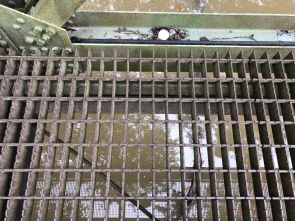
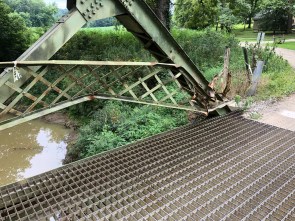
While following our map/directions app on the way to another historic bridge we were pleasantly surprised when we came up to another old iron bridge. This one has a lower profile, with no superstructure overhead. Typical of lots of smaller iron bridges, the deck is made of open grating that lets you look through the floor to the water below.

The approach

Note the angled supports

Detail of connection

Note damage at end of lattice piece

Looking over North Fork Salt Creek


This bridge, tagged Brown County Bridge #33, known to locals as the Green Valley Road Bridge, is an iron pony truss design. The bridge spans the North Fork of Salt Creek. The nearly 90 foot long span was constructed in 1915 by the Cambria Steel Co. of Johnstown, Pennsylvania. Cambria was a very prolific builder in many midwestern states at the turn of the century.

Open grate bridge deck

Probably needs an engineer to have a look


The Green Valley Road runs through a beautiful part of Brown County, one of Indiana’s most visited counties. This small bridge adds to the charm of the road and surrounds. It is eligible for the National Register of Historic Places. The structure could use a coat of paint. Some rather noticeable damage has occurred on one side of an approach. This damage may or may not be structural and hopefully is not hazardous to the bridge.
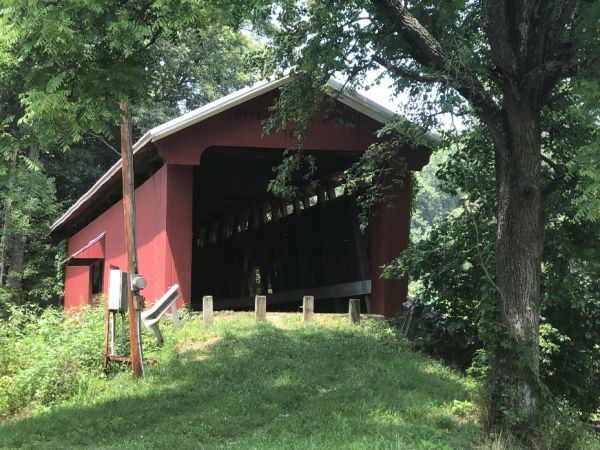
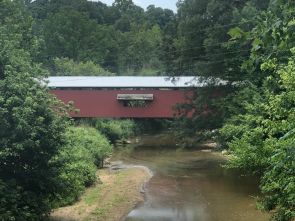
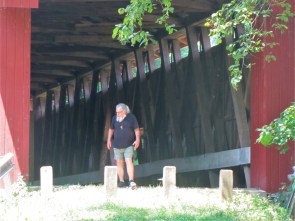
An 1885 Thomas A. Hardman covered bridge

This looks like the bridge was just plopped down on the edge of a forest

We visited another one of Hardman’s bridges at Versailles, Indiana. Hardman uses the Howe truss system, as opposed to the Burr-arch trusses that the Kennedy builders use. This bridge is called the Busching bridge, and is 182 feet long with a 14.1 foot wide deck. It spans Laughery Creek on Ripley County CR 40 South.

Notice this design has an overhang at each end

Busching Bridge name and build date

A look at the Howe truss system

Scenic view of Laughery Creek

Photo taken by Bryan E. Ketcham On Apr. 22,1946 at 10:35 a.m.

Another view with details of the Howe truss system

This is another fine example of a Thomas A. Hardman built bridges. It was restored in 2005 and is well maintained. The bridge was posted to the National Register of Historic Places on March 19, 2019. Coming from Versailles on CR 40 you cross the bridge and enter the valley. The entrance to the Versailles State Park and the new park offices are to the left after you leave the bridge.

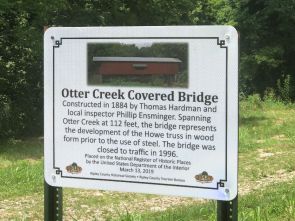
Otter Creek covered bridge

In what some may say is an area “out in the middle of nowhere” in Ripley County, Indiana, travelers will stumble upon a unique and historic covered bridge. Built in 1884 by Thomas A. Hardman, this bridge has a unique history as well.

Closed to road traffic in 1996, it is now open only to foot traffic.

The Otter Creek Bridge, also known locally as the Holton Bridge, is constructed with the Howe truss system. This design was invented by a William Howe, an American architect born in 1803. The Howe truss design, patented in 1840, became one of the most popular structural designs and continued to see use in later metal bridge designs.

View of the 113 foot bridge over Otter Creek

Maj examining the deck timber supports

A good view of the Howe truss system, and the roof supports as well

Nice information signage!

The bridge is in excellent condition

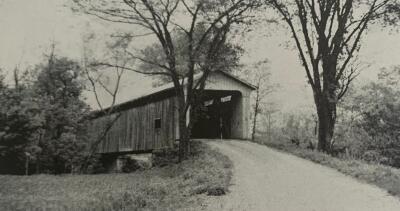
The bridge in 1943 (courtesy bridgehunter.com)

The bridge roof was partially ripped off during a straight line wind storm just months after it was placed on the National Register of Historic Places. Repairs were completed quickly and the structure again opened to pedestrian traffic. This piece of American history is located in a peaceful and beautiful setting and worth the drive to see.