We had been out picking up some items we had bought at an online auction last Saturday. Sher had already checked for “Things to do in Connersville” and an interesting bird watching place popped up. So after we picked up the items from the auction we had a 25 minute drive through farmland. The auction was north of town, and the birding place was south. It seemed like our destination was truly out in the middle of nowhere.
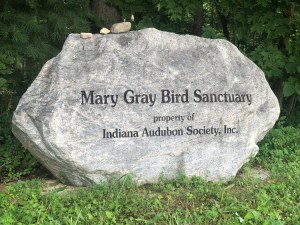
Easy to spot entrance
The Mary Gray Bird Sanctuary is located south of Connersville in Fayette County, Indiana. Alice Green Gray gave the initial 264 acre property to the Indiana Audubon Society in 1943 as a living memorial to her daughter Mary, who preceded her in death. Another Gray relative and Society members have made possible the acquisition of more property so that the Sanctuary now has 723 acres.
The road into the sanctuary grounds is a fairly long drive which immediately puts you in the middle of a semi dense woods. It truly allows you to prepare for atonement with Nature.
It was extremely hot that day. In fact an official weather service Heat Advisory was in effect. It became apparent as soon as we got out of the car that it was going to be a very unpleasant day to successfully do any birdwatching. In addition to the heat, a plethora of insects was present and quite annoying buzzing around.
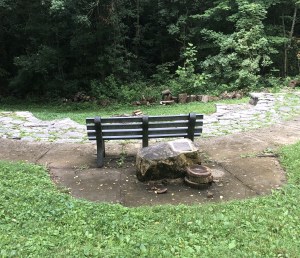
Bench seating at the amphitheater
We will definitely return when the conditions are much more conducive to for a comfortable and safe bird watching adventure. There are many features within this sanctuary. There is a bird watching blind where you can observe the many stocked feeders and not be seen. Ponds and native trees provide a perfect chance to immerse yourself in communing with Earth. Click here for the MGBS website.


 Roadtirement