The day we saw the Border Wall

One winter day when we were living at an RV resort in Harlingen, Texas, Sher and I decided to head out and see if we could see the border wall between Mexico and the United States. We also wanted to see the Rio Grande River, which is of course the actual US/Mexico border.

We started our trek on US Highway 281 south of Pharr, Texas. We headed east on 281, which for this stretch towards Brownsville is also the route of the Military Highway, another historic route in the Lone Star State.
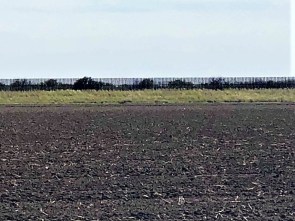
Border fence seen across a farm field

Closer to Hwy 281, with graffiti


We spotted some of the border wall sections that were pretty far from the road. We were closer to the fence between Los Indios and La Paloma. The vertical metal slats were mounted in a large concrete foundation.

What we didn’t get, however, was why the wall/fence stopped out in the middle of nowhere. It seemed odd that it seemed to be random as to where the fences had been constructed and where there were none.

We continued our drive into downtown Brownsville into the historic commercial part of town. What a treat to see all the colorful store fronts and signage in Spanish. Different for a couple from Indiana. I spoke with a Border Patrol Agent who kindly directed us to a small city park where we could see the Rio Grande river. It too had a high fence, complete with coils of razor wire on the Mexico side.

Mexico on left, Border Patrol watching the river

Looking across the river at Matamoros Mexico

Parked at the Alice Wilson Hope Park


All in all we had a very nice day. It was most interesting seeing the thousands of acres of irrigated crop ground. There were some workers in the fields, but mostly it seemed that new crops were just starting to grow, and other fields had been recently tilled in preparation for new crop plantings. Early in the year compared to our crop seasons back in the Midwest.
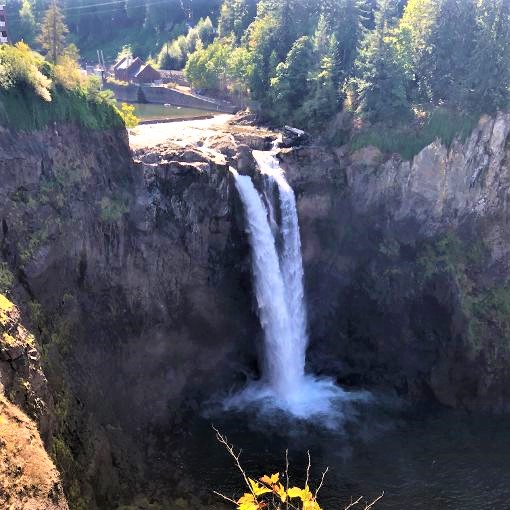
 

Beautiful Snoqualmie Falls

One of the most popular attractions in the Seattle area is the Snoqualmie Falls, a 269 foot single drop waterfall. The falls are near the town of Snoqualmie, which also offers interesting attractions to tourists and locals alike.

View from the observation deck

The area became an active logging site in the 1870’s with logs actually floated over the falls. In 1889 a railroad was built, opening the logging trade further. The town of Snoqualmie was platted in 1889 as well, and by the 1890’s Charles Baker had constructed an underground hydroelectric plant at the falls. Some of the original generators still function today.


It is very easy to gain access to the falls. Free parking is available, and an easy walk on the pedestrian bridge leads to the concrete paths to observation decks. If you prefer, for $7.00 you can park next to the gift shop next to the observation decks.

Beautiful scenery from the deck

Salish Lodge, note the wedding tent


The Salish Lodge and Spa offers high end accommodations, spa, and dining. Many use the striking views as a place for weddings. It overlooks the river, the generating plant and the top of the falls.

We just liked this photo

The walk to the observation decks is easy with only a couple of places with widely spaced steps. There were quite a few people enjoying the sights, but we felt comfortable and not crowded. The layout was very nice, and all of the paved paths and safety fencing was kept in excellent condition. It is easy to see why Snoqualmie Falls is one of Washington state’s most popular scenic attractions.


The old jail in Bardstown is haunted and a Bed and Breakfast

Bardstown, Kentucky is in Nelson County and is in the heart of the Kentucky Bourbon industry. Bardstown is also home to one of the oldest jails in the area. The original jail structure (now called the front jail) was erected in 1819 and was used until 1874 to house prisoners. In 1874 the “back jail” was built and held inmates until 1987. During this time the front jail was the jailer’s residence. The facility is now a Bed and Breakfast using the rooms in the old residence.

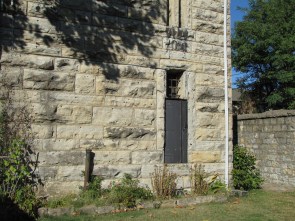
Thick walls and narrow windows of the jail

The history of this place is fascinating. You can (for a fee) take a tour of the back jail, with many of the jail cells untouched since the last prisoners left in 1987. There are original photos, some of which show the last hanging that took place in 1894 in the yard in back of the jail. Some paranormal activity has been reported and investigated.

Back of the jail where the gallows were for the last hanging in 1894

Hood and shackles for the 1894 hanging


The structure is quite the fortress! The walls are every bit of 30 inches thick with large metal bars covering the narrow windows. There are mason’s marks on the huge stones where hooks were used to move them into place during the construction. The original wall surrounding the back yard is complete with massive solid metal gates.

There are some nice RV parks in the area, including My Old Kentucky Home State Park. Be sure to check out the old jail. By the way, there are 11 (count ’em) distilleries in and around Bardstown. Go ahead and take a distillery tour while you are there.

Scott Joplin, King of Ragtime mural in Texarkana

Scott Joplin was an American composer and pianist born in Texarkana in 1868. He became famous for his ragtime compositions and was dubbed the “King of Ragtime.” During his brief career, (1895 – 1917) he wrote over 40 original ragtime pieces, one ragtime ballet, and two operas.


In 1984 a large mural was painted on the side of a building in downtown Texarkana, on Main Street a couple of blocks in from the Texas/Arkansas line, Texas side. Time took its toll, the mural faded. However in 2015 a project to restore the mural was undertaken. A local TV station reported that Joplin’s great niece dedicated the project. Joplin was a brilliant composer whose works became well known with the release of the 1973 movie The Sting.

We just happened upon this beautiful and large mural. We were lucky in that there were no cars in the parking lot blocking our view. Thus the photo of the complete mural, above. Another example of why travel is adventuresome.

Good timing at Mt. Rushmore National Memorial

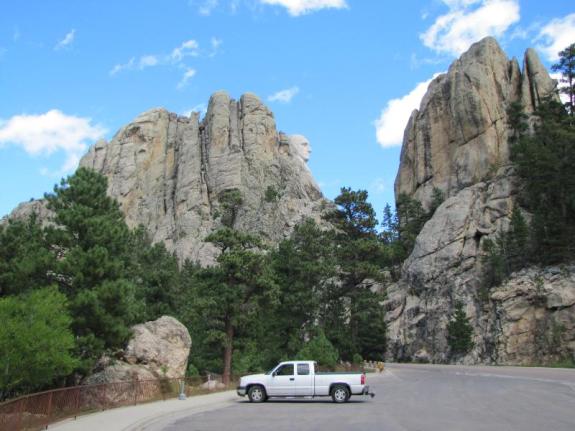
One thing we have discovered about Roadtirement is that timing is sometimes everything. We hit perfect timing when we visited Mt. Rushmore a while back on one of our trips to Seattle. We were at Mt. Rushmore National Memorial on a Sunday in late August a week before Labor Day. The traffic was minimal, and we discovered a vehicle pull off on the Norbeck Parkway, Route 244, where you can see George Washington’s face in profile. The parking area was nearly void of cars and outside the Park grounds.

See George directly above the white truck?

Sure there were some vehicles that pulled in to the turn off, but very few stayed for any length of time. It seemed like we had that beautiful slice of Mt. Rushmore all to ourselves.

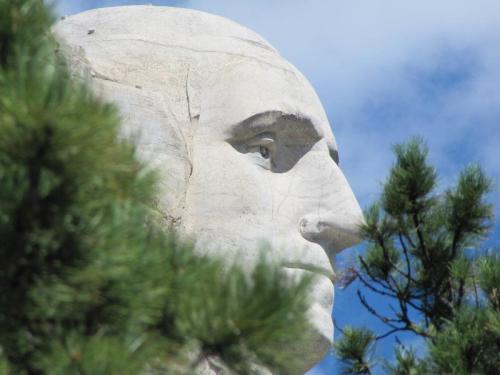
George’s big profile view

Some statistics: George’s face is 60 feet tall, his nose is 20 feet long and his mouth is 18 feet across. Oh, and don’t forget his eyes. They are 11 feet wide each. Glad we had a telephoto lens!


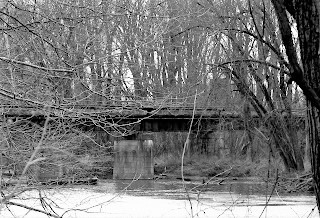
Haunted Suicide Railroad Bridge

The sad story has been repeated over and over: Unwed girl gets pregnant, gives birth, and takes her life and the infant’s life as well.

This tale of tragedy takes a paranormal turn in Columbus, Indiana. The time is in the mid 1920’s, when illegitimate children brought shame not only to the mother but to her family as well. One such birth led to the young unwed mother making the decision to take her own life and her baby’s. The location of the suicide was an open railroad bridge over the East Fork of the White River in Columbus, Indiana.

The old open RR bridge

Locals still report seeing the misty figure of a young woman with a bundled blanket in her arms standing on this bridge, which does not have adequate width to even allow current pedestrian traffic. This figure vanishes into “thin” air. Perhaps even more unsettling is the mournful sound of a baby wailing, also heard emanating from somewhere in the area.

The center portion of the bridge

Research into this apparition has revealed a couple of accounts of the sighting of some sort of large yellow eyed creature being seen on this bridge at times. However I was not able to confirm any such sightings or reports of same with the locals.

Note: This post is taken from our My Paranormal Encounters blog.

Tarpon Springs Florida home to historic Sponge Docks

During our travels in Florida over the years we have been fortunate to enjoy Tarpon Springs, Florida, a quaint and pretty town north of Clearwater and Tampa on the Gulf. When we were actively engaged in Flea Market business in Central Florida, Tarpon Springs became one of our favorite spots for R&R.

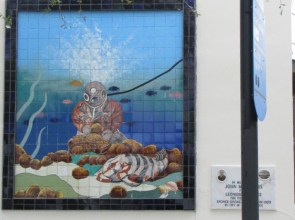
Statue honoring the Greek sponge divers. Note the sponge diving boat tied to the dock.

Tarpon Springs is famous for the Sponge Docks where diving boats still sail to the sponge beds and hard hat divers collect the sponges. This industry began here in Florida in 1905 when John M. Cocoris from Leonidion Greece started the now flourishing sponge business.

Sponge diver in a beautiful tile mosaic

Memorial to the founder of Florida’s Sponge Industry


Dodecanese Blvd. is the main street that houses multiple shops and businesses. The shops offer everything from fresh tea and spices, hand made cigars, souvenirs, freshly caught fish shops and of course several shops selling sponges collected by the Greek divers.

Locally collected sponges of all sizes for sale

Also of note in Tarpon Springs are the marvelous Greek Restaurants! Talk about authentic Greek cuisine, you’d have to go to Greece to get any cuisine that is more Greek. We have enjoyed several restaurants and bakeries in this wonderful spot on Central Florida’s Gulf Coast.

We have not yet seen any reports of Tarpon Springs suffering damage from Hurricane Ian. We hope that the Sponge Docks and the town were spared.

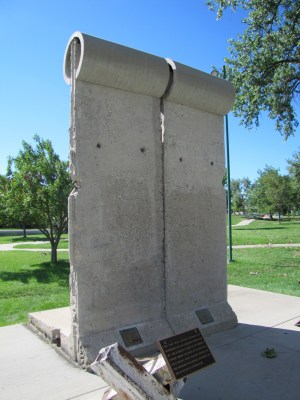
The Berlin Wall in Rapid City, South Dakota

Original wall sections, note the tank trap in foreground

Having just seen some of the statues of US Presidents in downtown Rapid City we continued just driving around checking out the town. Sher spotted a sign in a park next to the convention center that said “The Berlin Wall”. There we found a memorial to the history of the divided city and the ultimate fall of Communism and the tearing down of the wall in November of 1989. Remember Reagan’s speech to the Soviet leader? “Mr. Gorbachev, tear down this wall!”

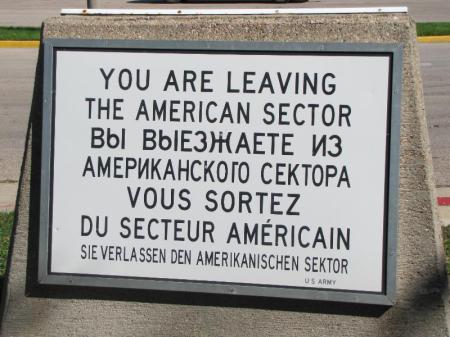
There are two sections of the original Berlin Wall displayed along with information filled plaques, signs and even old tank traps that were once used at Check Point Charlie, the only gate between East and West Berlin during the times of the divided city.

Original sign from “Check Point Charlie”

If you travel through the Rapid City area on your way to Mt. Rushmore, take a few minutes and go see this memorial. It is worth the time.

If this old tin barn could talk


Tin roofing? Yes, of course. However you don’t often see tin siding on a barn. This old structure needs a little TLC, at least a paint job! You can see at the peak of the roof the overhang indicating that originally there was a pulley and rail for loading loose hay into the barn. This old barn has been around for a long time.

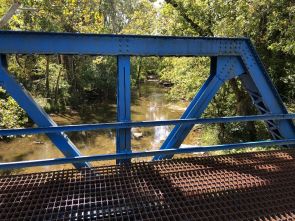
A bright blue iron bridge

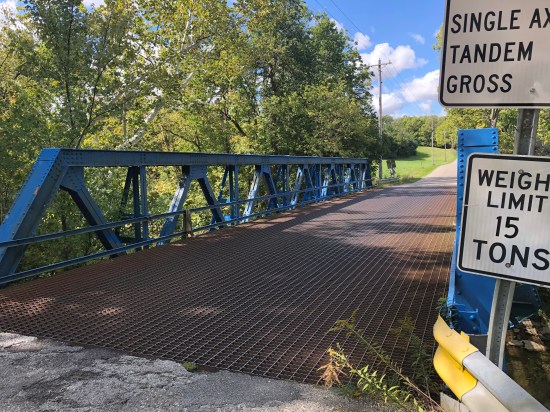
Normally old iron truss bridges are painted in shades of green. Not this one, Shelby County Bridge #117 on CR 600 S. Bridgehunter.com has a 2010 photo showing a rusty green, but a 2016 shot shows a shiny bright blue paint job.

Approaching on CR 600S

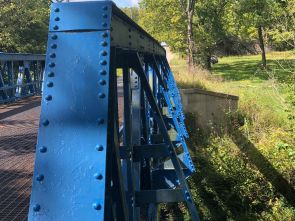
The first bridge over Conn’s Creek at this location was a 16′ tall Pratt through truss built in 1892. Ironically it got a new concrete deck in 1912. The irony comes with the historic and horrific disastrous flood of 1913 which washed this bridge away. The original concrete abutments and wingwalls survived the flood and now support the replacement 7-panel, riveted Warren pony truss bridge. This bridge was built in 1925.

Looking at Conn’s Creek through truss

Truss outriggers and abutment and wing wall

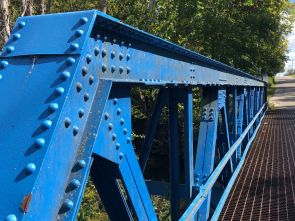
Riveted hip connection

Diagonals, side rails and deck grate

You can see all 7 truss panels and deck grate

It is quite a visual as you approach this bright blue iron bridge. Like referenced above, you usually see green iron bridges, not blue. This is, however, a very nice bridge that spans a pretty little country creek.

For those of you interested in truss design details, HistoricBridges.org describes the design and structure: Concrete abutments and wingwalls support the single-span Warren pony truss. The riveted structure extends 87’6″ in seven panels. Its all-interior verticals are manufactured from pairs of angles riveted together with stay plates and reinforced with external sway bracing. Its diagonals are made from a pair of angles (doubled in the outer panel) also riveted together with stay plates. The I floor-beams are riveted to gussets and the verticals above the lower chord and carry the concrete deck. The weight and varied size of the diagonals, the placement of the floor-beams, and the integration of knee or external sway braces into the verticals indicate a late stage in the design of all-riveted Warren pony trusses.