Mt Baker Theatre both historic and haunted

Ghost light on center stage at Mt.Baker Theatre

The historic Mt. Baker Theatre in Bellingham, Washington is reported to be  haunted, similar to most old theater’s claims. We took a theater tour and saw the ghost light which burns on center stage at all times there is no production going on. Ghost lights are a tradition among theaters and actors. The lights provide a means to placate ghosts who either want to perform or who want to watch.

The best well known spirit at Mt Baker Theatre is Judy, an amorous young lady. It seems Judy lost her house (or boarding house room, as some say) when the theater was built in 1926-1927. She is reported to be interested in young male projectionists, actors, or ushers. One theater staff member told me Judy is a flirt! Others ghosts who haunt the theater include a well dressed fellow named Geoffrey who appears in either a fancy pin-striped suit or a tuxedo. Another theater staffer said there is a ghost feral cat that haunts and hunts the basement.
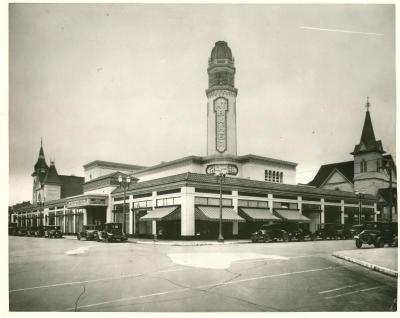
1927 photo shared by the Theatre archives

This really is a magnificent old structure, built in 1926 by the 20th Century Fox group. It was listed on the National Register of Historic Places in 1978. The interior was restored in the 1980’s back to its original ornate beauty. Here is a link to the history of the theater. The theater is still very active, hosting shows on stage, live music concerts and other events supporting the arts in the Pacific Northwest.
 

Unique White Bronze cemetery monuments

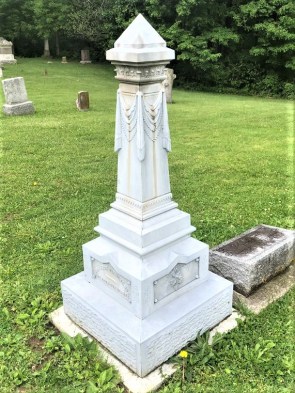
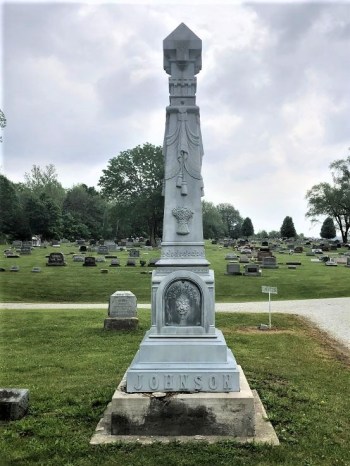
White Bronze metal monument

When you come across a blueish colored grave monument you can’t help but wonder how it has maintained its lettering and clarity of the dates. No, it is not a later replacement, it is the original zinc metal grave marker. Manufactured by the Bridgeport, CT. Bronze Company, these long lasting  but somewhat fragile monuments were custom made from 1876 until 1914.

When you tap on the surface of these monuments you can immediately tell it is metal. The seams where the individual pieces are joined are also obvious.  Each piece was cast in Bridgeport and then shipped to the cemetery for installation. Customers dealt with sales reps armed with multiple catalogues with unlimited possibilities for choice of monuments.

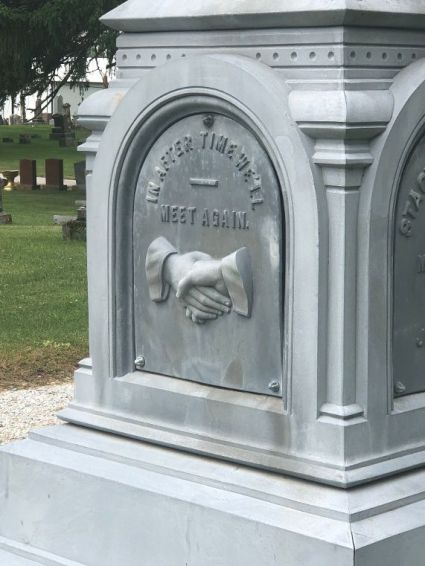
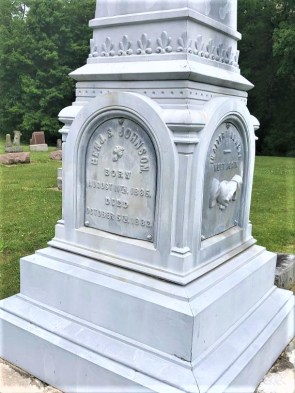
Name/dates of deceased and panel with “Shaking Hands”

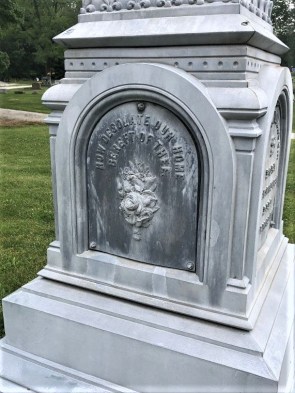
“HOW DESOLATE OUR HOME BEREFT OF THEE”


The zinc-tin alloy used in the castings did not rust and resisted the growth of mold or algae. Each monument was custom ordered, so all are one of a kind. The designs included panels that were screwed in and could even be changed at a later date, if desired.  These were perfect for symbols like the shaking hands, sheaves of wheat or personal messages in addition to the name and dates of the deceased.

A smaller monument

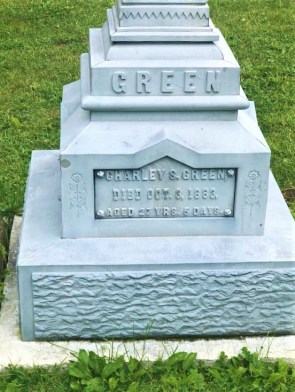
Name/date still legible after nearly 140 years


The material of these was advertised as White Bronze. White Bronze doesn’t exist. These are made with a zinc-tin alloy. The company, however, felt that White Bronze is a much classier and sophisticated name than zinc. They also claimed (of course!) that their monuments would outlast any stone monument. In a way that was true, however these zinc beauties were susceptible to breakage from, for example, falling trees. In addition, very tall monuments could suffer over time from settlement of part of the bases.

This panel would have been custom ordered for the monument

The next time you are enjoying a relaxing walk through a cemetery or graveyard keep an eye out for different looking monuments. Go have a look, it just might be a one of a kind White Bronze monument that was cast in Bridgeport, Connecticut between 1876 and 1914. The photos in this post were taken in the Arlington East Cemetery  in Rush County, Indiana.


Sustainable farm in North Little Rock

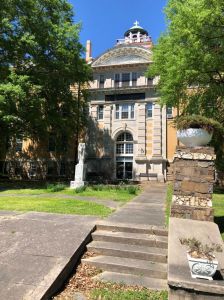
Original 1910 orphanage

North Little Rock, Arkansas is home to the St. Joseph Center, a non-profit organization based on a historic building that was once a children’s orphanage run by the Catholic Church.  The impressive structure was built in 1910 and currently there are several Artist’s Studios inside the spacious old building that houses other functions. As a Harvest Hosts site, we used our membership to park our RV free for the night.

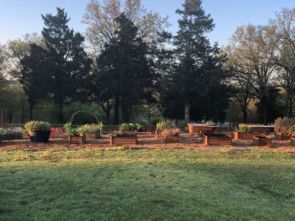
Currently the St. Joseph Center is an educational and working farm. The grounds are really beautiful. The first thing Sher and I did after we parked was to take a stroll around the main building, enjoying the old statuary and flower beds. We also got our first look at the garden plots. Turns out that there is a large citizen garden space  where locals can come and, for a modest fee, have their own personal garden plot.

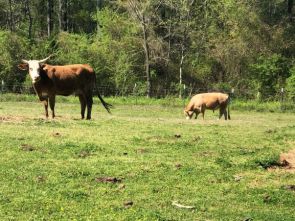
Bull, right and cow

Recently sheared ewe

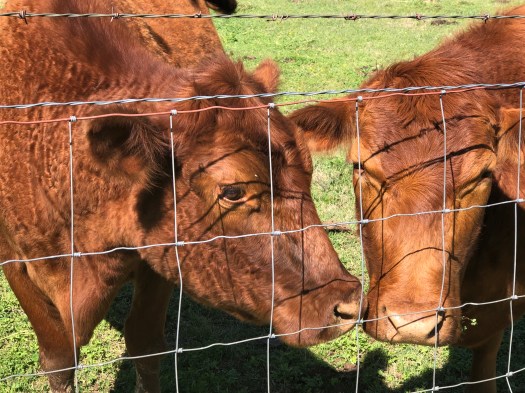
A couple of very friendly mommy cows

The Farm Stand, in other words the store, offers locally sourced goods ranging from in season produce to canned veggies, jams and jellies, pickles and cheeses. Local sourced flour, grains, and even meats are for sale. We certainly took advantage of Michelle’s opening the store for us and we made several purchases including pickles, pickled green beans and peppered Colby Cheese.

Raised garden boxes

View of the lovely grounds


There are quite a few head of livestock on the farm. Steve directed us to pastures and pens where goats, sheep and beef cattle make their homes. The sheep had recently been sheared ready for the hot summer. I enjoyed seeing the good quality cross bred cattle. Several calves were still on their mothers and would have been fall calves. There are also chickens supplying a great supply of free range eggs. There are two sets of beehives, and we purchased some delicious honey produced by the honey bees right there on the St Joseph Center grounds.

The honey we bought came from these hives

Sher and I enjoyed our visit at this educational farm. Owner’s Steve and Michelle made our visit to this sustainable operation very pleasant.   Recently North Little Rock was hit by a series of tornados. Fortunately the St Joseph Center only suffered the loss of several beautiful old trees, but no animals or buildings were damaged. Here is the farm website.

Seattle’s Space Needle

From the official website of the 605 feet tall Seattle Space Needle comes a to the point introduction to this world famous attraction: The Space Needle is one of the most recognizable landmarks in the world and is a treasured Seattle icon. Built for the 1962 World’s Fair … whose theme was “The Age of Space”. 

See views of downtown Seattle, Mount Rainier, Puget Sound, and the Cascades and Olympic mountain ranges from the tower

On our first trip to Seattle we went up in the Space Needle. At that time there was a restaurant that rotated a full 360 degrees in an hour. In 2017 a large reconstruction project revamped the entire top of the tower. Now the restaurant is gone, but a lounge, cafe and a wine bar with glass floors lets you look straight down to the ground over 500 feet below you! The rotation still gives you a chance to sit and view the total 360 view of Seattle.

Spoils of war

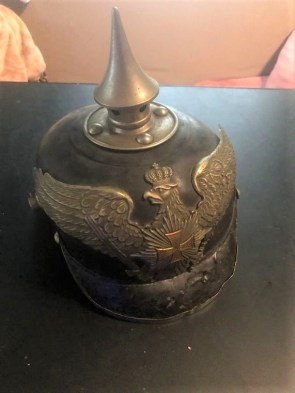
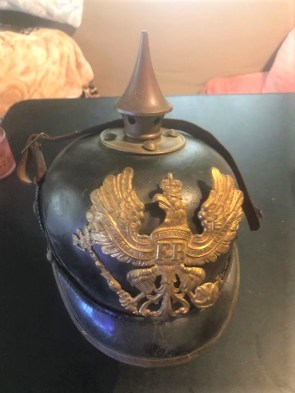
My maternal grandfather, Rex R. Forsyth, volunteered to serve in the United States Army Ambulance Corp in 1917. His unit was attached to the French Army. His unit operated Ford Model T ambulances. His time overseas included being part of the army of occupation after the was ended. His unit was billeted in Kaiser Wilhelm’s castle in the Black Forest. Rex brought back many photographs, personal items and quite a few things taken from Bosch (German) POW’s.
Pickelhaube, Bosch “Spiked Helmet”

Another Pickelhaube

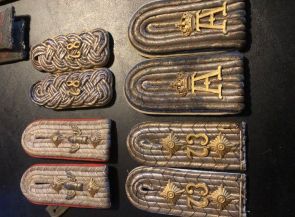
Bosch officer’s epaulettes

Belt buckle says “God With Us” (Gott Mit Uns)


Granddaddy Rex did share stories of his time overseas with me as I was growing up. He never spoke of the horrors of war that I know he witnessed, but he did share day to day activities. He told me that when Bosch (German) POW’s were brought to holding areas they were stripped of helmets, medals, belts and even uniform epaulettes. He did share that one time a Bosch soldier tossed a grenade while he was standing in line. Fortunately it was a dud, and a Poilu (French soldier) “dispatched him right away”.

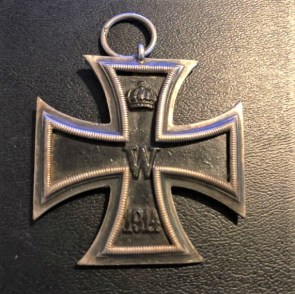
The Obverse side of a Bosch Iron Cross medal. The “W” stands for Wilhelm.

The Reverse side of the Iron Cross medal


We have many examples of these spoils of war. Note that the belt buckle states “Gott Mit Uns” which translates “God With Us”. Seems like it is common in warfare that both sides claim the high ground and Divine support. The term “Bosch” is one that was used to refer to German soldiers and personnel during WWI, aka The Great War. While some consider the term to be derogatory, it is how my grandfather always referred to the Germans. It seems strange to realize that WWI ended over 100 years ago.

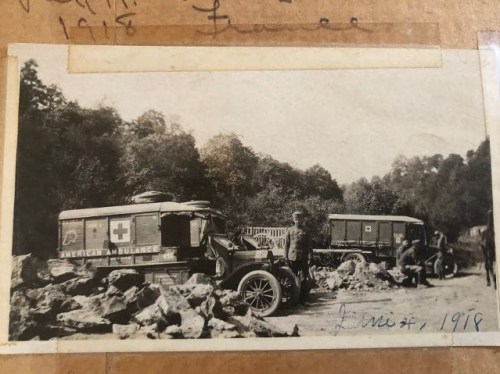
World War I Model T Ford Ambulances

My grandfather was an ambulance driver in Section 625 of the United States Army Ambulance Corps (USAAC) during World War I. His unit was attached to the French Army.

Note the Indian Head design on the back panel. The wrapped package on the top holds two spare tires.

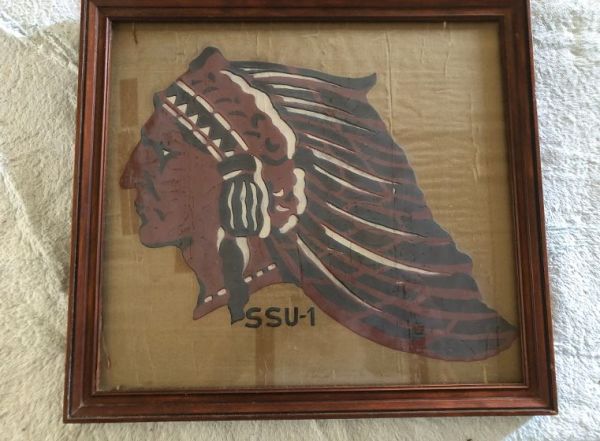
This framed canvas Indian Head came from Granddaddy’s ambulance. The “SSU-1” stands for Sanitary Service Unit 1.

Granddaddy learned to drive the Ford Model T ambulances at the fairgrounds race track at Allentown, Pennsylvania. His unit shipped overseas via troopship from New York Harbor. The ambulances performed well, and were remarkably effective driving across the war torn battlefields of France.

My grandfather’s heroism in 1918 France

The actual Croix de Guerre he received

My grandfather, Rex R. Forsyth, was in France during WWI (The Great War) serving in Section 625 of U.S.A.A.C. (United States Army Ambulance Corps). He had volunteered, learned to drive the Ford Model T ambulance in the Allentown, Pennsylvania fairgrounds. Once his training was done, Rex was shipped overseas. His unit was attached to, and served the French Army.

My grandfather was a true hero. On May 2, 1918 members of U.S.A.A.C. Section 625 were awarded the Croix de Guerre for bravery in action on April 17, 1918, having crossed a “zone violently bombarded by the enemies artillery” to continue to remove wounded from the battlefield.

Shown is Colonel Bertrand, 162nd French Infantry, pinning the Croix de Guerre on the coat of Rex Forsyth. Note in the right background that you can see the front end of one of the Model T Ford Ambulances.

Detail of certificate

Compare to photo of medal

Certificate that Granddaddy received in 1926 from the French Ministry of War

Because his unit was attached to the French, not the American Forces, photography was allowed. We are very fortunate to have photo albums and his diary among other “memorabilia”. Section 625 was part of the post war Army of Occupation. His unit was stationed at Kaiser Wilhelm’s castle in the Black Forest.
What we saw in 2022

The year 2022 was a very unique time for Roadtirement and, frankly, the entire country. The pandemic fears had greatly decreased and in lots of ways daily life seemed to be back to close to “normal”.  We did have many enjoyable trips in 2022. Here is a quick snapshot of some of those adventures.

Mom says it is time to go

As we predicted last year in July, our travels were altered to include more trips closer to home, and of shorter durations. We did, however, truly enjoy these shorter jaunts and like many,  we discovered many interesting attractions close to home.

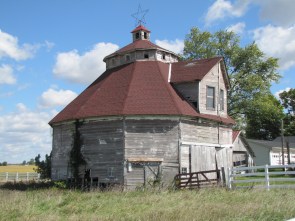
Round barn built in 1910

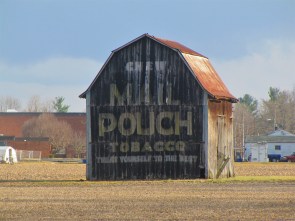
This barn’s Mail Pouch paint job is fading fast.


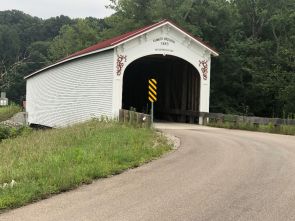
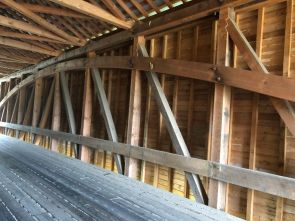
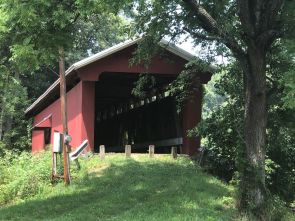
Maj really got into visiting historic covered bridges. Indiana is known for the large number of these beautiful structures. There are several different types of bridge truss systems, and we found several different ones as we ventured around central and southern Indiana an Ohio. Some of the old iron bridges are also interesting pieces of history, and they are disappearing quickly.

Beautiful white reconstructed bridge

The Burr-Arch truss system

Closed to road traffic in 1996, it is now open only to foot traffic.

Howe truss system

Abandoned iron bridge

We also enjoyed going to cemeteries. The history represented in both large and small cemeteries can be very fascinating. Some are part of church properties, others are on land not part of any structure at all. We came across several interesting cemeteries as well as many many fascinating monuments and headstones.

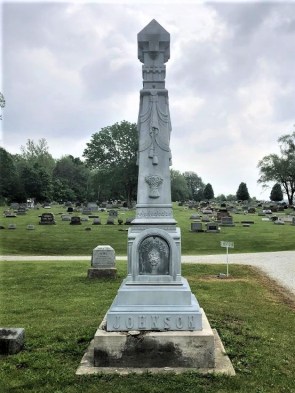
White Bronze metal monument

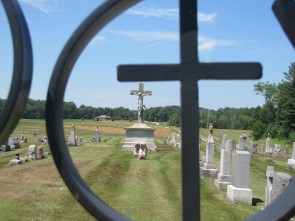
View through a gate

Hope you enjoyed this look back at Roadtirement’s 2022. We’ll keep you updated as 2023 progresses. 

Honoring Veterans Day and Remembering Granddaddy Rex on Armistice Day

Armistice Day was officially authorized by Congress in 1938 to honor the veterans of WWI. In 1954, after both WWII and the Korean War, the original Act of 1938 was amended to replace the word “armistice” with “veterans”. November 11th has been Veteran’s Day since then, with the exception of a few years in the early 1970’s.  Regardless, remember all veterans and thank them for their service to our country.

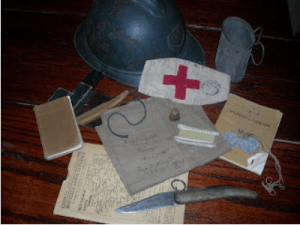
Granddaddy’s French helmet, red cross armband and other personal effects.

On November 11, 1918 the Armistice between Germany and the Allies was signed, ending the War to End All Wars. The guns on the Western Front fell silent. My grandfather, Rex R. Forsyth, was in France that day still serving in Section 625 of U.S.A.A.S. (United States Army Ambulance Service) while attached to the French Army. He volunteered, learned to drive the Model T ambulances in the Allentown, Pennsylvania fairgrounds, and was soon shipped overseas. His unit was part of the Allied Army of Occupation and was stationed during 1919 at Kaiser Wilhelm’s castle in the Black Forest.

Haversack for carrying personal items

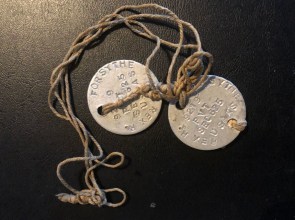
Rex’s dog tags, with “E” added to his name!


Granddaddy Rex did share stories of his time overseas with me as I was growing up. He never spoke of the horrors of war that I know he witnessed, but he  did share day to day stories. He told me that when Bosch (German) POW’s were brought to holding areas they were stripped of helmets, medals, belts and even uniform epaulettes. We have many examples of these spoils of war. He did share that once a Bosch soldier tossed a grenade while standing in line. Fortunately it was a dud, and a Poilu (French soldier) “dispatched him right away”.

“Iron Cross” Bosch medal, W is for Kaiser Wilhelm

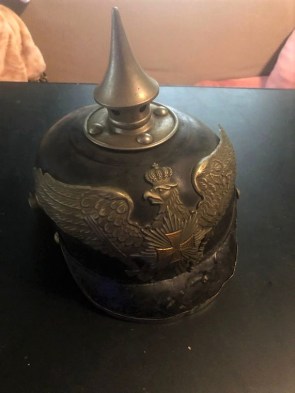
Pickelhaube, a German spiked helmet

Captured Bosch officer’s epaulettes

Note the Indian Head design on the back panel of the vehicle

This framed Indian head came from his ambulance

Shown is Colonel Bertrand, 162nd French Infantry, pinning the Croix de Guerre on the coat of Rex Forsyth. Note that the helmet Rex is wearing is shown in a photo above, and also note in the right background that you can see the front end of one of the Model T Ford Ambulances.

His Croix de Guerre (Cross of War)

My grandfather was a true hero. On May 2, 1918 members of U.S.A.A.C. Section 625 were awarded the Croix de Guerre for bravery in action on April 17, 1918, having crossed a “zone violently bombarded by the enemies artillery” to continue to remove wounded from the battlefield. Our family is so fortunate to have his diary and photo albums of never published photos. His Unit was allowed to take photos being attached to the French Army.