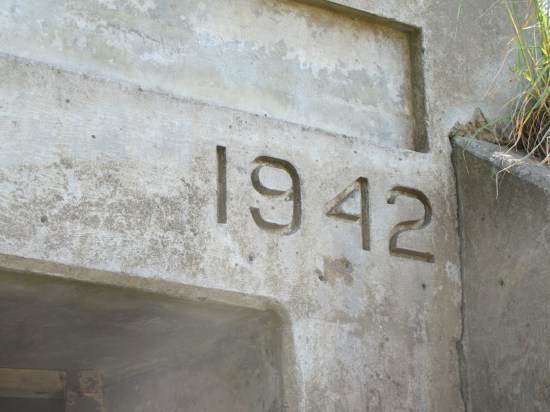
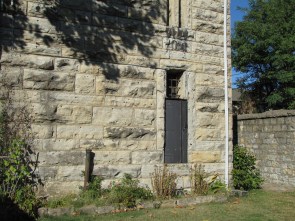
Date on the main bunker entrance

Forward observation post facing Puget Sound

One of the remaining two gun turret foundations

Date on the main bunker entrance

Forward observation post facing Puget Sound

One of the remaining two gun turret foundations


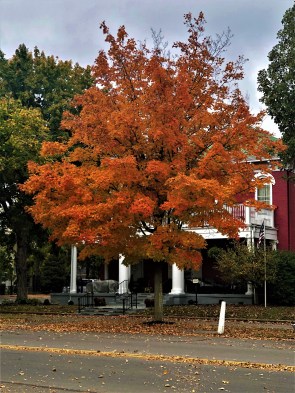
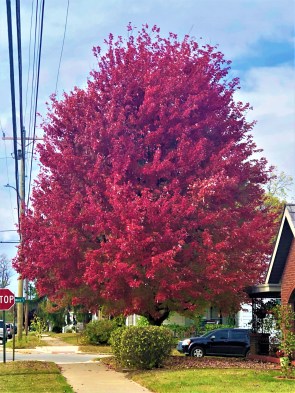
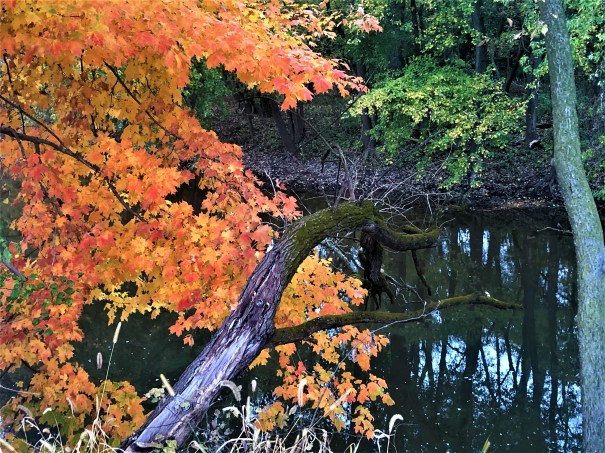
The fully changed trees are just stunning to see.

Fall is a most beautiful time of year in Indiana. My grandfather loved to travel and took trips several times a year. Granddaddy would never travel in October, thus would never miss the seasonal colors he loved so much.
Sher and I had discussed going to the diamond mine in Arkansas for some time. We’d read about this place, and it sure sounded like a fun and adventurous outing. The site is a 95 million year old inactive volcano crater. The first diamonds were discovered in 1906. Various mining enterprises have been attempted over the years. In 1972 the Craters of Diamonds State Park was established.

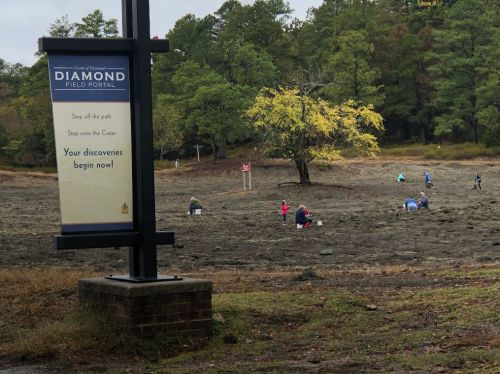
A small portion of the 37 acres for diamond hunting
We were able to plan a stop at the State Park on one of our trips to Austin to see family. We were of course exicited at the prospect of finding a diamond, or at least some of the other intersting and colorful stones in the park. This park is the only diamond hunting areas open to the public in the world. You keep what you find.

Getting ready to head for the diamond field.
The ground was muddy and slick so we had to watch our footing. The 37 acres open for diamond hunting is plowed about once every month, thus opening up more chances for finds. A fairly large amount of 1 carat plus sized diamonds have been found at the park.

Ready to dig! There is a sign picturing a huge diamond found.

Shed for washing dirt for diamonds and gemstones
We did not find any diamonds, but we did find some nice rocks for our landscaping at home. It was a fun way to spend a couple of hours. We enjoyed seeing some of the gear that others had. Pulled wagons filled with shovels, rakes, buckets and even sieves and screens. These are serious diamond hunters!
In 1892 the first Sacred Heart Catholic Church was built in Galveston, Texas. Unfortunately it was completely destroyed in the horrific hurricane of 1900. A replacement church was constructed during 1903-1904. Like the Bishop’s Palace across the street, famed Galveston architect Nicholas J. Clayton designed this, the second church on the site.


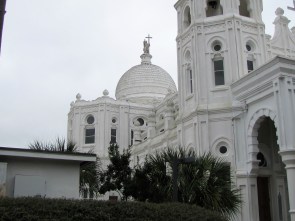
Note the dome, center

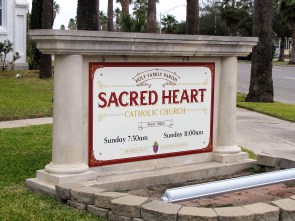
The beautiful church marquee
Following is a quote from a 1981 Texas Historical Commission Historical Marker placed at the church: “The present building, the second for the parish, was constructed in 1903-04 during the pastorate of the Rev. D. J. Murphy. A prominent landmark in the city, it features ornate octagonal towers, flying buttresses, elaborate ornamentation, and a variety of arches. The design reflects influences of the Moorish, Byzantine, Gothic and Romanesque styles. The building’s original dome, damaged in a 1915 hurricane, was redesigned by Nicholas Clayton.”

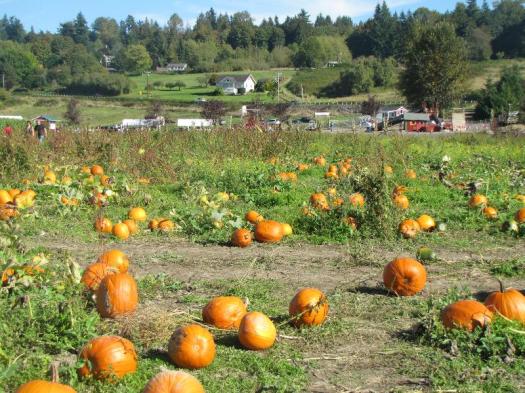
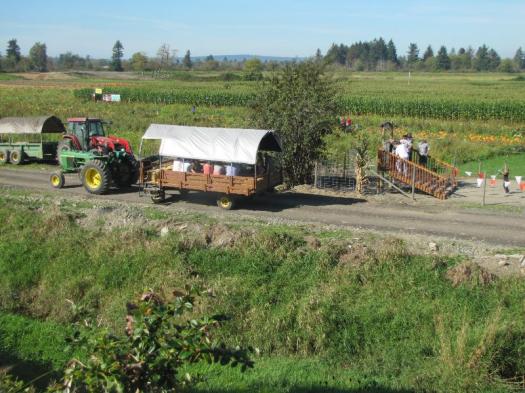
A tiny fraction of the pumpkin picking area available.

Hay ride to the pumpkin patch! (That is the kids zip line on the right.)

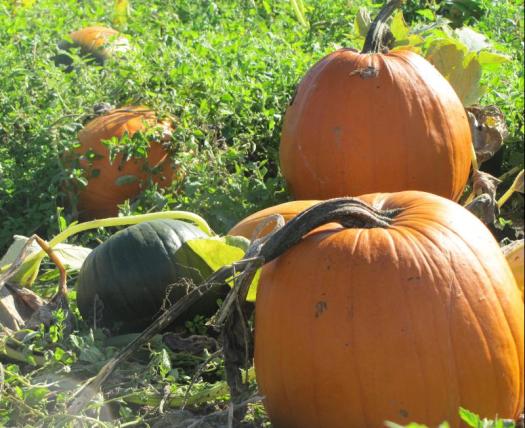
What a variety!
A U-Pick-It pumpkin farm in the Snohomish Valley north of Seattle. It provides a fun outdoor activity for young and old alike. This area has several farms offering pumpkin patches, corn mazes and Halloween spooky stuff too.
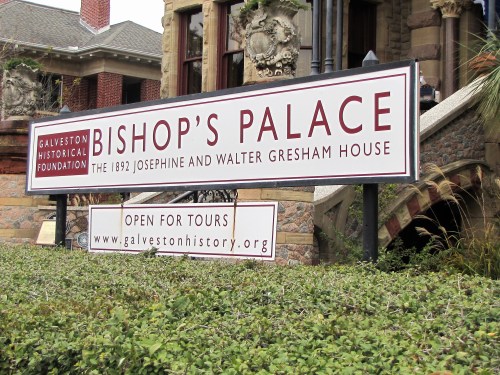
Known as Bishop’s Palace, this Victorian style mansion was originally the home of Josephine and Walter Gresham. Gresham was a railroad magnate and hired famed architect Nicholas Clayton to design the home. The structure was completed in 1892, and miraculously it survived the disastrous hurricane of 1900.

From 1923 until the 1960’s the house was used as the residence of the Bishop of the Galveston-Houston Archdiocese. It is now owned by the Galveston Historical Foundation. Guided and self guided tours are available for an admission fee.


This stunning mansion is listed on the National Register of Historic Places. Locally in Galveston it is a contributing building in the East End Historic District, in its entirety a National Historic Landmark.
One winter day when we were living at an RV resort in Harlingen, Texas, Sher and I decided to head out and see if we could see the border wall between Mexico and the United States. We also wanted to see the Rio Grande River, which is of course the actual US/Mexico border.
We started our trek on US Highway 281 south of Pharr, Texas. We headed east on 281, which for this stretch towards Brownsville is also the route of the Military Highway, another historic route in the Lone Star State.

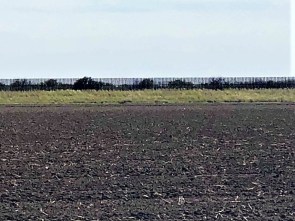
Border fence seen across a farm field

Closer to Hwy 281, with graffiti
We spotted some of the border wall sections that were pretty far from the road. We were closer to the fence between Los Indios and La Paloma. The vertical metal slats were mounted in a large concrete foundation.
What we didn’t get, however, was why the wall/fence stopped out in the middle of nowhere. It seemed odd that it seemed to be random as to where the fences had been constructed and where there were none.
We continued our drive into downtown Brownsville into the historic commercial part of town. What a treat to see all the colorful store fronts and signage in Spanish. Different for a couple from Indiana. I spoke with a Border Patrol Agent who kindly directed us to a small city park where we could see the Rio Grande river. It too had a high fence, complete with coils of razor wire on the Mexico side.

Mexico on left, Border Patrol watching the river

Looking across the river at Matamoros Mexico

Parked at the Alice Wilson Hope Park
All in all we had a very nice day. It was most interesting seeing the thousands of acres of irrigated crop ground. There were some workers in the fields, but mostly it seemed that new crops were just starting to grow, and other fields had been recently tilled in preparation for new crop plantings. Early in the year compared to our crop seasons back in the Midwest.
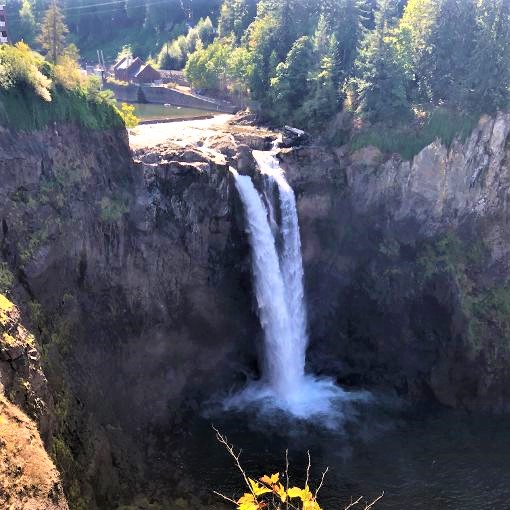
One of the most popular attractions in the Seattle area is the Snoqualmie Falls, a 269 foot single drop waterfall. The falls are near the town of Snoqualmie, which also offers interesting attractions to tourists and locals alike.

View from the observation deck
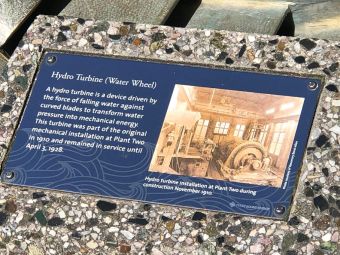
The area became an active logging site in the 1870’s with logs actually floated over the falls. In 1889 a railroad was built, opening the logging trade further. The town of Snoqualmie was platted in 1889 as well, and by the 1890’s Charles Baker had constructed an underground hydroelectric plant at the falls. Some of the original generators still function today.


It is very easy to gain access to the falls. Free parking is available, and an easy walk on the pedestrian bridge leads to the concrete paths to observation decks. If you prefer, for $7.00 you can park next to the gift shop next to the observation decks.

Beautiful scenery from the deck

Salish Lodge, note the wedding tent
The Salish Lodge and Spa offers high end accommodations, spa, and dining. Many use the striking views as a place for weddings. It overlooks the river, the generating plant and the top of the falls.

We just liked this photo
The walk to the observation decks is easy with only a couple of places with widely spaced steps. There were quite a few people enjoying the sights, but we felt comfortable and not crowded. The layout was very nice, and all of the paved paths and safety fencing was kept in excellent condition. It is easy to see why Snoqualmie Falls is one of Washington state’s most popular scenic attractions.
Bardstown, Kentucky is in Nelson County and is in the heart of the Kentucky Bourbon industry. Bardstown is also home to one of the oldest jails in the area. The original jail structure (now called the front jail) was erected in 1819 and was used until 1874 to house prisoners. In 1874 the “back jail” was built and held inmates until 1987. During this time the front jail was the jailer’s residence. The facility is now a Bed and Breakfast using the rooms in the old residence.

Thick walls and narrow windows of the jail
The history of this place is fascinating. You can (for a fee) take a tour of the back jail, with many of the jail cells untouched since the last prisoners left in 1987. There are original photos, some of which show the last hanging that took place in 1894 in the yard in back of the jail. Some paranormal activity has been reported and investigated.

Back of the jail where the gallows were for the last hanging in 1894

Hood and shackles for the 1894 hanging
The structure is quite the fortress! The walls are every bit of 30 inches thick with large metal bars covering the narrow windows. There are mason’s marks on the huge stones where hooks were used to move them into place during the construction. The original wall surrounding the back yard is complete with massive solid metal gates.
There are some nice RV parks in the area, including My Old Kentucky Home State Park. Be sure to check out the old jail. By the way, there are 11 (count ’em) distilleries in and around Bardstown. Go ahead and take a distillery tour while you are there.
Scott Joplin was an American composer and pianist born in Texarkana in 1868. He became famous for his ragtime compositions and was dubbed the “King of Ragtime.” During his brief career, (1895 – 1917) he wrote over 40 original ragtime pieces, one ragtime ballet, and two operas.

In 1984 a large mural was painted on the side of a building in downtown Texarkana, on Main Street a couple of blocks in from the Texas/Arkansas line, Texas side. Time took its toll, the mural faded. However in 2015 a project to restore the mural was undertaken. A local TV station reported that Joplin’s great niece dedicated the project. Joplin was a brilliant composer whose works became well known with the release of the 1973 movie The Sting.
We just happened upon this beautiful and large mural. We were lucky in that there were no cars in the parking lot blocking our view. Thus the photo of the complete mural, above. Another example of why travel is adventuresome.