Some plants around our yard

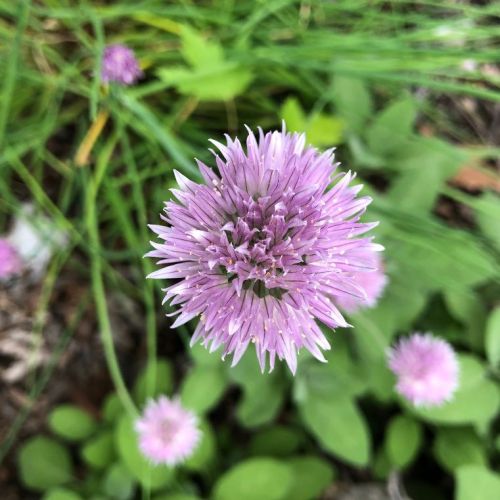
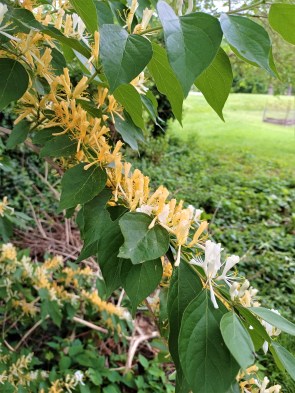
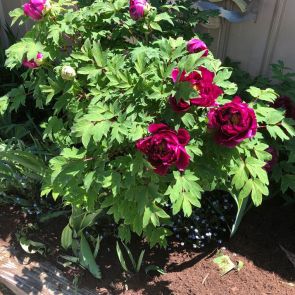
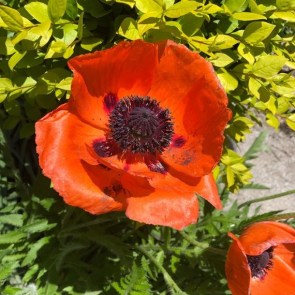
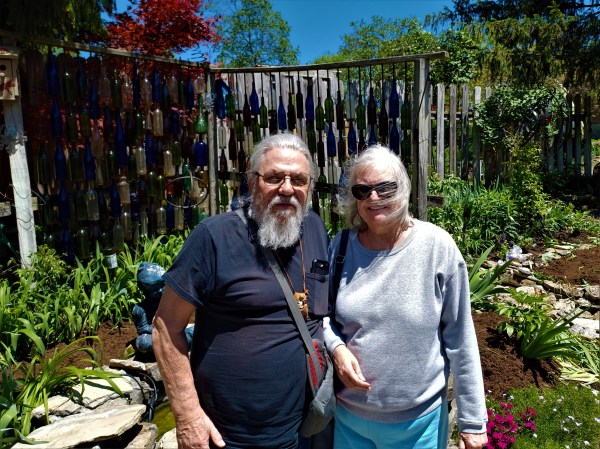
Here’s a little photo tour of some of the foliage in our yard.


The trees are now fully in leaf. The roses are beginning to bloom, herbs are growing very nicely and the honeysuckle is in full bloom and hopefully will help the hummingbirds. Seems like the grass needs mowed every third day. Spring is here, summer is on the way.

Thomas Family Winery

The Thomas Family Winery in downtown Madison, Indiana is housed in, appropriately, a vintage 1850’s old stable and carriage house. The interior is most welcoming, with tables set amidst a rustic motif, and there are outside tables as well for your pleasure.


This winery takes a bit of a different philosophy concerning their wine creations than other establishments. From the Thomas Family Winery website: “We feel that wine is food, and fills its greatest role as a mealtime beverage. We craft our wines in the European tradition of finesse, balance, and structure which particularly enhances the variety of flavors in meals.” Steve Thomas told us that they do not have any sweet wines, rather wines for pairing with meals. He expanded on their European style of wine making.

Maj tasting Gale Hard Cider

Owner Steve Thomas with our purchase

 
Owner Steve was most gracious and took plenty of time to explain what their winery is all about. The tastings were complimentary, and we did purchase a bottle of Niagara 2020. We did not partake of the bread and cheese offerings. That will be on another trip. We will be returning to enjoy the weekend live music. The supply of Gale Hard Cider will be restocked then as well. I liked that Cider! The Thomas Family Winery should be on your list of places to visit in Historic Madison, Indiana.

Lanthier Gardens on the Winery grounds

The Lanthier Winery and Distillery in Madison, Indiana is known not only for its award winning wines and distillery products but also for the magnificent gardens that surround the classic brick building . We visited this facility on Mother’s Day and walked the gardens. Our pervious visit was early in the season, and the weather was not conducive to an enjoyable stroll in the garden.


The gardens are known nation wide not only for the extraordinary variety of gorgeous flowers and vegetation, but also for a remarkable display of various art work in the form of paintings, sculpture and metalworks found throughout the grounds. There are so many unique creations in these gardens that you need to really keep your eyes open or you may miss something! The gardens are open seven days a week from sun up to sun down. There is never an admission charge.

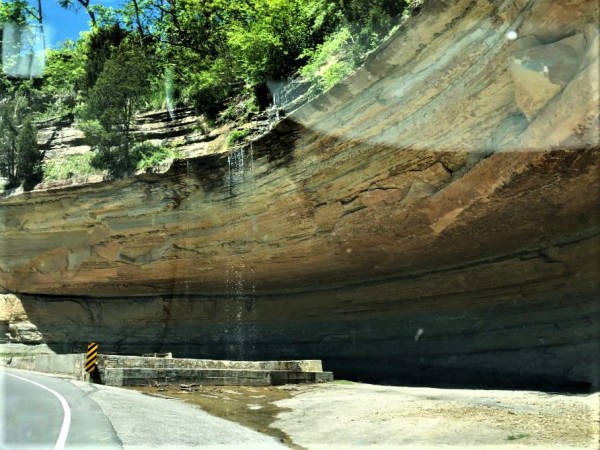
Hanging Rock, Madison, Indiana

Traveling from Columbus, Indiana to Madison on the Ohio River via Highway 7 you’ll enjoy a slightly rolling countryside of farms interspersed with small towns and villages. As you approach Madison you see smoke stacks of a power plant that is right on the Indiana side of the Ohio. Soon you will see road signs warning of hairpin turns and steep grades. No lies there, Highway 7 drops very fast and twisty on the way down to the town of Madison.

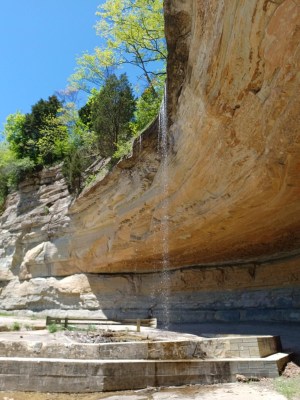
Soon you come to Hanging Rock. There on the north side of the road is a quite impressive rock cliff complete with an active waterfall. Hanging Rock has been an important landmark in Madison since, well, when the first winding path snaked its way from the top of the hill down to the river. Today there is a pull out that allows uphill traffic to drive behind the falling water. Even during droughts the water always cascades down the cliff.  The feature was formed by glaciers thousands of years ago.

Remembering an orphanage

The Gordon Children’s Home in Shelbyville, Indiana was finished in 1892 in order to provide a home for orphaned children in Shelby County, Indiana. At the time, the home was located on a hill on the outskirts of town.
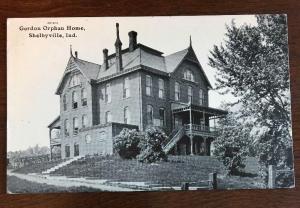
Vintage post card showing the home

Following is a  portion of the Gordon Home’s Annual Report from 1902.

The health of the institution during the past year has been good, with three exceptions.  One of our children had inflammatory rheumatism, one lung fever and one case of typhoid.
          We desire to thank all those who assisted us in donating presents for our Christmas tree.  Our children lok forward from one year to the next and think of te happy times they will have when Old Santa comes again.
          Number of of children received in our home during the year, girls 1, boys 5.
          Number placed in homes 20, girls 8, boys 12.
          Number sent to Ft. Wayne institute for feeble minded 4.
          Removed by death 0.
          Number remaining in the home 34, girls 7, boys 27. 
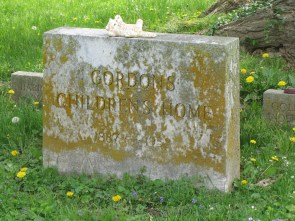

In Forest Hill Cemetery in Shelbyville you will find a simple stone monument with the inscription GORDON’S CHILDREN’S HOME and dates 1887 – 1958. Behind and in front of the stone are two lines of small headstones listing the names of children who died at the orphanage. Someone has placed small toys on several of the stones.

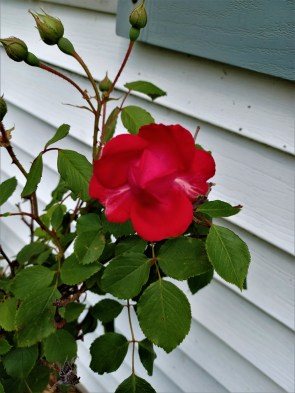
Hopefully the final frost

According to historic Indiana weather records, the final frost of the year is normally no later than April 26th. We’ve had a couple of days near 80, breezy and great for working outside.  Then this alert came in the e-mail:

Hope this beauty makes it ok.

Gonna be cold in the morning for sure. Hopefully the flowers and plants will be ok. Some of the baby birds and other baby critters are in for a cold night!

Old concrete fence posts dot the Midwest

A 1915 Purdue University guide to concrete fence posts

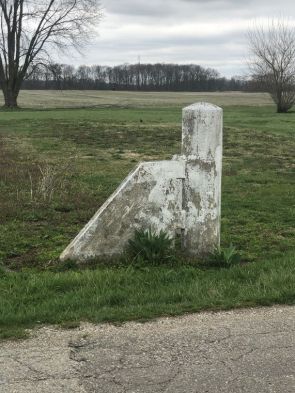
Take a drive on most any rural Indiana road or some other Midwest states and it won’t be long until you spot some rather massive concrete pillars apparently serving no purpose. These are in fact old, now abandoned concrete fence posts. Decades and decades ago almost all farmsteads raised livestock, including work horses, thus strong “cattle and horse tight” fencing was an absolute necessity.

Constructing livestock fencing that is functional and remains functional year after year is a skill that farmers and ranchers had. One of the important parts of a good fence is the end post and/or corner posts. These posts anchor the wire fence that stretches along the length of the particular fence line. If the end and corner posts do not hold, the fence wire will sag and livestock will get out, causing quite the kerfuffle.

Remnants of fence wire is still wrapped around this post

This post had white wash and weeds clipped


Old concrete fence posts can be seen alongside many roads in the country. Sometimes you can tell from the locations of these relics coupled with the position of mature trees where once stood an old house and barn yard. Some will be painted, others will be nearly covered with weed and bush growth. They do stand as a reminder of the days when all farm families raised livestock as a part of their livelihood.

This is the link to the 1915 pamphlet pictured above.