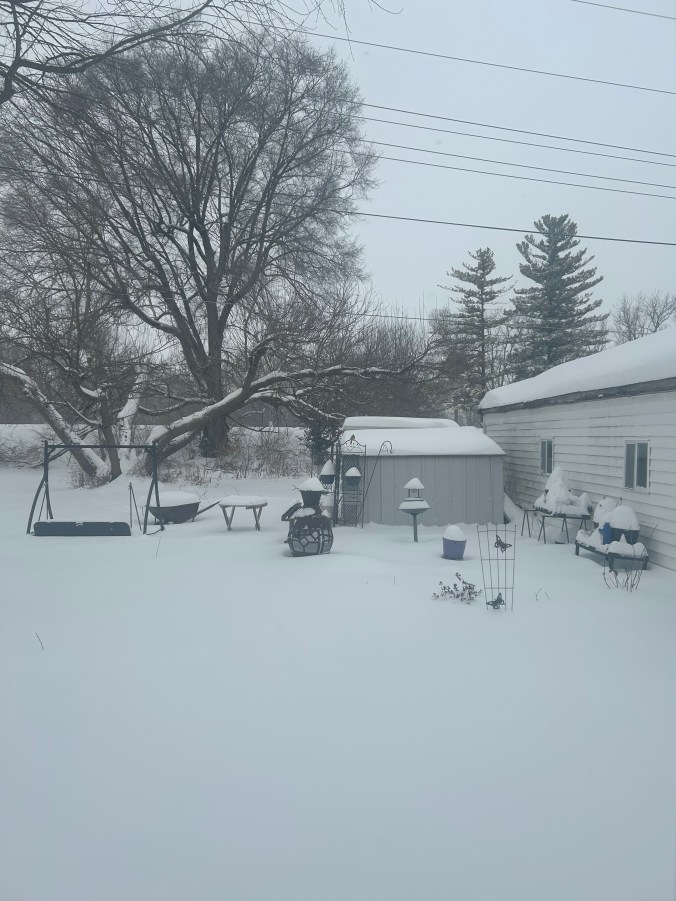
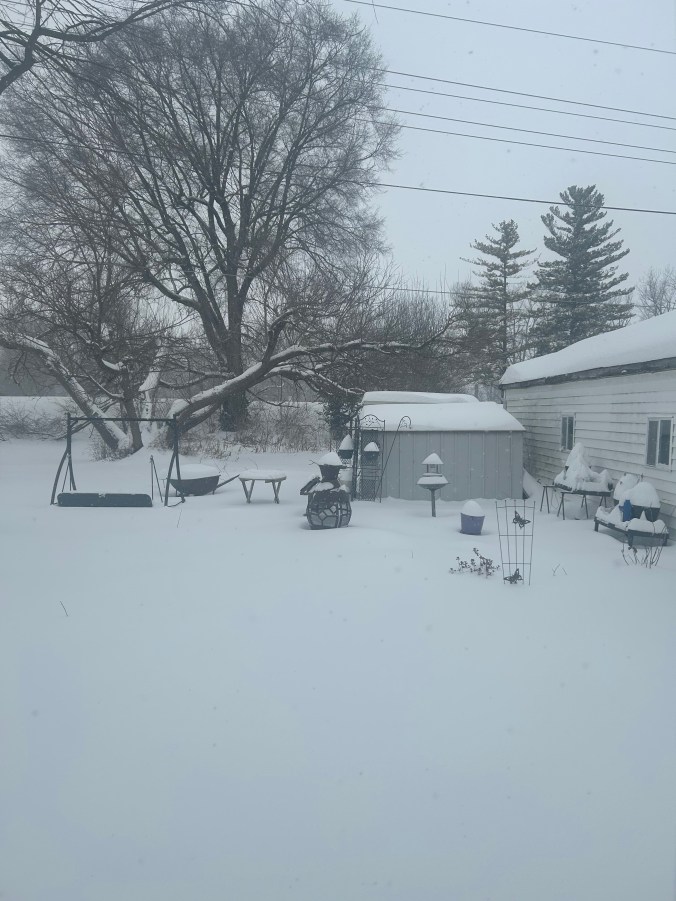
We made it through the snowstorm without any calamities. Central Indiana had tons of snow but avoided any freezing rain or sleet.
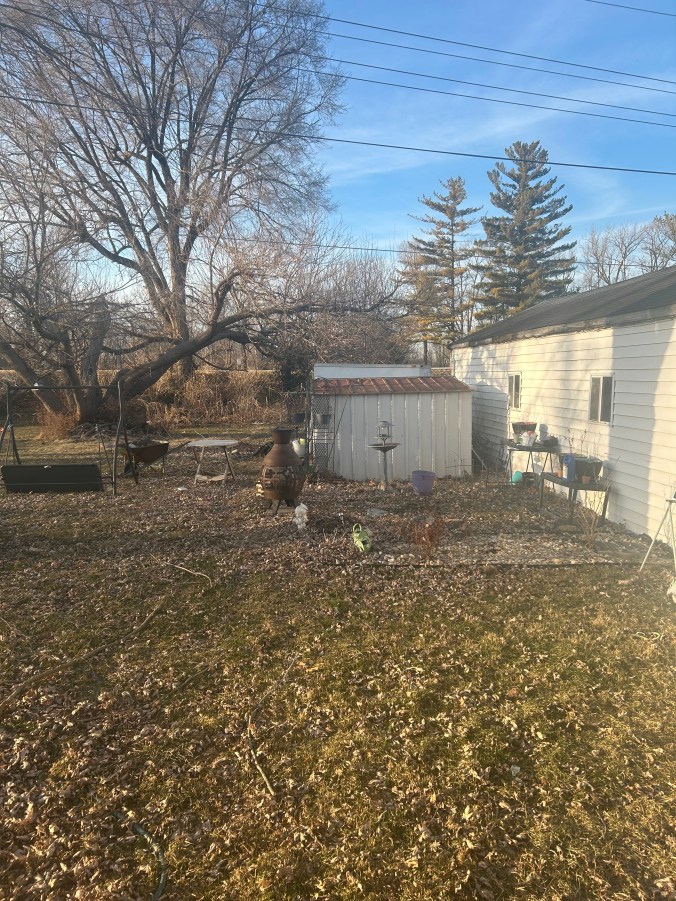
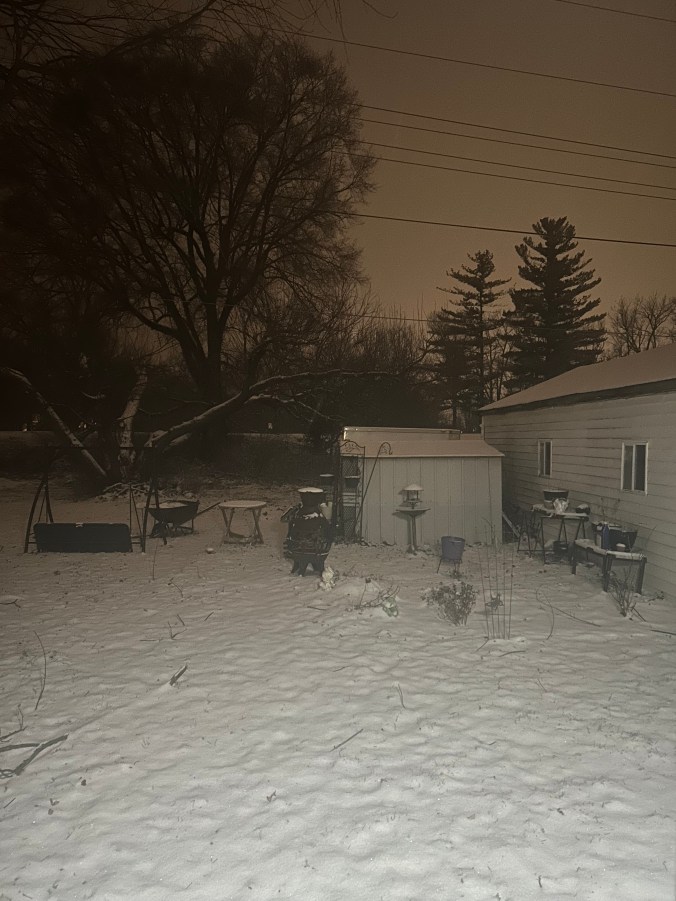
5 PM on Friday the 23 rd: Calm before the storm
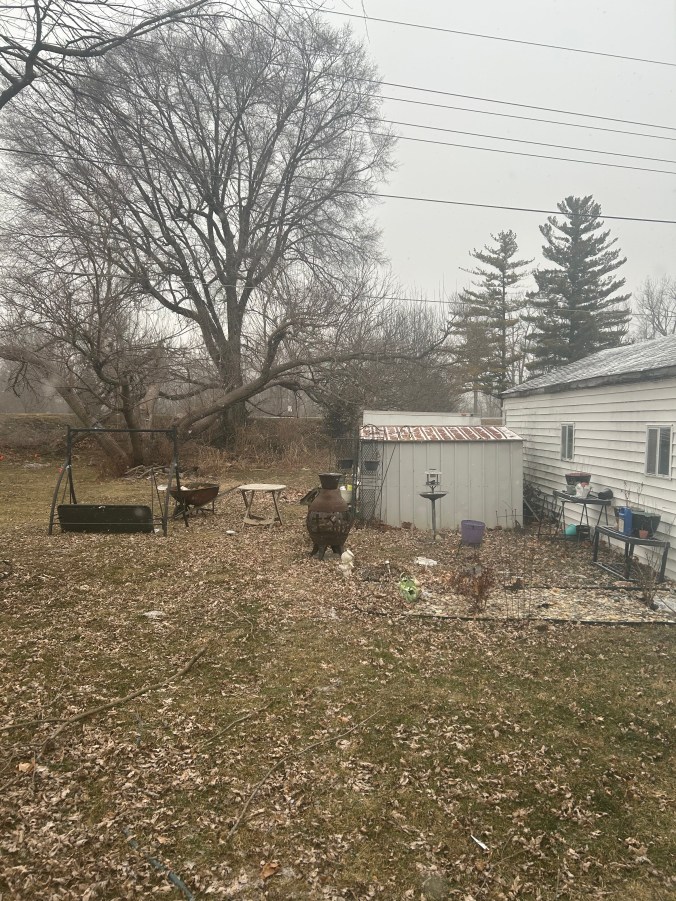
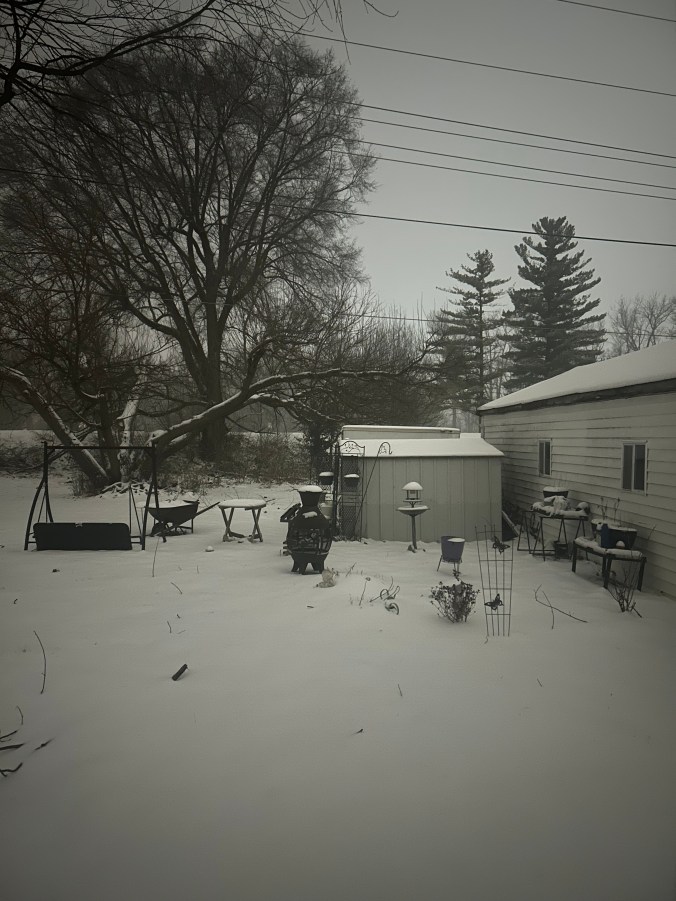
Noon on Saturday: some flakes are starting to fall
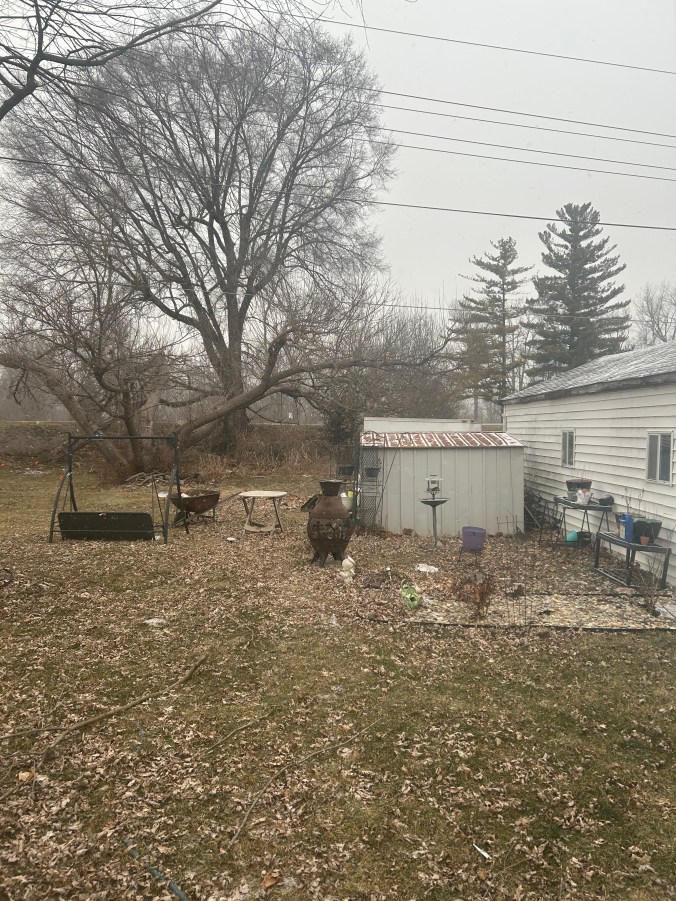
4PM Saturday Snow beginning to really come do0wn
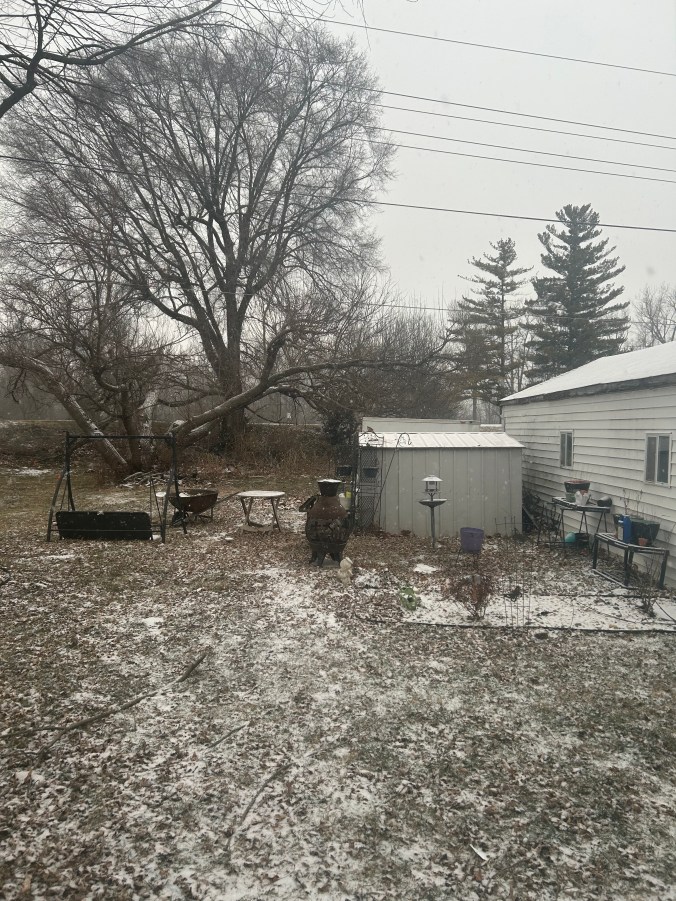
5 PM Saturday afternoon, Starting to accumulate.
7 PM Saturday, starting to add up quickly
1 AM Sunday the 25th, Cold snowy night!
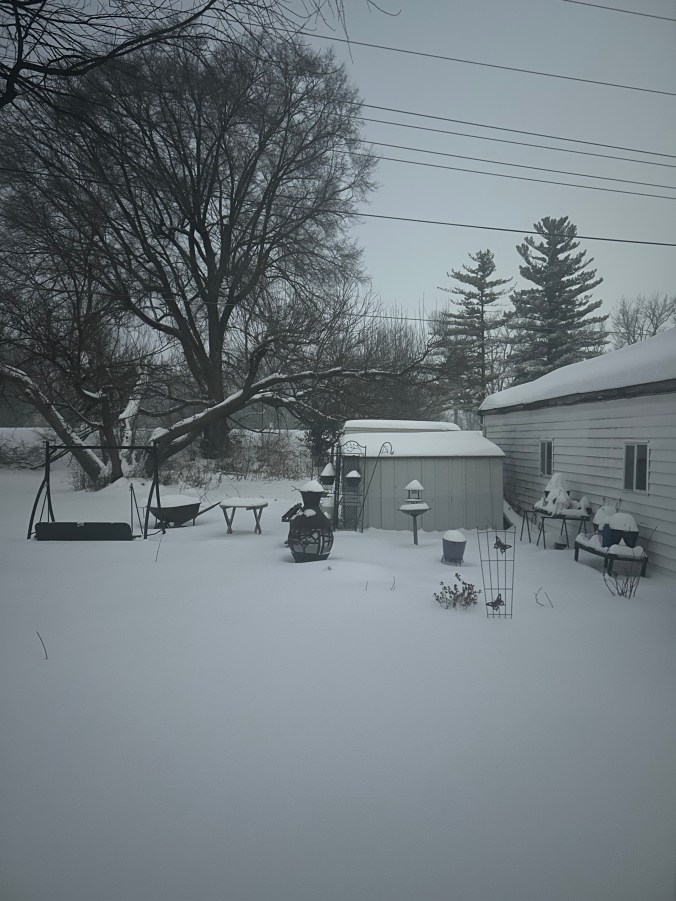
7:30 AM Sunday Morning, still snowing fast and furious
11:30 Sunday morning.
Sunday 2 PM, Snow fall continuous, very fine small flakes
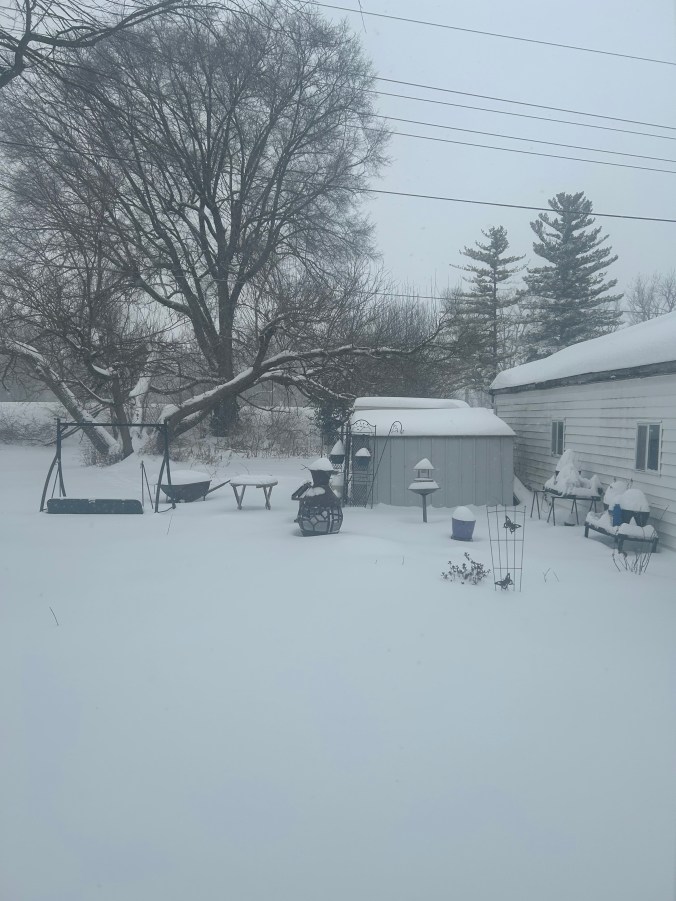
4 PM Snow rate slowing down, the end is in sight
The snow finally stopped, now we are looking forward to 7 days without any snow, but with single digit and sub-zero temperatures. The snow is over for now, but winter is still affecting Indiana.
We had been out picking up some items we had bought at an online auction last Saturday. Sher had already checked for “Things to do in Connersville” and an interesting bird watching place popped up. So after we picked up the items from the auction we had a 25 minute drive through farmland. The auction was north of town, and the birding place was south. It seemed like our destination was truly out in the middle of nowhere.
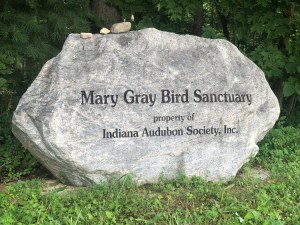
Easy to spot entrance
The Mary Gray Bird Sanctuary is located south of Connersville in Fayette County, Indiana. Alice Green Gray gave the initial 264 acre property to the Indiana Audubon Society in 1943 as a living memorial to her daughter Mary, who preceded her in death. Another Gray relative and Society members have made possible the acquisition of more property so that the Sanctuary now has 723 acres.
The road into the sanctuary grounds is a fairly long drive which immediately puts you in the middle of a semi dense woods. It truly allows you to prepare for atonement with Nature.
It was extremely hot that day. In fact an official weather service Heat Advisory was in effect. It became apparent as soon as we got out of the car that it was going to be a very unpleasant day to successfully do any birdwatching. In addition to the heat, a plethora of insects was present and quite annoying buzzing around.
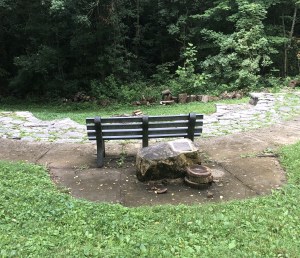
Bench seating at the amphitheater
We will definitely return when the conditions are much more conducive to for a comfortable and safe bird watching adventure. There are many features within this sanctuary. There is a bird watching blind where you can observe the many stocked feeders and not be seen. Ponds and native trees provide a perfect chance to immerse yourself in communing with Earth. Click here for the MGBS website.
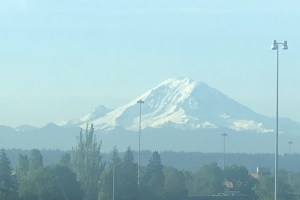
It is sixty miles from Seattle, closer yet to Tacoma and is the prominent feature on the horizon of this part of the State of Washington. Mount Rainier, also known as Tahoma, is an active volcano in the Cascade Range.
I took this pic from the highway near SeaTac Airport
Mt. Rainier is believed to have had some minor eruptions between 1820 and 1854, but these might have been merely rockslides or ash and pumice falls. Geologists think the most recent major eruption was in 1450 AD/CE.
Another view of Mt. Rainer (courtesy Alaska Airlines)
Mt. Rainier is 14,400 feet high and is is the most glaciated peak in the contiguous lower 48. The threat of eruptions is real, and evacuation drills are in place for the immediate vicinity. The biggest threat is from lahars, volcanic mudflows that form when the glaciers melt. These volcano spawned mud slides destroy anything in their path.
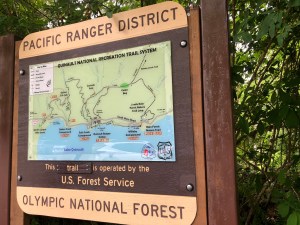
Part of the Olympic National Forest includes some interesting hiking trails designated the Quinault National Recreation Trail System. We turned off of Highway 101 and hit the South Shore Drive near Lake Quinault. We came across this information sign and decided to stop.
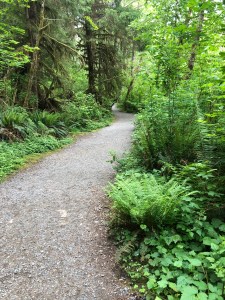
Easy walking on the gravel trail
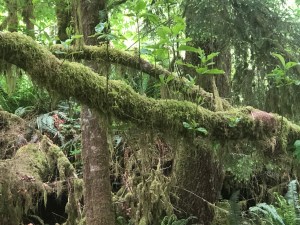
The look of a Pacific Northwest rain forest
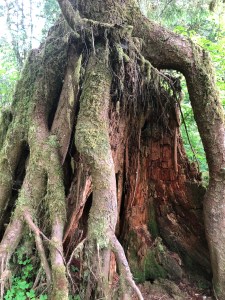
New growth on top of a very old stump
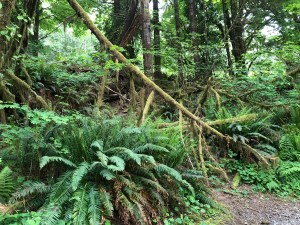
Ferns and other ground cover
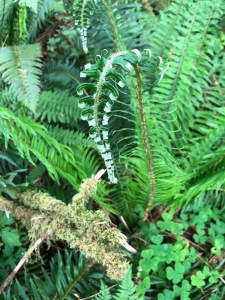
Delicately curled fern leaves
The forest on the portion of the trail we walked was tagged a rain forest and had some amazing vegetation. The trail itself was an easy to traverse with a firm gravel base. We spent a good hour on this section of the trail appreciating the thick dense foliage including massive trees and delicate leaves. “Nature at its awesome best” is a perfect description of this Forest.
Part of our recent road trip with our Seattle family took us into the heart of the Olympic National Park on a very mountainous road. Hurricane Ridge Road has a steep 7% grade, is windy with scary sheer drop offs and even has tunnels. Care is required when driving to the top of the Olympic Mountains.
Hurricane Road View
Hurricane Road View
Olympic National Park
Olympic National Park
There are several turnoffs along the way where you can stop , park and take in the striking scenery of the Washington State Olympic Peninsula. The skies were partly cloudy on the day we took the drive. A misty fog was rolling up several of the valleys adding an almost surreal feel to the landscape.
Hurricane Road View
Top of road, parking area
Beautiful scenery, Olympic Mountains
The top, or highest part of the road, was very cold and quite windy. We parked at the large parking area. As soon as I got out of the car I knew I was not dressed warmly enough for the mountain top environment. There were two large modular restroom trailers, both heated. You have to drive the road to really appreciate the magnificent vistas. Pictures do not do the land justice.
Sher and I recently visited family in the Seattle area. We all took a two day road trip to the Olympic Peninsula and other places. The natural beauty of this far north western part of the state provided one eye opening scene after another.
Driftwood logs on the shoreline
Driftwood logs, sea stacks in left background
Washington State Olympic National Park is on the Pacific coast in the north part of the state. This national park has stunning scenery and beautiful coastlines. Highway 101 follows this coast and near the north end of the park it runs next to Ruby Beach. Dramatic “sea stacks”, rocks remaining after ocean weathering are visible from the shore.
Islands in the background off shore
People enjoying the beach, small islands almost gone background
Ruby Beach is home to an unbelievable amount of huge driftwood logs. Tidal currents have for centuries been responsible for the migration up and down the coastline of the driftwood logs. Many of these weather worn logs have no doubt been on different parts of the beach over the decades.
Some people are afraid of them, most state how ugly they are, many shudder when they think of what turkey vultures eat. Turkey vultures are, regardless of their reputation, wonderful birds that play a very important role in the ecosystem. They consume any dead animal carcasses they find, thus removing any rotting carcasses.
Warming up or drying out
What some think about the Turkey Vulture
Turkey vultures tend to roost at night in large groups. Their body temperatures lower overnight, and the next morning these large birds often spread their wings wide and hold them spread out. This behavior allows them to raise their temperatures. This behavior also is thought to dry wings.
Some more fun facts about Turkey Vultures
They can soar for hours at a time, rarely flapping wings
They clean up the carcasses of dead animals, keeping diseases down
Wing spans reach up to six feet
They stick their heads in carcasses, so no head feathers
Buzzard is not the correct name for turkey vultures
They DO NOT kill dogs, cats, or children
And finally, a group of Turkey Vultures roosting is called a “committee”. When they are soaring in the air on thermals they are a “kettle” and when eating they are a “wake”.



 Roadtirement