Historic hotel now a favorite local restaurant

Sunday was a great day for an unplanned day trip to Franklin, Indiana. There was perfect weather for seeing things in the area and we ended up at a local historic site and restaurant.
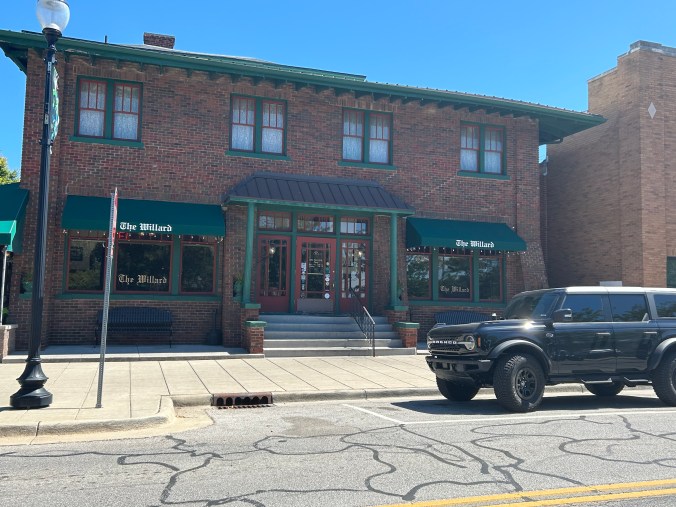
The popular local eatery
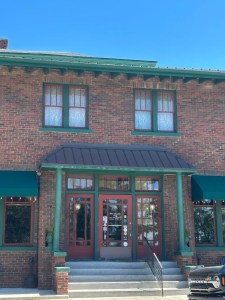
The entrance
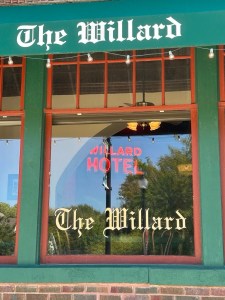
The old hotel light visible


The Willard Hotel was once an active hotel and now The Willard is a very popular restaurant with both outside seating and indoor dining areas. We really enjoyed our very tasty meals. Our son had pretzel breadsticks, fries and a coke. Sher had a custom made veggie pizza and I had the fried fish platter. We both enjoyed Blue Moon on tap. Our waiter Steven took excellent care of us, making sure we had everything we needed for an enjoyable dining experience.
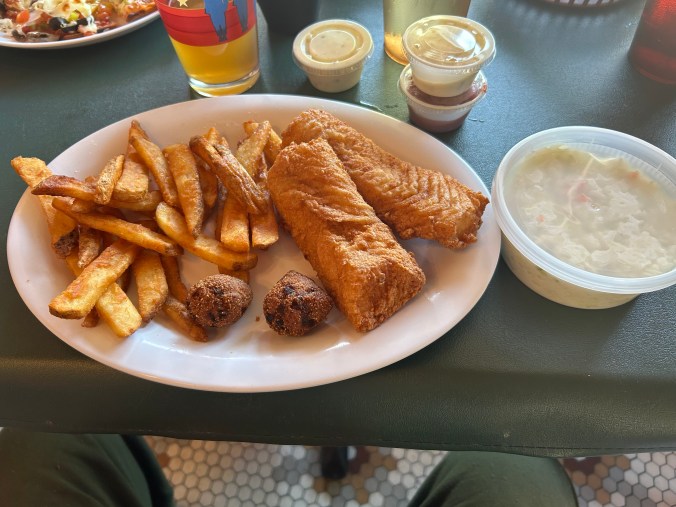
Two piece cod platter with fries, hush puppies and slaw

Custom made veggie pizza
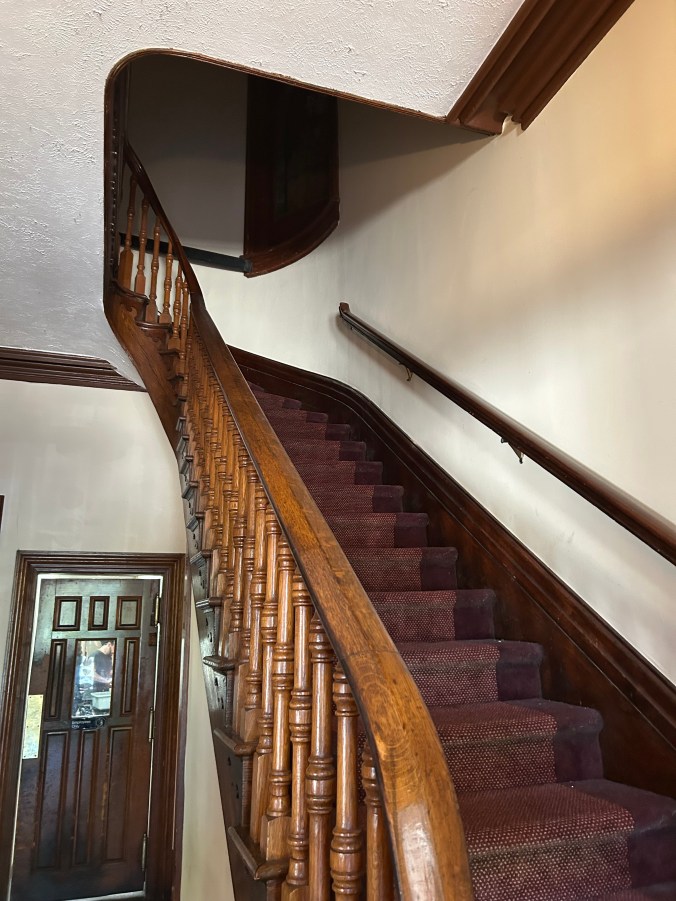
Curved stairway leading to now closed second floor of the hotel

The brick house of the Willard was originally built in 1860 by the daughter of one of the town’s founders. Over the years the hotel saw quite a history and the legends of hauntings continue to this day.

A splendid 1849 Greek Revival mansion on the Ohio River

Madison, Indiana is a wonderful town on the Ohio River between Cincinnati and Louisville. The entire downtown has been declared a National Historic site due to the remarkable number of historic buildings including the Shrewsbury-Windle House.

The Official Designation Plaque

The “back door” on city street


One historic home brings back fond memories for me, as the most recent owners of the Shrewsbury-Windle house were close friends of my paternal grandparents, who also lived for a while in Madison.  As a young lad I remember many wonderful visits with John and Ann in the house. I loved climbing up and down that spiral stairway! John and Ann Windle founded the Historic Madison, Inc society.

3 story free standing spiral staircase

Frank Costigan was a famous architect who designed many Greek Revival style homes in both Indianapolis and Madison. The Shrewsbury House features 16-foot ceilings, 12 foot high entrance doors, intricate plaster moldings, and ornately carved stone details. The most remarkable (and acclaimed) feature is the 3 story, 53 step free standing spiral staircase. The stair case serves as a means of letting hot air raise and vent out of attic windows in addition to providing access to the second floor rooms.

The expansive yard, Ohio River in background past the far fence

Front door faces Ohio River, columns are typical Costigan style

Tours of the Shrewsbury-Windle House are available. For details please go to this page of Historic Madison Inc. In addition, I strongly recommend checking out this article outlining both the history of the house, and the history of John and Ann Windle’s ownership of the house and founding the Historic Madison, Inc society.

Historic 1930’s art deco building

The historic building survives with a new use

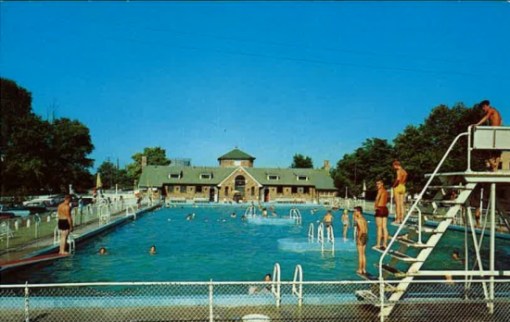
This historic building in Shelbyville, Indiana was originally the bath house for what was for decades the town’s public swimming pool.  The William A. Porter Memorial Swimming Pool Bathhouse was built to honor the memory of the son of a Shelbyville family. This Art Deco building was dedicated in 1930.

Sometime in the 1960’s showing pool and back of the building

The pool was closed in 1998 and subsequently was demolished. The building is currently being used by the local Chamber of Commerce and serves as the Shelby County Tourism & Visitors’ Bureau. It is located on the north side of town and is one of the first structures that visitors see when they come into town.

Impressive monument

Sher

While Sher and I were driving around Vincennes looking for interesting things, we spotted the steeple of a large church.  We parked, got out and went up to one of the historical information signs. Then we looked to the right and wow, there was a huge structure that looked like a monument you’d see in Washington, D.C.

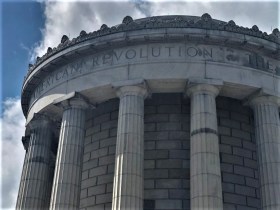
What we were seeing was the George Rogers Clark Memorial. The monument honors the 1779 victory of General George Rogers Clark over the British at Fort Sackville, on the Wabash River in what is now Vincennes. This was a hugely successful campaign during the Revolutionary War and led to the United States claiming the Northwest Territory from Britain.

Detail of the monument inscription

Francis Vigo, with the Wabash River behind


The State of Indiana built the monument in 1933 and President Franklin D. Roosevelt dedicated it in 1936. The site was turned over the the National Park service in 1966, and the NPS runs it to this day, along with a Visitor’s Center and other parts of the historic park. There is a lovely “River Walk” paved path along the banks of the Wabash River, which is the boundary with Illinois.

It was a hot day, however in the shade it was comfortable. We saw a few people out, most without masks, but no problem keeping safe distances. We really enjoyed finding this impressive piece of Indiana and American history!

Stay safe while your travel, friends, but go ahead and travel!