
Author: Roadtirementvintage
Ducks enjoying an icy river
Went for a drive today. Here’s what we saw.
These fine feathered friends of ours were certainly enjoying their afternoon romping in the river. Hop on the ice, jump in the water, swim a bit, hop back on the ice, repeat, repeat again. Ducks have a fine life.
Banalinga stones from India
These naturally weathered stones are found in only one riverbed in the world. That is the Narmada River in Madhya Pradesh state in central India. These stones are considered sacred, are an iconic symbol of worship and are ancient and connote divinity.
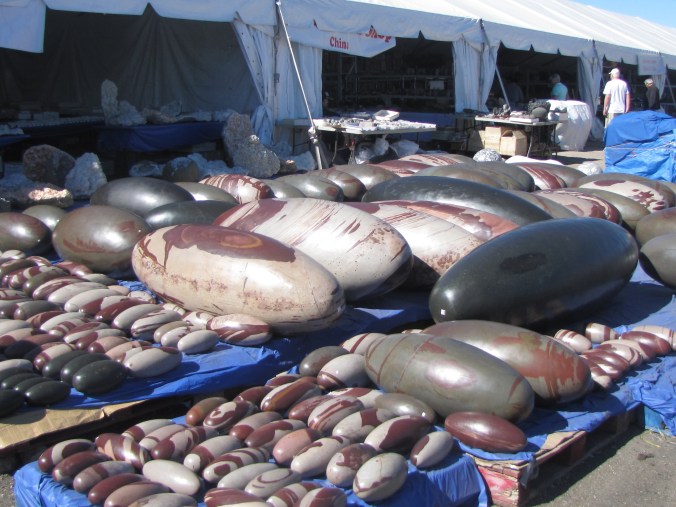
Sacred stones for sale at the 2016 Tucson Gem and Mineral Show.
The shape of these stones, regardless of their size, are created naturally during the course of the flowing water and movement of the river bed sediments. It is quite the phenomena that these stones are found in only one place on Earth.
Dinner tonight
We’d been basically stuck at home for the past few days via snow and stupid cold temperatures. Somehow pizza sounded pretty good for dinner tonight.

Love those olives

Alfredo sauce and bacon strips!
The car was a challenge to get the doors open, wipers free and 10 inches of snow removed. But with our son’s help we got it dug out. It needed to get started anyway, so our son picked up our online order at Papa Johns. Yummy and a nice break from cooking at home.
A nice pair of mushrooms

Sometimes Nature shows us that things can be better in two’s.
Remembering summer warmth

Let’s take a break from the cold and snow and remember how nice summertime is with flowers and bugs and warm temperatures.
Ganesha, son of Shiva
A thousand year old sandstone statue of Ganesha, son of Shiva
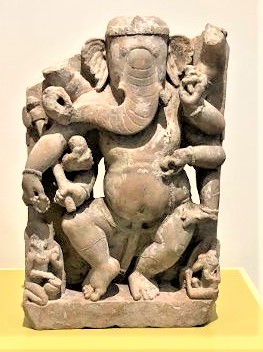
This statue is about 3 feet tall
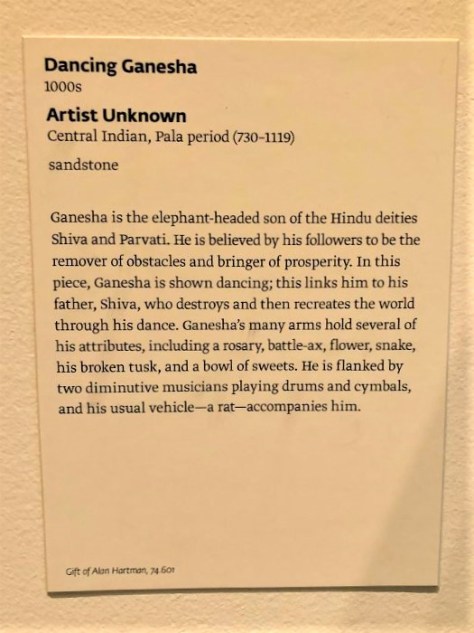
Information panel next to Ganesha statue
This stature, as the panel states, is from Central India, most probably from year 730 to 1119, representing the Pala period. It is on display at Newfields Indianapolis Museum of Art.
Enjoying classic comedy
Yesterday we decided to watch some funny clips on YouTube. One of those was the classic Abbott and Costello bit “Who’s on First?” Considered by many to be the funniest eight minutes in comedy history.
If you have never seen this skit, then by all means check it out. If you’ve seen it before, refresh your memory. You will laugh out loud.
This has survived over 5000 years
This Egyptian vessel has survived for over 5000 years. It is amazing that you can still observe it close up in the Newfields museum in Indianapolis.
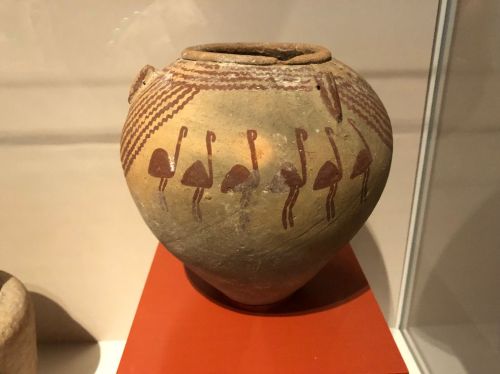
This pot is about 14 inches tall
This artifact is identified in a museum information label as a Nagada II Vessel, titled Flamingos. It is dated 3400-3200 B.C. The pictures of the flamingos and the geometric lines are typical of other pots of the same vintage.
Bunny prints
We had a bunny cross the yard yesterday

 Roadtirement